

About-Saint-Paul-de-Vence
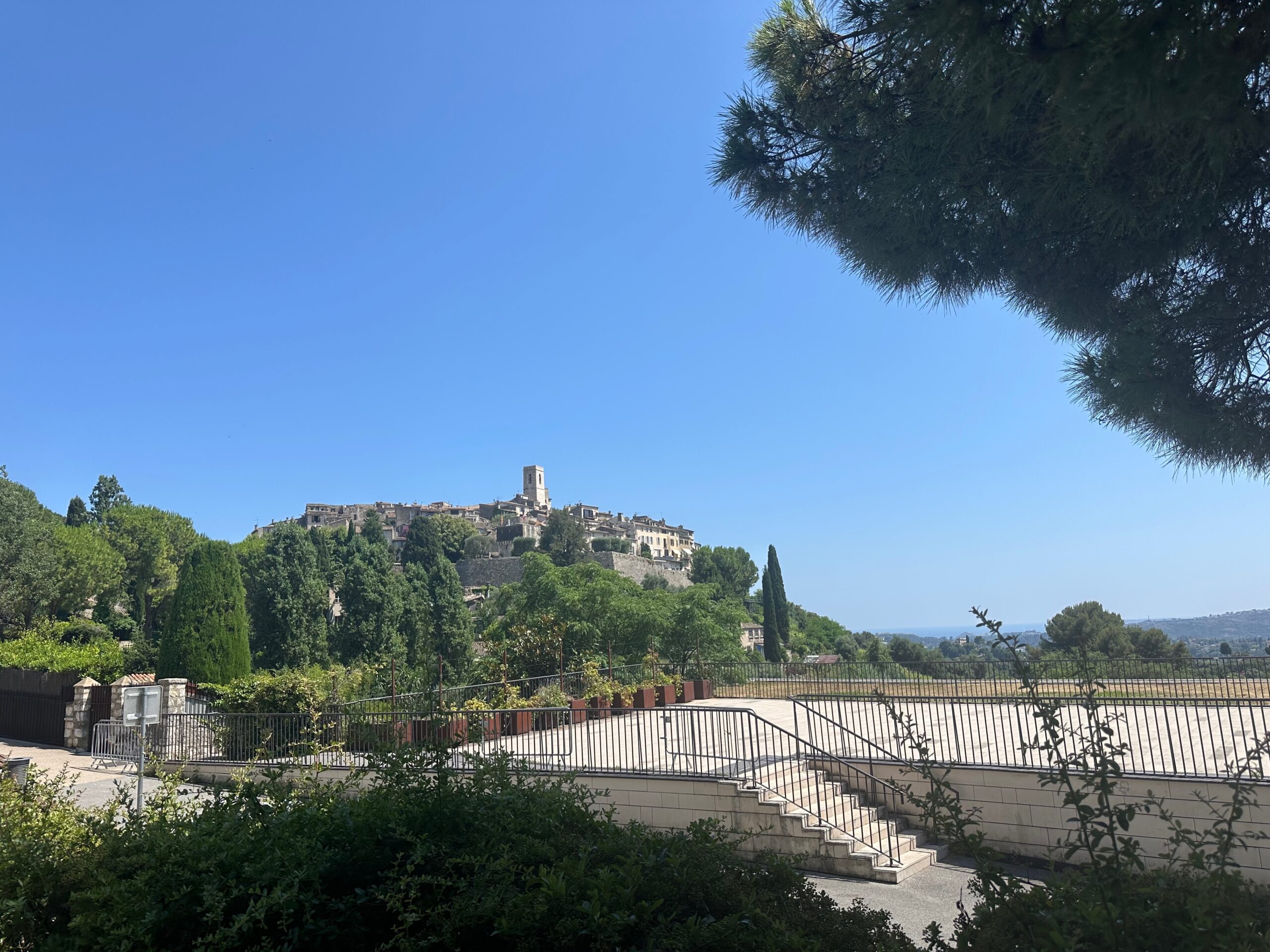
Saint-Paul-de-Vence is one of the best-known fortified villages in the hills behind the Côte d’Azur, situated between the Mediterranean coast and the mountains surrounding Vence. Its historic centre occupies a rocky ridge above the surrounding valleys, enclosed by an almost continuous circuit of sixteenth-century ramparts. From a distance, the village appears remarkably compact, with tightly grouped stone houses rising towards the church tower and the former medieval keep. The setting is immediately recognisable, but Saint-Paul’s international reputation owes as much to its cultural history as to its architecture.
The village developed over many centuries as an important fortified settlement near the eastern frontier of Provence. Its strategic position became particularly significant after Nice and its surrounding territory passed under the authority of the House of Savoy in 1388. During the reign of François I, Saint-Paul acquired an extensive system of modern fortifications designed to protect the French frontier against military threats from the east. Those ramparts remain among the best-preserved examples of their period in the region and continue to determine the shape of the historic centre.
During the twentieth century, Saint-Paul underwent an extraordinary transformation. Painters, writers and actors began discovering the village, attracted by the landscape, the Mediterranean light and the possibility of working away from the increasingly fashionable coastal resorts. Artists including Marc Chagall, Pablo Picasso, Henri Matisse, Georges Braque and Joan Miró became associated with Saint-Paul, while La Colombe d’Or developed into one of the most celebrated meeting places of the international artistic world. The opening of the Fondation Maeght in 1964 established a permanent cultural institution whose significance extended far beyond the village itself.
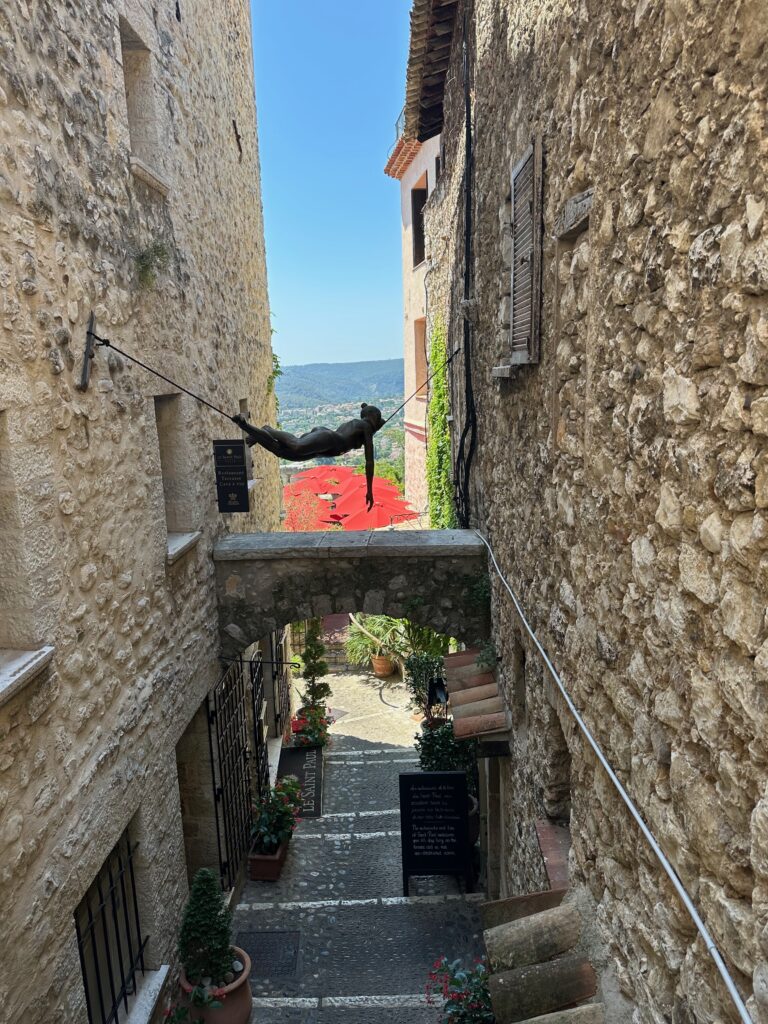
Today, the historic centre attracts visitors throughout the year, and its narrow streets contain numerous galleries, restaurants and shops. Particularly during the summer, Saint-Paul can be considerably busier than its appearance in photographs might suggest. Yet the fortified village represents only a small part of the commune. Beyond the walls, the landscape opens into wooded hillsides, former agricultural terraces, olive groves and residential neighbourhoods, with villas and country houses distributed across the surrounding countryside.
This distinction is essential to understanding Saint-Paul-de-Vence. Within the ramparts, life is shaped by historic architecture, pedestrian streets and a substantial tourist presence. Outside the village, the atmosphere is generally quieter and more residential, although the character of individual locations varies considerably. Some properties enjoy wide views towards the Mediterranean, while others overlook the green valleys and limestone hills towards Vence and Saint-Jeannet.
Saint-Paul also benefits from a convenient position between the coast and the hinterland. Nice Côte d’Azur Airport, Cagnes-sur-Mer, Vence and the commercial areas around the lower Var valley are all within practical driving distance. For residents, the combination of cultural heritage, countryside and access to everyday services is often more important than the village’s international celebrity.

Neigbourhoods
Saint-Paul-de-Vence is much larger than its fortified centre suggests. The commune extends over approximately seven square kilometres, with residential areas spread across hillsides, valleys and former agricultural land. Unlike a coastal town with clearly defined urban districts, Saint-Paul is organised around a historic village and a collection of neighbourhoods and localities that have developed gradually along rural roads.
The differences between these areas are substantial. A house within walking distance of the ramparts offers a completely different lifestyle from a villa on a wooded hillside or a property in the lower parts of the commune towards La Colle-sur-Loup and Cagnes-sur-Mer. Orientation, road access, neighbouring development and the topography of the land are particularly important in Saint-Paul, where two properties only a short distance apart can have very different surroundings.
The Historic Village
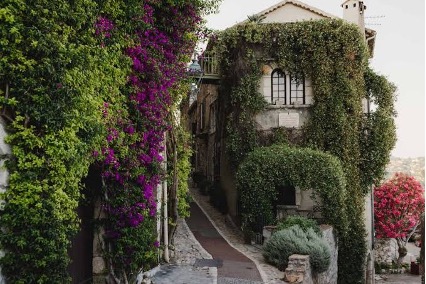
The fortified centre is the most recognisable part of Saint-Paul-de-Vence and the reason the village has become internationally famous. Enclosed by its sixteenth-century ramparts, it consists of narrow pedestrian streets, stone houses, small squares and passages that follow the contours of the rocky ridge. Rue Grande runs through the centre, connecting the northern entrance with the southern end of the village, while smaller lanes lead towards the church, the former keep and the surrounding walls.
The architecture reflects several centuries of development. Medieval structures stand beside houses altered during the Renaissance and later periods, with vaulted ground floors, stone staircases, wooden shutters and small internal courtyards. The limited space within the fortifications has produced a dense urban environment, with buildings often sharing walls and streets that are too narrow for ordinary vehicle access.
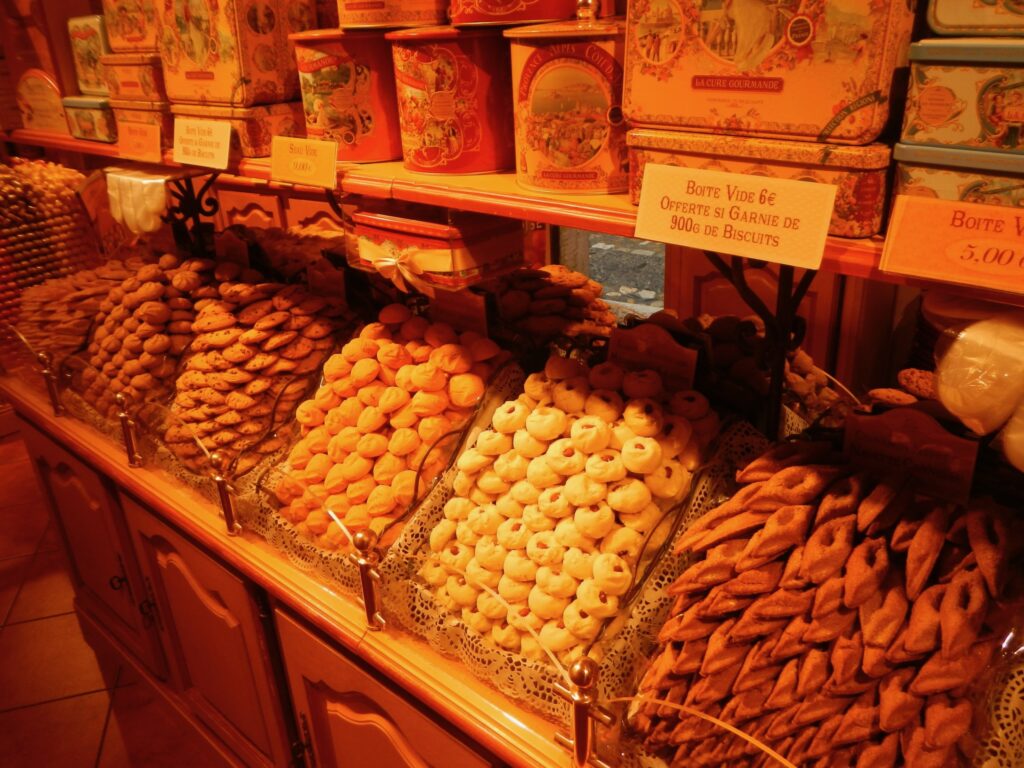
Today, many ground-floor premises are occupied by galleries, boutiques and restaurants, while apartments and village houses remain above them. The presence of visitors is considerable, particularly between spring and autumn, and the character of the streets changes noticeably between the daytime and the quieter evening hours.
Residential properties within the ramparts appeal primarily to people who appreciate historic architecture and the possibility of living in a pedestrian village. However, parking is generally outside the walls, outdoor space is limited and renovations can be complicated by the age of the buildings and heritage regulations. A property with a terrace, accessible entrance or open view is therefore quite different from one situated deep within the narrow streets.
Les Gardettes
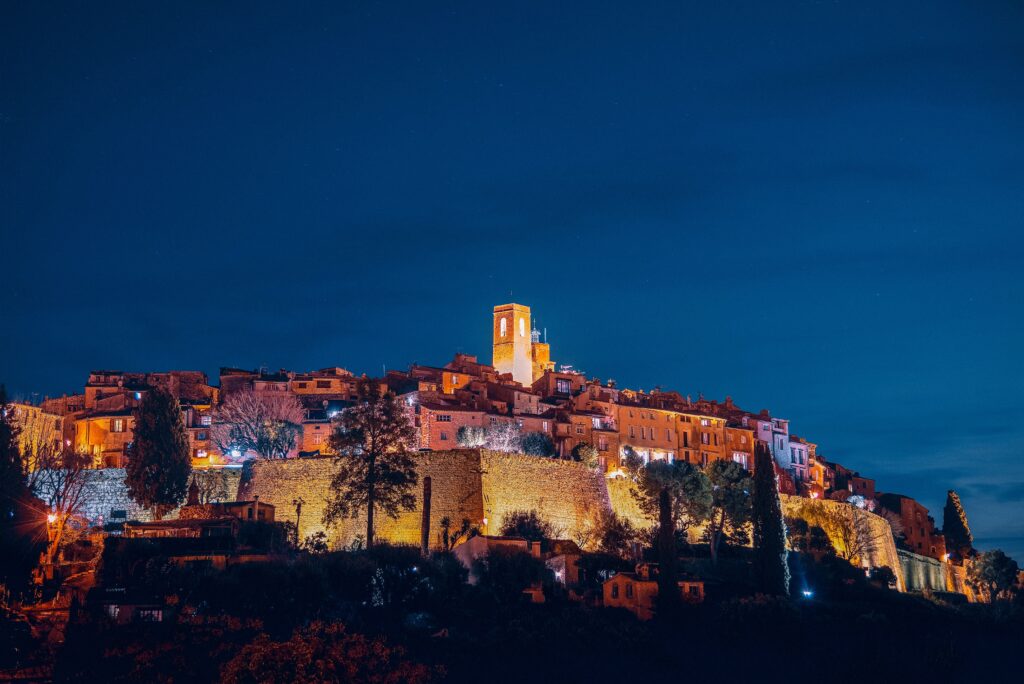
To the north and northwest of the historic village, the landscape becomes greener and more spacious. The Colline des Gardettes is particularly associated with the Fondation Maeght, whose buildings and sculpture gardens occupy a wooded setting among Mediterranean pines.
This part of Saint-Paul has a markedly different atmosphere from the historic centre. Roads pass between established gardens, older villas and larger residential properties, many of which are screened by mature vegetation. The landscape is characterised by wooded slopes and changing views towards the surrounding hills, with the occasional glimpse of the fortified village itself.
The proximity of the Fondation Maeght gives the area a strong cultural association, but everyday life is largely residential. Depending on the precise location, some houses are within walking distance of the village, although the roads can be narrow and hilly and do not always have pavements.
Properties range from traditional Provençal houses to more contemporary villas, often set in landscaped gardens with swimming pools. The wooded environment provides privacy, but the density of trees and the orientation of individual plots can affect sunlight and views. As elsewhere in Saint-Paul, the appearance of a property on a map does not necessarily reveal how accessible or secluded it feels in practice.
La Colle Hillsides
The countryside extending towards La Colle-sur-Loup contains some of Saint-Paul’s more established residential areas. Here, the landscape consists of rolling hills, terraced gardens, olive trees and winding roads connecting individual properties and small groups of houses.
Historically, much of this land was agricultural. Olive cultivation, vines and other Mediterranean crops occupied terraces that are still visible in many gardens today. As the commune became increasingly desirable during the twentieth century, former agricultural holdings were gradually converted into residential properties or divided into smaller plots.
The result is a varied housing landscape. Traditional farmhouses and older country villas stand alongside houses built during the later twentieth century, while some properties have been extensively renovated or replaced by contemporary architecture.
Certain elevated positions offer views towards the fortified village or the Mediterranean in the distance. Others overlook wooded valleys and neighbouring hillsides, creating a more enclosed and rural atmosphere. Road access can vary significantly, and some properties are reached by narrow private lanes or steep driveways.
For permanent residents, these areas offer the advantage of a quieter environment while remaining reasonably close to the shops and services of La Colle-sur-Loup, Vence and Cagnes-sur-Mer. A car is generally essential.
The Lower Hills
The lower parts of the commune, particularly along the roads leading towards Cagnes-sur-Mer, have a somewhat different character from the higher residential hills. The terrain becomes more open in places, and access to the coastal road network, supermarkets, schools and commercial facilities is generally more convenient.
Residential development here is more varied, with individual villas, small residential groups and older properties occupying land that was once used primarily for agriculture. Some roads carry more local traffic than those in the quieter hills, particularly where they form connections between Saint-Paul, La Colle-sur-Loup and the coastal towns.
For residents who commute regularly or need frequent access to Nice Airport and the coast, these locations can be practical. They are generally less closely connected to the atmosphere of the historic village, however, and their surroundings need to be assessed individually.
The commune’s lower-lying areas also demonstrate that Saint-Paul is not uniformly rural or secluded. Depending on the exact position, properties may be influenced by nearby roads, neighbouring buildings or the more developed landscape towards the coast.
The Countryside
Between the better-known residential localities, Saint-Paul retains areas of countryside where traditional stone walls, olive groves, gardens and wooded slopes remain important features of the landscape. These are not necessarily separate neighbourhoods in an administrative sense, but they contribute significantly to the character of the commune.
Some properties occupy substantial plots that offer privacy and a sense of space, while others are located on smaller parcels created through successive divisions of agricultural land. The terrain can be steep, and the relationship between a house, its garden and the surrounding landscape is often more complex than in flatter coastal towns.
The countryside setting is one of Saint-Paul’s principal attractions, but it also brings practical considerations. Access roads, drainage, retaining walls, vegetation management and planning restrictions can all influence the use and maintenance of a property.
Property in Saint-Paul-de-Vence
Saint-Paul-de-Vence has long attracted an international clientele, drawn by its artistic heritage, historic architecture and proximity to the Mediterranean coast. Its reputation extends well beyond the Côte d’Azur, giving the local property market a distinctive character, particularly in the higher price segments.
The market is relatively small, and properties can differ considerably in character and value. Location alone does not determine the price. Privacy, the quality of the views, orientation, the size and usability of the land, and the condition of the buildings all play an important role. An unobstructed view of the fortified village can be particularly desirable, while properties offering both privacy and convenient access are often sought after.
The age and history of many properties also make technical and planning considerations important. Older buildings may require substantial renovation, while extensions, swimming pools and other alterations are subject to local planning regulations. In the historic centre and its protected surroundings, additional heritage restrictions may apply. On the hillsides, the topography of the land, retaining walls, drainage and access roads can be equally relevant.
Saint-Paul-de-Vence attracts both permanent residents and second-home buyers, including an established international clientele. For buyers unfamiliar with the area, the diversity of individual locations makes a careful assessment particularly important. Two properties with similar living areas and asking prices may offer very different levels of privacy, accessibility, views and possibilities for future alterations.
To Do
Saint-Paul-de-Vence is best explored on foot, although the most interesting places are not all situated within the fortified village. The historic centre, the Fondation Maeght and the surrounding countryside each offer a different perspective on the village’s history. While many visitors come primarily for the galleries and picturesque streets, Saint-Paul has an unusually rich collection of cultural landmarks for a commune of its size.
Village & Ramparts
The historic village is entered through the Porte de Vence, the principal gateway on its northern side. From here, Rue Grande follows the spine of the settlement towards the southern ramparts, passing stone houses, galleries, restaurants and small squares. The route is relatively short, but the streets branching away from it reveal much of the village’s architectural interest.
Saint-Paul’s present fortifications were constructed during the sixteenth century, when François I ordered the medieval defences to be replaced by a system better suited to artillery warfare. The walls follow the contours of the rocky ridge and incorporate projecting bastions that allowed defenders to cover the approaches to the village. Their construction profoundly changed Saint-Paul, requiring the demolition of houses and altering the relationship between the settlement and the surrounding countryside.
Today, the ramparts provide a particularly good opportunity to understand the geography that made Saint-Paul strategically important. Views extend across wooded valleys and towards the limestone hills around Vence and Saint-Jeannet. From certain positions, the Mediterranean is visible beyond the lower countryside towards the coast.
Within the walls, the Grande Fontaine, the former medieval keep and the Collégiale de la Conversion-de-Saint-Paul are among the principal historic landmarks. The church developed over several centuries and contains architectural and decorative elements from different periods. The keep, originally part of the medieval defensive system, now houses the town hall.
Although the centre is pedestrianised, the streets are not uniformly easy to navigate. The traditional stone paving can be uneven, and some passages involve steps or steep gradients. During the busiest summer months, early morning or late afternoon is generally a better time to appreciate the architecture without the crowds.
Fondation Maeght
The Fondation Maeght is one of the most important museums of modern and contemporary art in southern France and an essential visit for anyone interested in the artistic history of the Côte d’Azur.
The foundation was created by Aimé and Marguerite Maeght, influential art dealers who maintained close relationships with many of the leading European artists of the twentieth century. Following the death of their son Bernard, the couple decided to establish an institution dedicated to art and artistic creation. The foundation opened in 1964, with André Malraux, France’s Minister of Cultural Affairs, attending the inauguration.
The buildings were designed by the Catalan architect Josep Lluís Sert, who had worked with Le Corbusier and developed a distinctive approach to modern architecture. Rather than constructing a conventional museum with a series of enclosed galleries, Sert integrated the exhibition spaces into the wooded hillside, using courtyards, gardens, natural light and open-air installations to create a continuous relationship between architecture and landscape.
Several artists contributed directly to the project. Joan Miró created the Labyrinth, an extraordinary outdoor environment of sculptures, ceramics and architectural elements. Alberto Giacometti’s bronze figures occupy the courtyard that bears his name, while works by Georges Braque, Marc Chagall and other artists form part of the permanent collection.
The Fondation Maeght is particularly interesting because the architecture was conceived in dialogue with the artists rather than merely as a building in which to display their work. The gardens, terraces and exhibition spaces are all part of the experience, and the collection is complemented by temporary exhibitions.
Practical information: The Fondation Maeght is located at 623 Chemin des Gardettes, outside the fortified village. Allow at least two hours for a visit, particularly if temporary exhibitions are taking place. Opening hours and admission prices vary, so consult the official website before travelling.
Official website: https://www.fondation-maeght.com/
La Colombe d’Or
Few establishments on the Côte d’Azur have a history as closely connected to twentieth-century art as La Colombe d’Or. Situated just outside the northern entrance to the fortified village, the hotel and restaurant developed from a modest gathering place into one of the most celebrated addresses in the artistic world.
Its story began with Paul Roux, who opened a café in the 1920s that became a small inn. Together with his wife Baptistine, known as Titine, he created an informal and welcoming atmosphere that appealed to the painters and writers visiting Saint-Paul.
Artists such as Picasso, Matisse, Braque, Fernand Léger, Chagall and Miró became associated with the establishment. Some developed lasting friendships with the Roux family, and artworks gradually found their way onto the walls and into the gardens. Over time, the collection became an extraordinary part of La Colombe d’Or’s identity, with paintings, ceramics and sculptures displayed in the surroundings for which they had originally been given or acquired.
The restaurant also became a meeting place for actors and writers. Yves Montand and Simone Signoret were married in Saint-Paul in 1951, and their association with La Colombe d’Or remains part of the village’s cultural memory.
Despite its international reputation, La Colombe d’Or is not a conventional museum. It remains a privately operated hotel and restaurant, and the works of art are integrated into the dining rooms, corridors, terraces and garden. This makes the experience quite different from visiting a formal collection.
Reservations are strongly recommended, particularly during the summer. The restaurant is situated at the entrance to the village, opposite the famous pétanque square.
Official website: https://www.la-colombe-dor.com/
Chapelle Folon
The Chapelle Folon is one of Saint-Paul’s most interesting artistic interiors. The building was originally the chapel of the White Penitents, a religious brotherhood that played an important role in the social and spiritual life of the village.
In the early twenty-first century, the Belgian artist Jean-Michel Folon was invited to develop a new artistic programme for the chapel. Folon, who had lived for many years in the region, was known internationally for his illustrations, watercolours, sculptures and distinctive visual language, often featuring solitary human figures and poetic landscapes.
The chapel’s interior was transformed through a combination of stained glass, mosaics, paintings and sculpture. Folon’s imagery explores themes of generosity, human relationships and spirituality without relying exclusively on traditional religious iconography.
Folon died in 2005, before the completed chapel was inaugurated in 2008. The project was finished with the involvement of collaborators who had worked closely with him.
The result is a remarkable encounter between a historic religious building and the imagination of a contemporary artist. Unlike the Fondation Maeght, which places artworks in dialogue with modern architecture, the Chapelle Folon introduces a completely new artistic language into an older architectural setting.
The chapel is located within the historic village, close to the church and the medieval tower, now home to the town hall. Opening arrangements should be checked locally before visiting.
Chagall’s Grave
Marc Chagall spent the final decades of his life in the south of France and settled in Saint-Paul-de-Vence in 1966. By that time, he was already one of the most celebrated artists of the twentieth century, known for paintings that combined memories of his childhood in Belarus with biblical subjects, personal symbolism and intensely expressive colour.
His house, La Colline, was situated outside the fortified village. Chagall continued working there on paintings and major commissions, including stained glass, mosaics and monumental decorative projects. His long residence in Saint-Paul strengthened the village’s reputation as a centre of artistic life.
Following his death in 1985, Chagall was buried in the village cemetery at the southern end of the historic centre. His grave is relatively modest and is often visited by admirers of his work.
The cemetery itself is worth visiting for its setting. Situated near the southern ramparts, it overlooks the surrounding countryside and offers a quieter atmosphere than the principal streets of the village.
Visitors should remember that it remains an active cemetery and approach it with appropriate respect.
Art Galleries
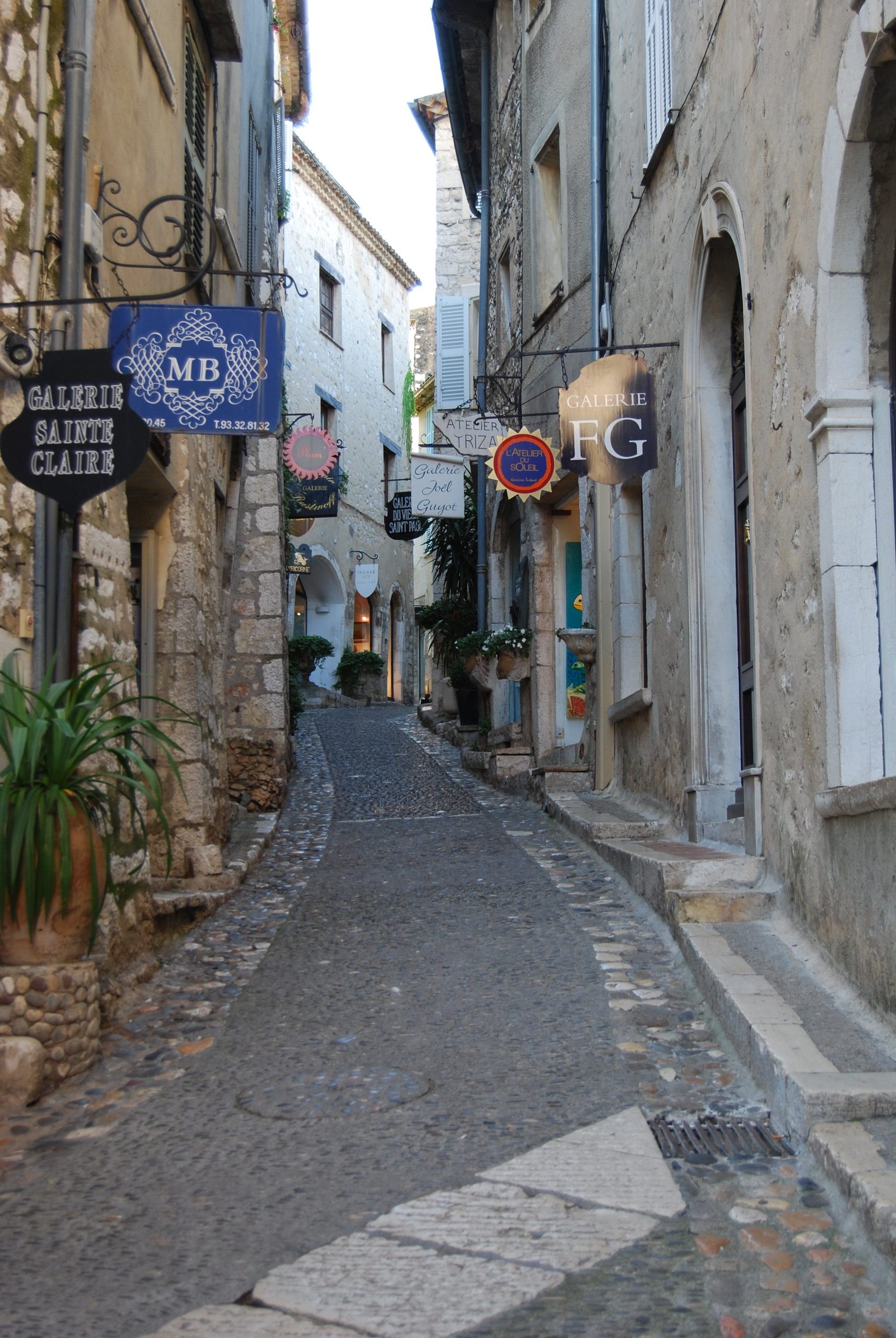
Saint-Paul-de-Vence has one of the highest concentrations of art galleries among the historic villages of the Côte d’Azur. Many occupy former shops, workshops and residential buildings along Rue Grande and the surrounding streets.
The gallery tradition developed during the twentieth century as the village became associated with modern painters and sculptors. Today, the selection is broad, ranging from established contemporary artists to decorative painting, photography and sculpture.
The quality and character of individual galleries vary considerably, and not every exhibition has a direct connection with Saint-Paul’s artistic heritage. Nevertheless, the concentration of galleries remains an important part of the village’s identity.
It is worth taking time to explore the smaller streets rather than limiting a visit to the most prominent galleries along the main route. Temporary exhibitions and changes of programme mean that the selection is never entirely the same from one visit to the next.
Pétanque
Immediately outside the northern entrance to Saint-Paul lies Place du Général de Gaulle, a broad square shaded by plane trees and closely associated with the village’s social history.
During the twentieth century, the square became a meeting place for local residents, artists and well-known visitors staying at La Colombe d’Or. Games of pétanque were part of everyday life, and photographs of actors and painters playing beneath the trees helped establish the square as one of Saint-Paul’s most recognisable locations.
Yves Montand was particularly associated with the game, and the square became part of the informal social world surrounding La Colombe d’Or.
Pétanque is still played here, although the atmosphere changes considerably according to the season and the number of visitors. The square is also a useful starting point for exploring the village, with the ramparts, restaurants and northern gateway all within a short walk.
Countryside Walks
Although Saint-Paul is best known for its fortified centre, the surrounding countryside is an important part of its appeal. Footpaths and small roads pass through wooded hillsides, olive groves and former agricultural terraces, offering views of the village from different directions.
The landscape is typical of the lower hills of the Alpes-Maritimes, where Mediterranean vegetation combines with limestone outcrops and cultivated land. In spring, the countryside is particularly green, while autumn brings softer light and quieter conditions for walking.
Routes towards La Colle-sur-Loup and the surrounding valleys offer opportunities to explore beyond the historic centre, although not every rural road is suitable for pedestrians and some paths cross private land. It is advisable to use current local walking maps and check the condition of trails before setting out.
For visitors who have only seen Saint-Paul from within its walls, walking through the surrounding countryside provides a useful perspective on the village’s original defensive position and its relationship with the landscape.
Facts
Region: Provence-Alpes-Côte d’Azur
Department: Alpes-Maritimes
Population: Approximately 3,200 inhabitants
Location: In the hills between Cagnes-sur-Mer and Vence, northwest of Nice
Altitude: Historic village approximately 180 metres above sea level
Area: Approximately 7.3 km²
Distance to Nice Côte d’Azur Airport: Approximately 13–15 kilometres by road, depending on the route
Known for: Sixteenth-century ramparts, Fondation Maeght, La Colombe d’Or and its artistic heritage
Main property types: Historic village houses, Provençal villas, country houses and contemporary residences
Landscape: Wooded hillsides, olive groves, valleys and distant Mediterranean views from certain locations
Lifestyle: Cultural, residential and countryside-oriented, with a busy historic centre
Transport: No railway station in Saint-Paul; regional bus services connect the village with neighbouring towns
Nearby towns: Vence, La Colle-sur-Loup, Cagnes-sur-Mer and Tourrettes-sur-Loup
History
The history of Saint-Paul-de-Vence is inseparable from its geographical position. Built on a rocky ridge overlooking the valleys between the Mediterranean and the foothills of the Alps, the village offered both natural protection and control over routes connecting the coast with the interior of Provence. Although the surrounding area was inhabited in antiquity, the fortified settlement that would become Saint-Paul developed during the Middle Ages, when communities throughout the region sought the security of elevated and defensible locations.
By the eleventh century, Saint-Paul appeared in written records, and over the following centuries it developed into a significant settlement within the County of Provence. Its position became especially important in 1388, when Nice and its surrounding territory came under the authority of the House of Savoy. This political change created a frontier between Provence and the Savoyard territories, placing Saint-Paul close to a boundary that would remain strategically sensitive for centuries.
During the late Middle Ages, Saint-Paul was already protected by defensive walls and dominated by a keep. The village also served as a local administrative and commercial centre, drawing on the agricultural production of the surrounding countryside. Olive cultivation, vines and other crops supported the local population, while the fortified position provided a degree of protection during periods of conflict.
The sixteenth century brought the most dramatic change in Saint-Paul’s physical history. The Italian Wars had turned the territories between France, Savoy and northern Italy into a contested military region. Advances in artillery also meant that traditional medieval walls were becoming increasingly vulnerable. Following the invasion of Provence by the forces of Charles V in 1536, François I recognised the need to strengthen the French frontier and ordered the construction of modern fortifications at Saint-Paul.
Work began in the 1540s under the direction of the military engineer Jean de Saint-Rémy. The new defences followed the principles of bastioned fortification that were developing in Renaissance Italy, with thick walls, angular projections and positions designed to allow artillery to cover the approaches to the settlement. The resulting circuit of ramparts was considerably more sophisticated than the medieval walls it replaced.
The construction came at a considerable cost to the inhabitants. Houses outside the new defensive perimeter were demolished, and the works displaced part of the population. Families moved into the surrounding countryside and neighbouring settlements, contributing to the development of communities such as La Colle-sur-Loup. The new walls also restricted the physical expansion of Saint-Paul, preserving the compact form that remains visible today.
For the following centuries, Saint-Paul retained its role as a frontier stronghold, although changes in warfare and political geography gradually reduced its importance. The region remained divided between French Provence and the County of Nice until 1860, when Nice and Savoy were annexed to France following an agreement between Napoleon III and the Kingdom of Sardinia. The disappearance of the international frontier removed the original strategic purpose of Saint-Paul’s fortifications.
By the nineteenth century, the village was primarily an agricultural community. Olive groves, vineyards, orchards and flower cultivation shaped the surrounding countryside, while the historic centre remained relatively isolated from the rapid changes taking place along the Mediterranean coast. Nice and Cannes were developing into fashionable winter resorts for European aristocrats and wealthy travellers, but the villages of the hinterland continued to depend largely on agriculture and local trade.
This relative isolation began to change during the early twentieth century. Improved roads and transport connections made the countryside behind the coast more accessible, while painters searching for new subjects and working environments began exploring the villages of Provence. The landscape around Saint-Paul, with its olive trees, stone houses and changing Mediterranean light, appealed to artists who were increasingly interested in painting outside traditional academic settings.
Among those associated with Saint-Paul during the early decades of the century were Paul Signac, Raoul Dufy and Chaïm Soutine. Their visits formed part of a wider movement of artists towards southern France, where the light and colours had already influenced painters such as Cézanne, Renoir and Matisse. Saint-Paul gradually acquired a reputation as a place where artists could work and socialise away from the more formal atmosphere of the coastal resorts.
One of the central figures in this transformation was Paul Roux, who established a modest café near the entrance to the village during the 1920s. Together with his wife Baptistine, known as Titine, he developed the establishment that became La Colombe d’Or. What began as a simple gathering place evolved into a hotel and restaurant whose history became closely intertwined with the artistic world.
The Roux family cultivated friendships with painters, writers and actors, and the establishment became known for its informal hospitality. Artists including Picasso, Matisse, Braque, Fernand Léger, Chagall and Miró were associated with La Colombe d’Or, and works of art gradually became part of the building itself. Paintings, ceramics and sculptures were displayed not as part of a conventional museum collection but within the everyday surroundings of the restaurant, hotel and garden.
This unusual relationship between hospitality and art helped establish Saint-Paul as an important social meeting place. During the middle decades of the twentieth century, actors and writers joined the painters who had first been attracted to the village. Jacques Prévert spent time in Saint-Paul, while Yves Montand and Simone Signoret became closely associated with La Colombe d’Or. The couple married in the village in 1951, and the pétanque square outside the hotel became a familiar setting for gatherings involving local residents and famous visitors.
The development of Saint-Paul’s artistic reputation was also connected to the wider cultural transformation of the Côte d’Azur after the Second World War. The region was no longer simply a winter destination for wealthy Europeans. It had become an important centre of modern art, with artists working in Nice, Vence, Antibes, Vallauris and the surrounding countryside. Museums, galleries and private collections increasingly reflected this cultural activity, creating an artistic network that extended across the region.
The opening of the Fondation Maeght in 1964 gave Saint-Paul a permanent institution of international significance. Aimé and Marguerite Maeght were influential art dealers who had developed close relationships with leading modern artists. Following the death of their son Bernard in 1953, they began planning a foundation dedicated to art and artistic creation.
They commissioned the architect Josep Lluís Sert to design the buildings on a wooded hillside outside the village. Sert, a prominent figure in modern architecture, created a complex of galleries, courtyards and gardens that responded to the landscape and incorporated works conceived specifically for the site. Joan Miró, Alberto Giacometti, Georges Braque and other artists contributed to the project, making the foundation a collaboration between architecture, sculpture and painting.
The Fondation Maeght was inaugurated on 28 July 1964 in the presence of André Malraux, France’s Minister of Cultural Affairs. Its establishment was a decisive moment in Saint-Paul’s history. The village was no longer simply a place where artists happened to gather; it had become the setting for one of Europe’s important private institutions devoted to modern art.
Marc Chagall’s decision to settle permanently in Saint-Paul in 1966 further strengthened this reputation. Born in Vitebsk, in present-day Belarus, Chagall had lived and worked in several countries before establishing himself in France. His paintings combined memories of Jewish life in Eastern Europe with religious subjects, personal symbolism and an extraordinary use of colour. During his years in Saint-Paul, he continued producing major works and commissions, including stained glass and monumental decorative projects. He remained in the village until his death in 1985 and was buried in the local cemetery.
Saint-Paul also became home to the American writer James Baldwin, who moved there in 1970. Baldwin had already established himself as one of the most important literary voices of the civil rights era, with novels, essays and public debates addressing race, identity, sexuality and American society. His residence in Saint-Paul provided a place to write and receive friends and visitors, while he continued to engage with political and cultural developments in the United States. He died in 1987, having spent the final seventeen years of his life in the village.
By the later twentieth century, Saint-Paul’s international reputation had transformed its economy. Tourism and cultural activity increasingly replaced agriculture within the historic centre, while galleries, restaurants and boutiques occupied buildings that had once served as family homes or workshops. At the same time, the surrounding agricultural land gradually became residential, with villas and country houses developed along the hillsides and valleys outside the ramparts.
The preservation of the historic centre has allowed Saint-Paul to retain much of its original architectural character, although the village’s popularity has also changed the nature of everyday life within its walls. The contrast between the busy historic centre and the quieter residential countryside is now one of the defining features of the commune.
Saint-Paul-de-Vence consequently represents several distinct periods of regional history within a relatively small area: a medieval settlement shaped by insecurity and frontier politics, a Renaissance fortress built in response to the development of artillery, an agricultural community that survived into the modern era, and a twentieth-century meeting place for artists and writers whose influence continues to attract visitors from around the world.
Trivia
The Stones Beneath Your Feet
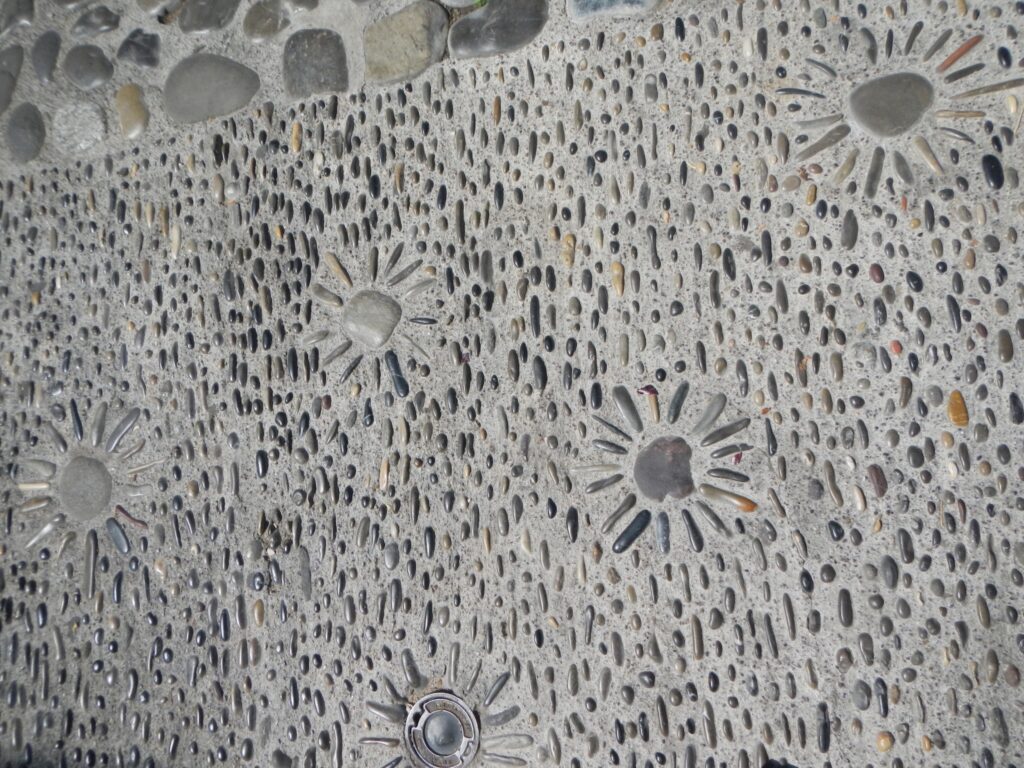
The picturesque cobbled streets of Saint-Paul-de-Vence look as though they have been there since the Middle Ages, but much of the paving is considerably younger. In the 1950s, the village’s streets were repaved in the traditional Provençal calade style, using rounded pebbles collected from the beaches of Cagnes-sur-Mer. The distinctive patterns that visitors photograph today are therefore part of a relatively modern restoration rather than an untouched medieval streetscape.
A Hollywood Romance
In 1950, Yves Montand met Simone Signoret at La Colombe d’Or. At the time, Signoret was married to film director Yves Allégret, but the encounter marked the beginning of a relationship that would become one of the best-known partnerships in French cinema. Montand and Signoret married in Saint-Paul-de-Vence in December 1951 and remained together until her death in 1985.
The Man Who Gave Away His Fortune
In the seventeenth century, Saint-Paul was home to Pierre de Bernardi, a wealthy local benefactor whose generosity left a lasting mark on the community. He used part of his fortune to support the poor and established charitable foundations. His name remains associated with the village’s history, although his story is far less familiar to visitors than those of its twentieth-century artists.
The Village That Became a Film Set
Saint-Paul-de-Vence has appeared in several French and international film productions. Its stone streets, medieval gateways and dramatic hilltop setting made it attractive to filmmakers looking for a picturesque Provençal backdrop. The village’s association with cinema was reinforced by the actors who regularly stayed at La Colombe d’Or, although its role as a filming location is less widely known than its artistic heritage.
Who is Saint-Paul-de-Vence for?
Saint-Paul-de-Vence appeals particularly to people looking for a residential setting that combines countryside, historic architecture and cultural life within relatively easy reach of the Mediterranean coast. Its reputation is international, but the experience of living here depends very much on whether a property is situated within the fortified village or in one of the residential areas outside it.
The historic centre is attractive to those who enjoy village life, pedestrian streets and immediate access to galleries and restaurants. It offers an unusual architectural environment, although properties often have limited outdoor space and parking can be inconvenient. The substantial number of visitors during the tourist season is another consideration, particularly for anyone planning to live here throughout the year.
The surrounding hillsides offer a different lifestyle. Villas and country houses are distributed among gardens, olive groves and wooded slopes, often with swimming pools and a greater degree of privacy. Some locations have panoramic views towards the sea or the mountains, while others are more enclosed by vegetation and neighbouring hills.
Saint-Paul is also a practical choice for residents who want to remain connected to Nice Airport, the coastal towns and the services of Vence and Cagnes-sur-Mer without living directly in an urban environment. A car is generally necessary, particularly outside the historic centre, and access to individual properties can vary considerably.
For families and permanent residents, the availability of schools, shops and everyday services in neighbouring towns is an important advantage. At the same time, the commune retains areas where narrow roads, steep terrain and the distance from local facilities make daily life more dependent on driving than the village’s compact appearance might suggest.
Saint-Paul-de-Vence is therefore best suited to those who appreciate the cultural heritage of the region but also value the quieter residential countryside that surrounds it. The choice of neighbourhood is especially important, since the atmosphere, views, accessibility and degree of privacy can differ substantially from one part of the commune to another.