

About Valbonne
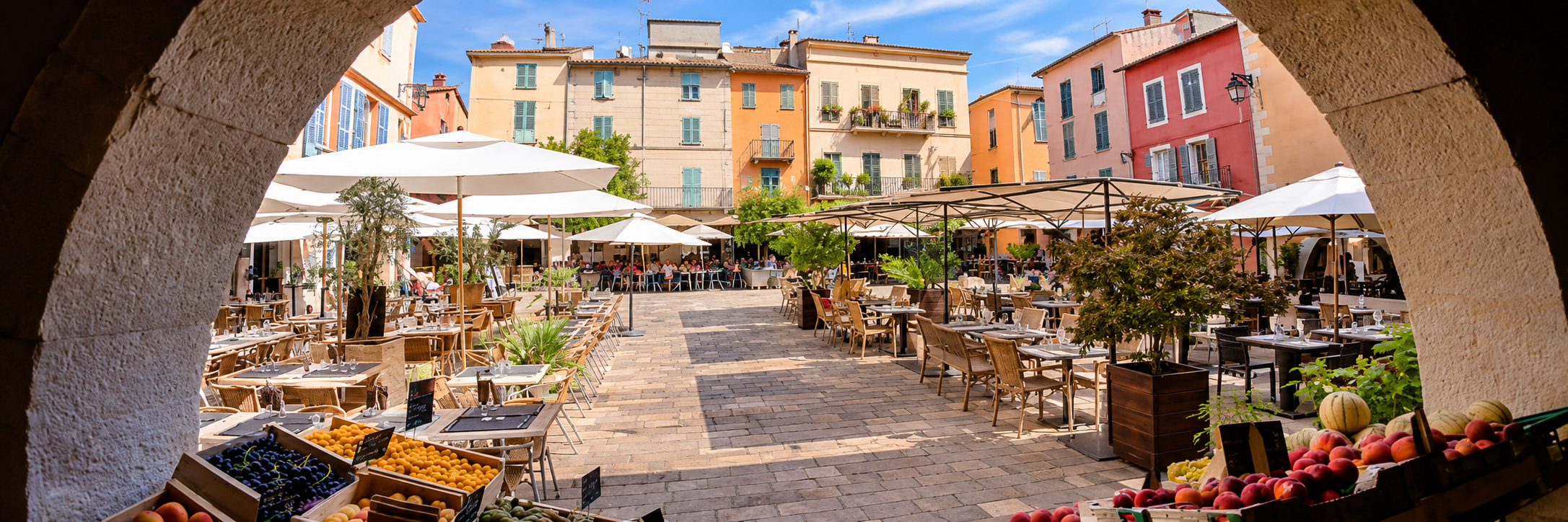
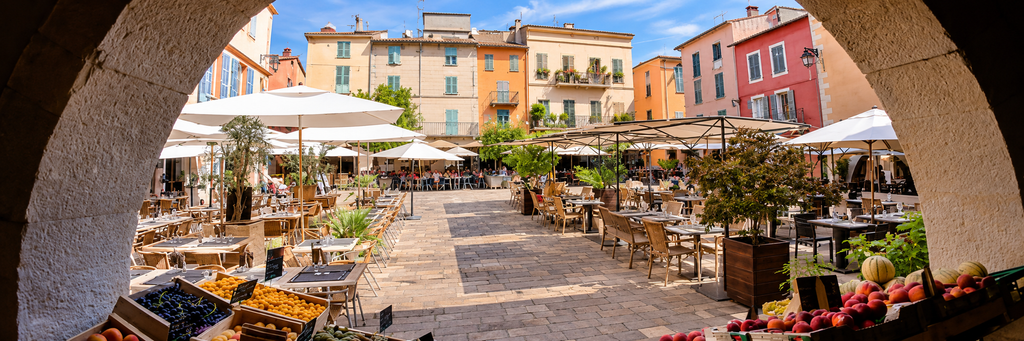
Valbonne is one of the most attractive villages in the hills behind Cannes and Antibes, although the village itself tells only part of the story. Its historic centre is known for its ochre façades, narrow streets and the Place des Arcades, where restaurants and cafés occupy the covered arcades around the square. Unlike many old Provençal villages, Valbonne was built on a carefully planned grid of streets rather than around the top of a hill, which gives the centre an unusually orderly layout.
The village is lively throughout the year. Friday mornings bring a popular market, while the restaurants around the square attract people from across the surrounding area. There is a good selection of independent shops, cafés and places to eat, and the international population has become part of the character of Valbonne without entirely changing its Provençal atmosphere. The centre is particularly pleasant for anyone who enjoys being able to walk out for coffee, meet friends for lunch or spend an evening in the village without having to drive elsewhere.
Beyond the old streets, Valbonne extends into a much larger residential landscape of wooded hills, individual villas and established neighbourhoods. Some properties are within walking distance of the centre, while others are several kilometres away along quiet roads. This is an important distinction when looking for a house here, because a Valbonne address does not necessarily mean that village life is on your doorstep.
The development of nearby Sophia Antipolis has had an enormous influence on the area. Established in 1969, the technology park has attracted international companies, researchers and professionals, many of whom have chosen to settle with their families in Valbonne and the surrounding communes. International education, employment and a relatively cosmopolitan community are therefore important parts of the local housing market.
For families in particular, Valbonne offers an appealing combination of residential space and access to schools, employment and everyday facilities. Villas with gardens and swimming pools are common in the surrounding neighbourhoods, and there is generally more greenery and privacy than in the densely developed coastal towns. The countryside is also close, with the wooded valleys of the Brague and Valmasque providing walking routes through a landscape that feels quite removed from the beaches and apartment buildings of the coast.
The location is convenient, although travelling times depend heavily on where in the commune you live and the traffic on the roads towards Sophia Antipolis, Antibes and the A8. Cannes, Mougins, Biot and the coast are all within reach, but a car is essential for most residents outside the village centre.
Valbonne is particularly attractive to people who want to live on the Côte d’Azur without necessarily living beside the sea. It has the restaurants and social life of a well-established village, a substantial international community and residential areas where a family can have considerably more room than on the coast. The main consideration is choosing the right part of Valbonne, because life in an apartment overlooking the Place des Arcades is very different from life in a villa surrounded by woodland several kilometres away.

Neigbourhoods
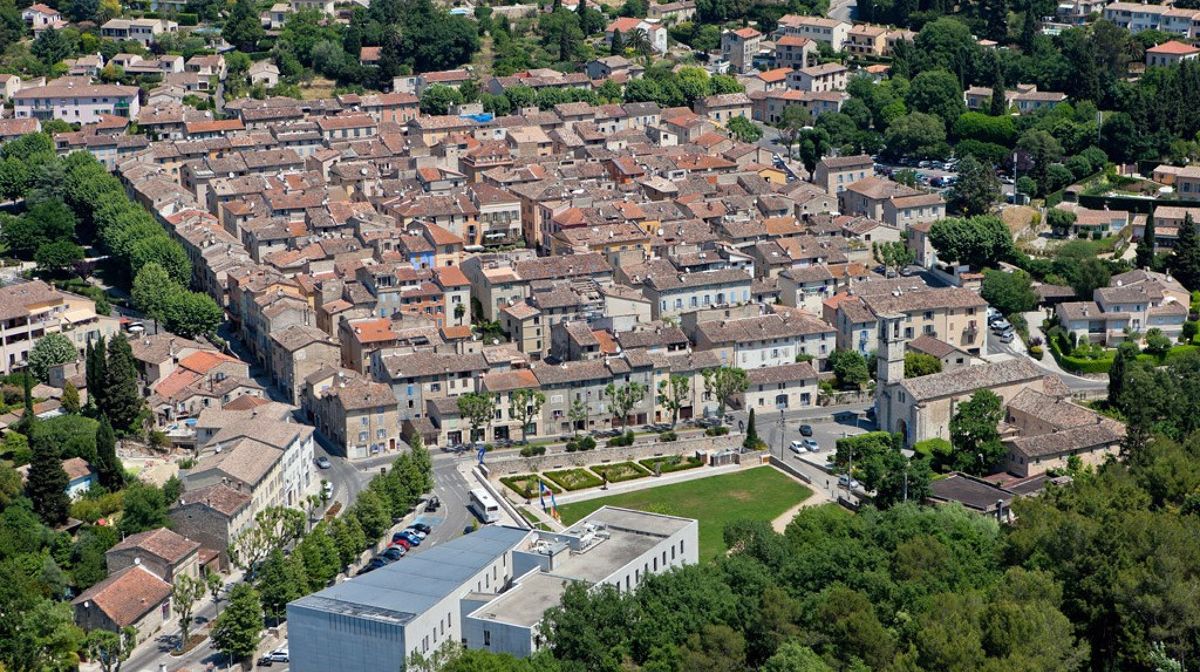
Valbonne is a much larger and more varied commune than its historic village might suggest. The old centre is relatively compact, but beyond it the landscape opens into residential neighbourhoods, wooded hills and the business and residential districts of Sophia Antipolis. The differences between these areas are considerable, particularly when it comes to walking distance to shops, access to schools, traffic and the amount of privacy a property offers.
Valbonne Village
The historic centre
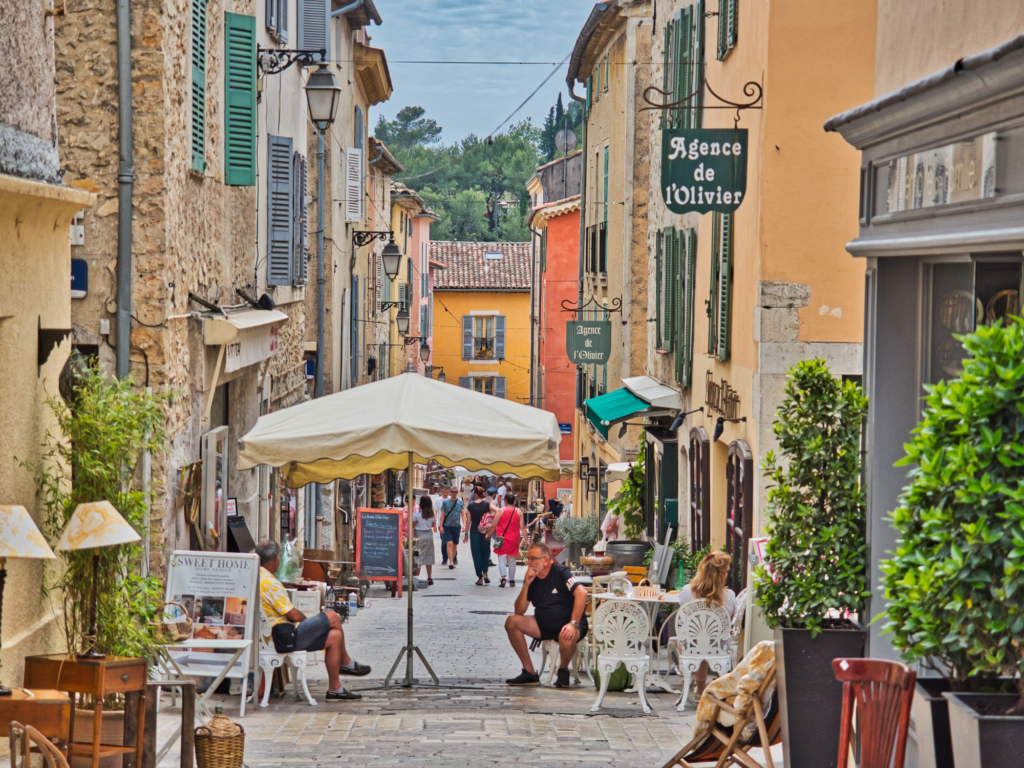
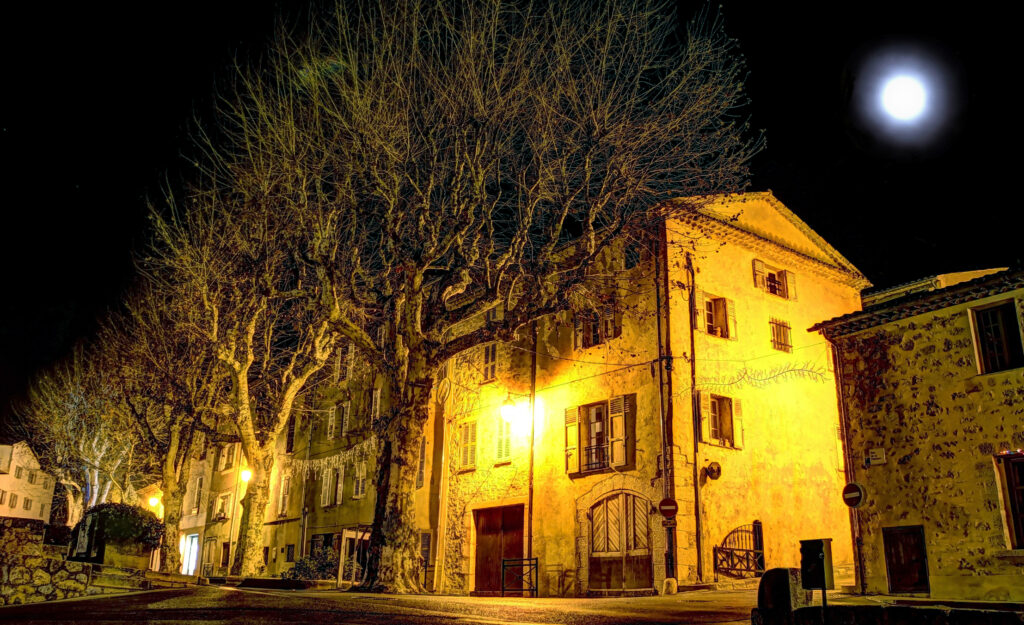
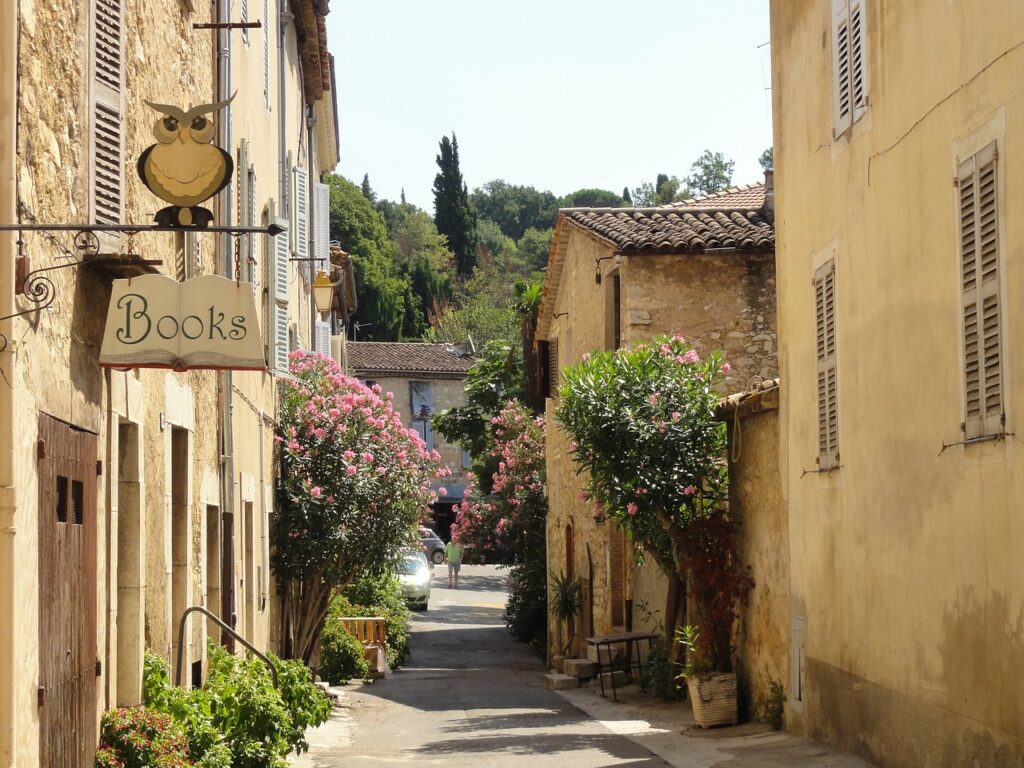
The old village is the most recognisable part of Valbonne, with its distinctive grid of narrow streets arranged around the Place des Arcades. The buildings are generally three or four storeys high, with colourful façades, wooden shutters and ground-floor shops or restaurants. The covered arcades around the main square give it a character quite different from the more irregular medieval villages found elsewhere in the region.
Living here means having practically everything on your doorstep. The bakery, cafés, restaurants, small shops and weekly market are all within a few minutes’ walk, and the centre remains active throughout the year. There is also a sizeable international community, although Valbonne has retained much of the atmosphere of a working Provençal village.
Properties in the historic centre are mainly apartments and traditional maisons de village, often arranged over several floors. Some have been extensively renovated, while others still have original staircases, exposed beams and the slightly irregular layouts typical of older buildings. Roof terraces are particularly attractive, although they are relatively uncommon.
The main compromises are parking, outside space and access. Many houses have steep internal staircases, and some apartments receive limited natural light because of the narrow streets. Anyone considering a property in the centre should also pay attention to its exact location. An apartment overlooking the Place des Arcades has a wonderful view of village life, but restaurants and evening activity inevitably bring some noise, particularly in summer.
Around the village centre
Walkable residential Valbonne
Immediately outside the historic centre, Valbonne becomes more residential. Along the roads leading towards Opio, Mouans-Sartoux and Sophia Antipolis, there are smaller apartment buildings, townhouses, individual villas and established residential developments. Some are within an easy walk of the village, which makes this area particularly attractive for permanent living.
The advantage is being able to combine the space and practical facilities of a more modern property with the restaurants and shops of the old centre. Depending on the location, houses may have private gardens, swimming pools and garages, while apartments are more likely to offer terraces and dedicated parking than those in the historic streets.
Walking distance is worth checking rather than assuming. A house may appear very close to the village on a map, but the route can involve a busy road, a steep climb or a stretch without a comfortable pavement. For buyers who specifically want to walk into Valbonne for dinner, the precise address can make a considerable difference.
This is often a good compromise for families or couples who want a garden and some privacy without feeling isolated from village life.
Île Verte
The residential areas around Île Verte offer a different side of Valbonne, with individual villas, gardens and a much greener setting than the village centre. The roads wind through established neighbourhoods where mature trees and substantial vegetation often provide privacy between neighbouring properties.
Housing here consists largely of detached villas, ranging from older Provençal houses to renovated family homes and more contemporary properties. Gardens and swimming pools are common, and the residential atmosphere is generally quiet, although this varies according to proximity to the main roads.
The appeal is space and greenery, with the village and the surrounding towns still accessible by car. Properties can feel surprisingly secluded, particularly where gardens back onto wooded land. That same vegetation, however, can limit sunlight during parts of the day, and the orientation of a house deserves careful attention.
For buyers looking at larger plots, it is also important to distinguish between the total land area and the amount of garden that can comfortably be used. Some properties have sloping or densely wooded sections, which provide privacy but are not necessarily suitable for a lawn, play area or additional outdoor facilities.
Les Clausonnes
Towards Sophia Antipolis, the character of Valbonne changes considerably. The landscape remains green, but the proximity of offices, research centres, schools and major connecting roads becomes more apparent. Around Les Clausonnes and the adjoining residential areas, convenience and access often matter as much as traditional village atmosphere.
This part of the commune is particularly practical for people working in Sophia Antipolis or travelling regularly towards Antibes and the A8. Depending on the exact location, the commute can be considerably easier than from a villa on the other side of Valbonne.
The housing is varied, with individual villas, residential developments and apartment buildings. Some neighbourhoods are pleasantly wooded and established, while others are closer to busy roads or commercial activity.
Traffic is an important consideration here. Sophia Antipolis has a substantial working population, and the main roads can become congested during school and office commuting hours. A property that seems exceptionally convenient on a Sunday afternoon may feel rather different at eight o’clock on a weekday morning.
Garbejaïre
A residential neighbourhood within Sophia Antipolis
Garbejaïre is one of the most distinctive parts of the commune because it developed alongside Sophia Antipolis rather than around the historic village. It has its own shops, services, schools and residential buildings, and functions as a neighbourhood in its own right.
The architecture is more modern and the atmosphere more suburban than in Valbonne Village. Apartment buildings and planned residential developments are common, with greenery incorporated into the neighbourhood. For people working in Sophia Antipolis, this can be a practical place to live, particularly when everyday convenience is more important than owning a traditional Provençal house.
Garbejaïre also reflects the international character of the technology park. Its residents include professionals and families from many different countries, and the surrounding area has developed services and facilities to support that population.
For property buyers, it offers a different market from the villa neighbourhoods around Valbonne. Apartments are more prevalent, and access to employment, schools and local services is often the main attraction. The historic village is a drive away, however, and Garbejaïre should not be confused with living in the centre of Valbonne.
The countryside
Towards Opio and Châteauneuf-Grasse
To the north and west of Valbonne, the landscape gradually becomes more rural as the roads lead towards Opio and Châteauneuf-Grasse. Villas sit among olive trees, woodland and established gardens, and the density of development is generally lower than closer to Sophia Antipolis.
This is the part of the area that often appeals to buyers looking for a traditional Provençal property, a larger garden or a quieter setting. Older houses may have substantial plots, while more recent villas can offer modern living space without losing the feeling of being in the countryside.
The distinction between communes is worth keeping in mind. Properties advertised as being in the Valbonne area may actually be in Opio, Châteauneuf-Grasse or Mouans-Sartoux. These are all attractive places to live, but local planning rules, school arrangements, property taxes and journey times can differ.
For anyone who enjoys the countryside and does not need to walk into the village every day, these surroundings can be very appealing. The trade-off is greater dependence on the car, particularly for shopping, school runs and evening activities.
Property in Valbonne
The property market in Valbonne is quite different from that of the coastal towns. Although the village lies only a short distance inland from Cannes and Antibes, buyers generally come here for a different type of home: more living space, a garden, a swimming pool and a quieter residential setting. The historic centre has its own appeal, but much of the market consists of villas spread across the wooded hills surrounding the village.
Valbonne has a particularly strong international market, partly because of its proximity to Sophia Antipolis. The technology park has attracted professionals and families from across Europe and beyond, creating consistent demand for homes suitable for permanent living. International schools, access to employment and the possibility of having a substantial family home without moving too far inland all contribute to the area’s popularity.
In the historic village, properties are mainly apartments and traditional maisons de village. These can be particularly attractive to buyers who enjoy the atmosphere of the Place des Arcades and want restaurants, cafés and shops within walking distance. Renovated village houses sometimes offer surprisingly generous accommodation over several floors, although private gardens are rare and parking can be difficult. Roof terraces are highly desirable, especially where they provide an open view over the rooftops.
Immediately outside the old centre, the choice becomes more varied. There are smaller apartment residences, townhouses and detached houses, some within comfortable walking distance of the village. This is an interesting area for buyers who want the convenience of village life but would prefer a garden, private parking or a more modern layout. Properties that combine these advantages are particularly sought after, and walking distance to the centre can have a noticeable influence on value.
The largest part of Valbonne’s residential market consists of villas. These range from relatively modest family houses on smaller plots to substantial Provençal properties and contemporary homes with extensive gardens and swimming pools. Mature trees and established vegetation often provide considerable privacy, and many neighbourhoods have a pleasantly green character. Unlike the coastal hills around Cannes or Nice, panoramic sea views are not the main attraction here. Buyers are generally looking for space, tranquillity and an attractive garden rather than a dramatic view of the Mediterranean.
The age and condition of villas vary considerably. Many properties were built during the period when Sophia Antipolis expanded and Valbonne became increasingly popular with international families. Some have since been extensively renovated, while others retain their original layouts, building services and energy performance. A house that appears spacious on paper may still require substantial investment to meet current expectations, particularly when it comes to insulation, heating, cooling and the relationship between indoor and outdoor living areas.
Gardens deserve particular attention. Valbonne is greener than much of the immediate coastline, and mature pine trees, oaks and other vegetation are part of its appeal. They can also create considerable shade, particularly during winter, and require regular maintenance. In wooded locations, buyers should examine drainage, the condition of retaining walls where relevant and the applicable vegetation-clearing obligations intended to reduce wildfire risk. A large plot is not necessarily entirely usable, and the possibilities for extending a house or adding a swimming pool depend on the local planning regulations rather than simply on the amount of available land.
Access is another important consideration. Some of the most attractive villas are reached by narrow residential roads, while others are conveniently located near the main routes towards Sophia Antipolis, Mougins or the A8. The latter can be an advantage for commuting, but traffic noise and congestion vary significantly between locations. It is worth visiting a property at different times of day, especially if the journey to work or school is an important part of the decision.
For families, the choice of school often influences the choice of neighbourhood. Valbonne and its surroundings offer access to French and international education, but travelling times should not be underestimated. A villa that is only a few kilometres from a school may still involve a surprisingly long drive during the morning rush hour, particularly on roads serving Sophia Antipolis.
There is also an important distinction between properties actually situated in the commune of Valbonne and those marketed as being in the wider Valbonne area. Houses in neighbouring Opio, Châteauneuf-Grasse, Mouans-Sartoux and Roquefort-les-Pins may offer a similar environment, sometimes with larger plots or a more rural setting. They can be excellent alternatives, but the practical implications of the location, including schools, access and planning regulations, should be considered separately.
Valbonne is therefore a market where the exact location of a property matters at least as much as its size or architectural style. A renovated house within walking distance of the village offers a very different lifestyle from a secluded villa in the surrounding hills or an apartment close to Sophia Antipolis. All three have their own advantages, and understanding those differences is essential when deciding where to buy.
To Do
Valbonne is a place where much of the pleasure comes from everyday life rather than major tourist attractions. The historic village is certainly worth exploring, but the surrounding countryside, walking routes and neighbouring villages are just as much part of its appeal. Its position between the coast and the hills also makes it a convenient starting point for discovering a quieter side of the Côte d’Azur.
old village and Place des Arcades
The historic centre of Valbonne is unusual for this part of Provence. Rather than developing around a hilltop castle, the village was laid out in a regular grid during the sixteenth century, with streets crossing at right angles around the central Place des Arcades. The result is a remarkably harmonious collection of narrow streets, stone houses and small squares that is easy to explore on foot.
The Place des Arcades is the natural centre of village life. Its covered walkways shelter cafés, restaurants and shops, while the open square provides space for terraces and occasional events. It is a pleasant place to spend an hour over coffee or lunch, particularly outside the busiest summer weeks when the village feels more relaxed.
It is worth wandering beyond the main square. The surrounding streets have small boutiques, galleries, old doorways and beautifully restored façades, but also ordinary houses where people have lived for generations. Valbonne is popular with visitors, yet it remains a residential village rather than a centre devoted entirely to tourism.
Friday market
Friday is market day in Valbonne, when stalls spread through the village centre and the streets become noticeably busier. The market brings together fresh produce, cheeses, olives, flowers, clothing and a variety of regional products, attracting both residents and visitors from the surrounding area.
It is one of the best mornings to experience the social side of Valbonne. People come to do their shopping, meet friends and stop for coffee, while the cafés and restaurants around the square benefit from the extra activity. The market is popular throughout the year, although summer brings considerably more visitors.
If you are coming by car, arriving early is sensible. Parking becomes more difficult as the morning progresses, particularly close to the historic centre.
abbey of Valbonne
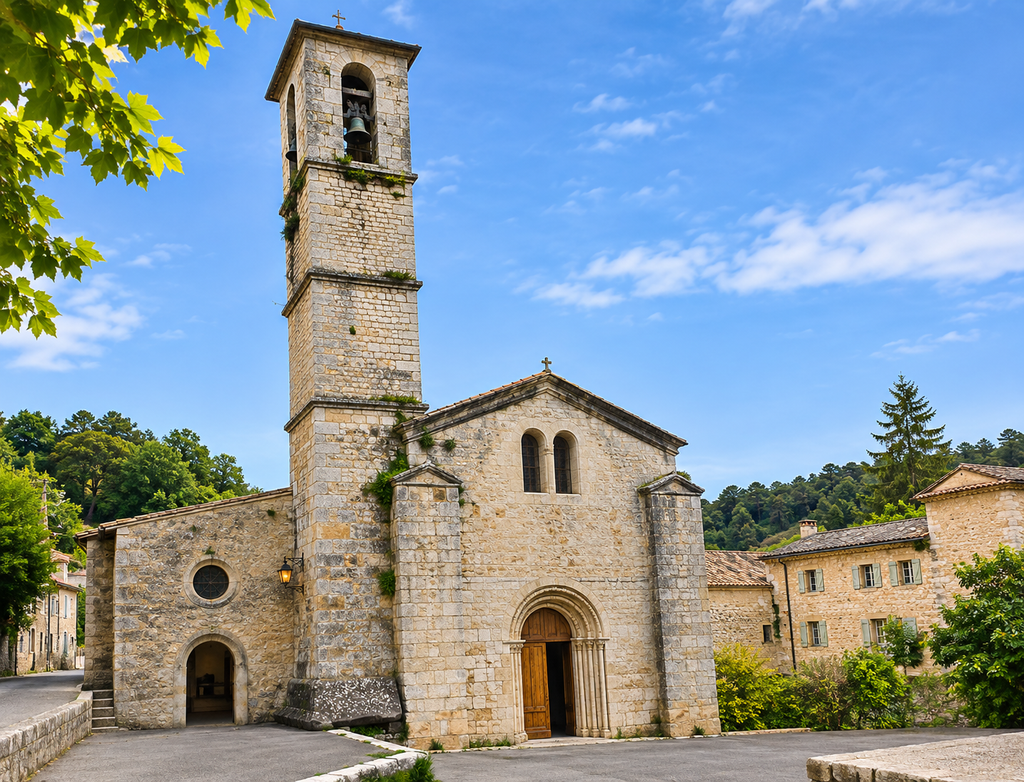
The origins of Valbonne are closely connected to the former Chalaisian abbey, established in the twelfth century. The abbey church and surviving monastic buildings stand beside the historic village and provide a reminder that this was a religious settlement long before the streets and houses of the present centre were laid out.
The church of Saint-Blaise is particularly interesting for its restrained Romanesque architecture. Its simple stone construction is very different from the colourful village buildings nearby and reflects the austere traditions of the monastic community that originally occupied the site.
The abbey also helps explain an unusual aspect of Valbonne’s history. Unlike many Provençal villages that developed gradually over centuries, the present village was deliberately established on land associated with the former monastery. The relationship between the abbey and the planned settlement is still clearly visible today.
the Brague
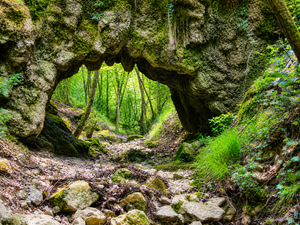
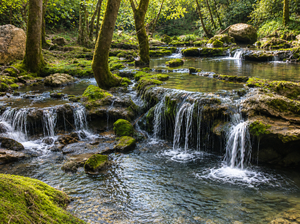
The River Brague flows through the wooded countryside between Valbonne and Biot, creating one of the most attractive natural areas in this part of the Alpes-Maritimes. The landscape is surprisingly lush, with oak trees, dense vegetation and stretches of river running between moss-covered rocks.
Walking paths follow parts of the valley, including the well-known route between Valbonne and Biot. The longer walk takes several hours and passes through woodland that feels quite removed from the busy roads and residential developments nearby. Shorter walks are also possible, depending on where you start.
The paths can be muddy and slippery after rain, and sections close to the river may become unsafe during or after heavy rainfall. It is worth checking local access restrictions and weather conditions before setting out, particularly following storms.
For residents, the Brague valley is one of Valbonne’s great advantages. Having this kind of countryside so close to home makes walking a regular part of life rather than something that requires a long drive into the mountains.
neighbouring villages
Valbonne is well placed for exploring several of the smaller villages in the hills behind Cannes and Antibes. Each has a rather different character, and all are close enough for an easy morning or afternoon outing.
Biot is particularly known for its glassmaking tradition, ceramics and old village streets. Its historic centre is compact and attractive, with workshops and galleries that reflect its long association with crafts and artists.
Mougins has a more polished atmosphere, with galleries, restaurants and a long connection with the art world, including Picasso, who spent the final years of his life there. Its hilltop position also offers views across the surrounding countryside.
Opio and Châteauneuf-Grasse are quieter alternatives, surrounded by olive groves and residential countryside. They are particularly interesting for anyone exploring the wider area with a view to buying a property, as the differences between these neighbouring communes are often more apparent once you spend time in them.
the coast
One of the advantages of Valbonne is that the Mediterranean remains relatively close, even though everyday life takes place inland. The beaches around Antibes, Juan-les-Pins and Cannes are all within driving distance, giving residents a choice between sandy beaches, rocky coves and more developed seaside areas.
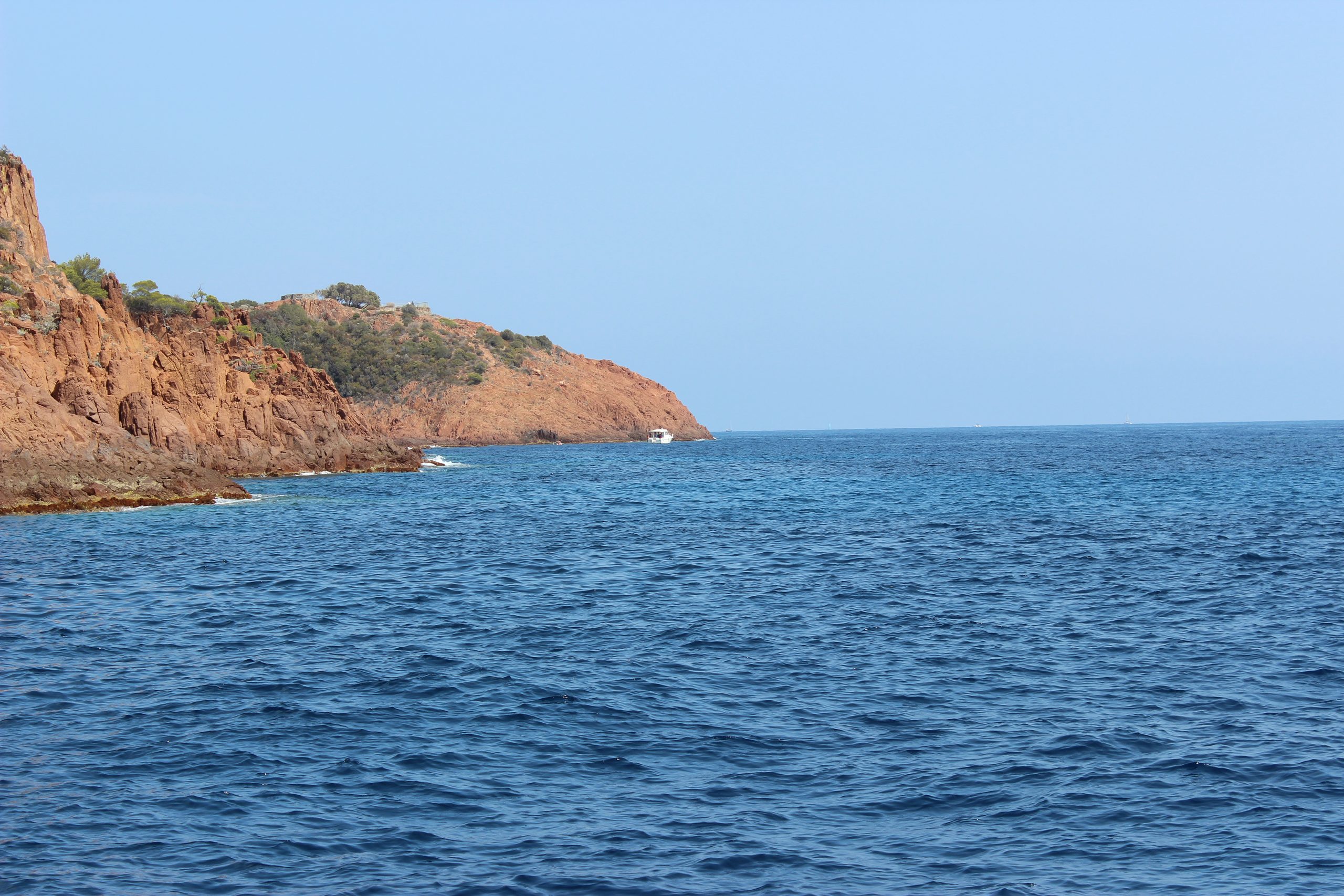
Antibes is particularly useful for a day by the sea, with its old town, harbour and beaches around Cap d’Antibes. Cannes offers a different atmosphere, especially along the Croisette, while the coastline towards Théoule-sur-Mer becomes increasingly dramatic as the red rocks of the Estérel approach the Mediterranean.
The practical consideration is traffic. During summer, a journey that seems straightforward on the map can take considerably longer, especially when travelling towards the beaches at weekends. Valbonne works best for people who enjoy having the coast nearby but are comfortable with the fact that visiting it generally involves getting into the car.
Facts
Department: Alpes-Maritimes (06)
Region: Provence-Alpes-Côte d’Azur
Population: Approximately 13,000 inhabitants
Area: 18.97 km²
Altitude: Approximately 170–300 metres, depending on location
Location: Inland between Cannes, Antibes and Grasse
Distance to Cannes: Approximately 13 km
Distance to Antibes: Approximately 15 km
Distance to Nice Airport: Approximately 25 km
Nearest motorway: A8, accessible via several junctions
Railway station: No station in Valbonne; nearby stations include Mouans-Sartoux and Antibes
Market day: Friday morning
Known for: Place des Arcades, historic village, former abbey and Sophia Antipolis
Landscape: Wooded hills, residential countryside and the Brague valley
Climate: Mediterranean, with generally warmer summer days and cooler winter nights than directly on the coast
Distances are approximate and depend on the starting point within the commune.
History
From a medieval abbey to a Provençal village
Valbonne has a rather different history from many of the hilltop villages of the Alpes-Maritimes. Its historic centre was not built around a medieval castle or developed gradually along the contours of a rocky hillside. Instead, the village owes its distinctive appearance to a sixteenth-century decision to establish a new settlement beside a much older monastery.
The story begins in the twelfth century, when monks belonging to the Order of Chalais established an abbey in the wooded countryside between the coast and Grasse. The name Valbonne comes from the Latin Vallis Bona, meaning “good valley”, a reference to the fertile and sheltered land surrounding the monastery. The monks cultivated the land and managed the surrounding estate, but the religious community eventually declined, and the abbey passed into the hands of the Abbey of Lérins.
A village built according to a plan
The decisive moment in Valbonne’s history came in 1519, when Augustin de Grimaldi, Bishop of Grasse and Abbot of Lérins, initiated the creation of a new village on the former monastic lands. At the time, parts of the surrounding countryside had suffered from depopulation and economic decline, and establishing a permanent community was a way of bringing the land back into productive use.
Unlike the older fortified villages nearby, Valbonne was laid out according to a regular geometric plan. Streets intersected at right angles, forming a grid of rectangular blocks around a central square. This type of planned settlement was unusual in the immediate region and gives Valbonne a character that remains clearly recognisable today.
The Place des Arcades became the commercial and social heart of the new village, surrounded by houses with covered galleries at ground level. The arcades provided sheltered space for trade and everyday activity, a purpose they continue to serve, although restaurants and cafés have largely replaced the original merchants.
The village gradually developed into a community of farmers, craftsmen and traders. Agriculture was central to the local economy, with olives, vines and other crops cultivated in the surrounding countryside. Valbonne remained a relatively modest rural settlement for centuries, its position inland keeping it largely removed from the rapid changes that would later transform the Mediterranean coastline.
Centuries of agricultural life
For much of its history, Valbonne remained a farming community. Olive trees and vineyards dominated the surrounding land, while roses and jasmine were cultivated for the perfume industry centred on nearby Grasse. Life was relatively hard, and the village’s position away from the main coastal routes meant that it developed slowly compared with the towns along the Mediterranean.
One particularly unusual local speciality was the Servan grape, a late-ripening variety that could be kept fresh for months by placing the stems of harvested bunches in jars of water. Cultivation expanded in the early twentieth century, and although production has almost disappeared, Valbonne still preserves the tradition through its municipal vineyard and the annual Saint-Blaise celebrations.
The transformation of the twentieth century
Valbonne began to change more substantially after the Second World War. The population increased, agriculture gradually declined and improved roads made the countryside behind Cannes and Antibes more accessible. Land that had once been used for farming was increasingly developed with villas, attracting families who wanted more space than the expanding coastal towns could offer.
The greatest transformation, however, came with the creation of Sophia Antipolis in 1969. Conceived by Pierre Laffitte as a centre for scientific research, technology and education, it developed into an internationally important technology park across the wooded plateau north of Antibes, including part of the commune of Valbonne.
Its influence went far beyond employment. Researchers, engineers and professionals arrived from different countries, followed by international schools, services and new residential neighbourhoods. Valbonne’s population and housing market changed accordingly, creating the unusual combination that defines the commune today: a traditional Provençal village surrounded by an international residential and technological community.
The contrast is particularly visible when walking through the old centre. The street plan established in 1519 remains remarkably intact, and the former abbey still stands beside the village, while only a short distance away Sophia Antipolis represents an entirely different period of development. Valbonne has managed to accommodate both, which helps explain why it feels quite different from many of the other historic villages in the hills above the Côte d’Azur.
Trivia
When Duran Duran came to Valbonne
In the early 1980s, the British band Duran Duran was becoming one of the biggest names in pop music. Their third album, Seven and the Ragged Tiger, released in 1983, was recorded partly in the south of France, at a time when the band was enjoying enormous international success.
According to accounts associated with the property, the musicians used Domaine de La Sylviane, a historic estate near the centre of Valbonne, as a base during their time in the region. The estate, with its Provençal architecture, gardens and privacy, was rather different from the recording studios and concert venues normally associated with the band.
In 2026, La Sylviane returned to the headlines when the estate was offered for sale, and its reported connection with Duran Duran became part of the property’s story.
A village that survived an invading army
There is also a much older story worth considering. During the Italian Wars, the armies of Emperor Charles V devastated parts of Provence in 1536–1537. Valbonne, however, reportedly escaped destruction because it belonged to the Church through the Abbey of Lérins. Local historical accounts suggest that the imperial troops respected its ecclesiastical status and spared the settlement.
For a village that had only been established in 1519, this was a remarkably fortunate beginning. It had barely had time to develop before war swept through the surrounding region.
Château de la Napoule looks old enough to have survived intact since medieval times. It didn’t. Much of what visitors see is Henry and Marie Clews’ twentieth-century interpretation of what their château should be. Purists might raise an eyebrow. We rather like that about it.
The grapes that could be kept until Easter
One of Valbonne’s more unusual agricultural traditions involved the Servan, a late-harvest table grape that became a local speciality. Growers developed a method of preserving the grapes by placing the cut stems in individual containers of water, allowing the bunches to remain fresh for several months after harvesting. At a time when fresh fruit was generally seasonal, this was a remarkable achievement. The grapes could sometimes be enjoyed as late as Easter, long after the harvest had ended. The tradition is still remembered locally, and a small municipal vineyard helps preserve this part of Valbonne’s agricultural heritage.
Who is Valbonne for?
Valbonne is particularly attractive to people who want to live on the Côte d’Azur but prefer the atmosphere of a Provençal village and the greenery of the surrounding countryside to the busy coastal towns. It offers a combination that is not always easy to find in this region: an attractive historic centre with restaurants, shops and a lively social life, alongside residential neighbourhoods where villas with gardens and swimming pools are a substantial part of the housing market.
For families, Valbonne has several advantages. The presence of Sophia Antipolis has brought an international population to the area, and there is a good choice of French and international education in Valbonne and the surrounding communes. Many families settle here for precisely this combination of schools, employment and residential space. Children can grow up in a relatively green environment, while parents remain within reach of the coast, Nice Airport and the main employment centres around Sophia Antipolis, Antibes and Cannes.
Valbonne also appeals to people who enjoy village life but do not necessarily want to live in an isolated rural setting. The historic centre has a good selection of restaurants and cafés, a popular weekly market and enough activity throughout the year to make it an enjoyable place to spend time. For someone who works from home, is semi-retired or spends several months a year in France, having this kind of social life nearby can be particularly appealing.
The location of the property is important, however. Living in the old village, where you can walk to the bakery and restaurants, is very different from living in one of the residential neighbourhoods several kilometres away. Many villas offer considerable privacy, but everyday errands generally involve a car. Buyers who imagine strolling into the village every morning should therefore pay particular attention to the actual walking route rather than simply the distance on a map.
For those who enjoy outdoor activities, the surrounding countryside is another attraction. The wooded valleys, walking trails and quieter roads around Valbonne provide plenty of opportunities for walking and cycling. The landscape is softer and greener than the dramatic coastal hills around Èze or La Turbie, with fewer steep climbs and more sheltered residential areas. It is particularly pleasant for people who enjoy spending time outdoors without necessarily wanting to live in the mountains.
Valbonne is also a good choice for buyers who prefer a traditional Provençal villa to a contemporary apartment overlooking the Mediterranean. The local housing market offers a wide range of detached houses, often with established gardens, terraces and swimming pools. Sea views are relatively uncommon, and properties are generally valued more for their setting, privacy, condition and proximity to the village or schools. Buyers whose priority is a panoramic Mediterranean view will usually find more suitable locations closer to the coast.
There are some practical disadvantages to consider. Valbonne has no railway station, and although public transport connects parts of the commune with neighbouring towns, most residents depend on a car. Traffic around Sophia Antipolis can be heavy during commuting hours, and journeys to the beaches take longer in summer. The wooded environment also means that some houses receive less winter sunshine than their gardens might suggest, while maintaining a large plot can require considerable work
Valbonne or Mougins?
Compared with nearby Mougins, Valbonne generally feels more like a traditional village with an established everyday community, although both offer attractive villa neighbourhoods and access to the coast. Mougins is particularly convenient for Cannes and has a strong association with art and gastronomy, while Valbonne’s connection with Sophia Antipolis gives it a somewhat different international character.
Valbonne or Biot?
Biot is another interesting alternative, especially for buyers who want a historic village closer to Antibes and the Mediterranean. Its old centre is smaller and more irregular than Valbonne’s, and the surrounding residential areas have their own distinctive character. Opio and Châteauneuf-Grasse, meanwhile, offer a quieter and often more rural environment, with olive groves, larger plots and a stronger sense of being in the Provençal countryside.
The essence of Valbonne
For buyers who want to be able to walk to the beach, enjoy a harbour or rely on trains for everyday transport, Valbonne is probably not the most suitable choice. Antibes, Cannes or one of the smaller coastal towns would make more sense. But for those who value a garden, a lively village, international schools and the possibility of living in a greener and more spacious environment, Valbonne is a very appealing residential area in the hills behind the Côte d’Azur.