

About MANDELIEU
Mandelieu-la-Napoule is not a place that necessarily wins you over at first sight.
Arrive from Cannes along the main road and there are roundabouts, apartment buildings, shops, supermarkets and plenty of traffic. It is practical, certainly, but not exactly the image most people have in mind when they start looking for a home on the Côte d’Azur. Then turn towards La Napoule!
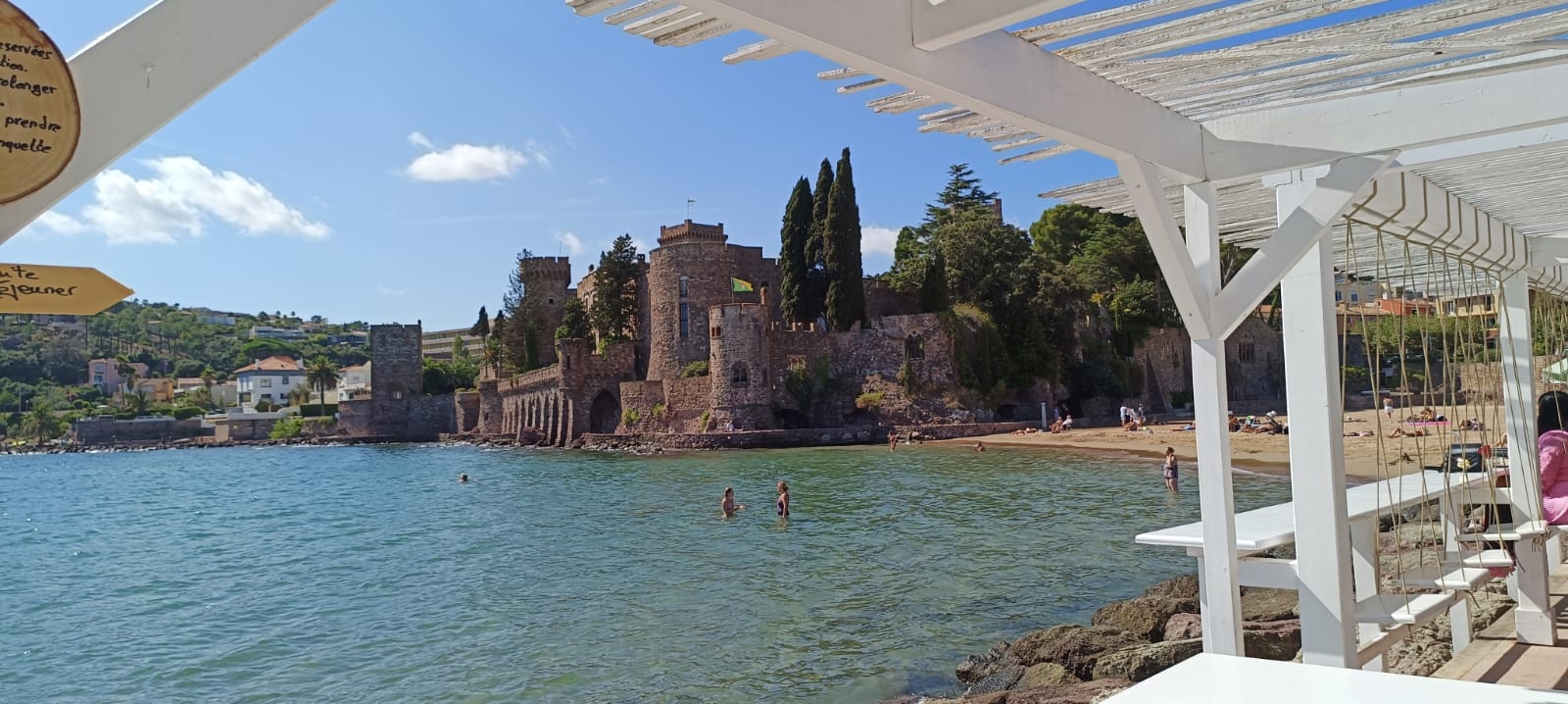
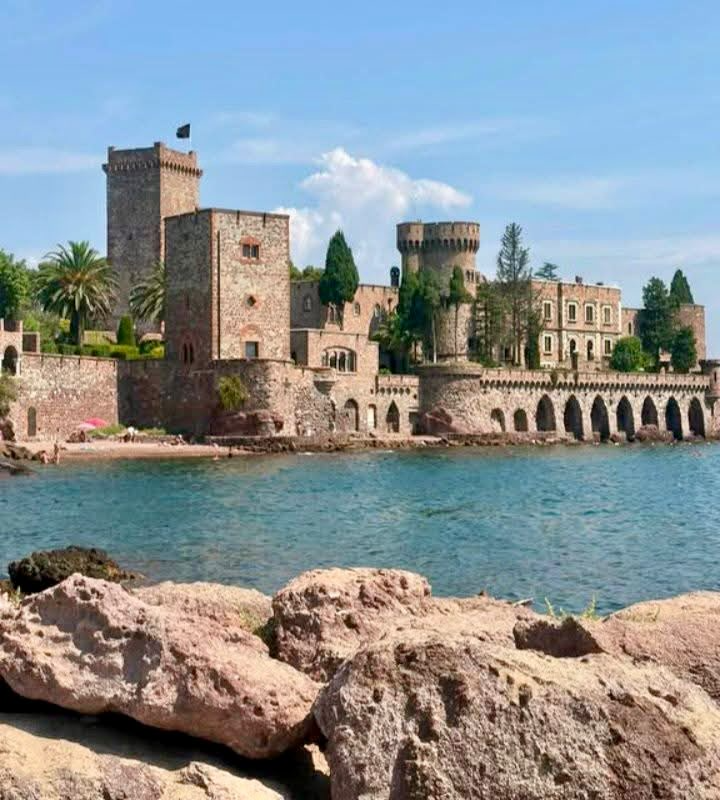
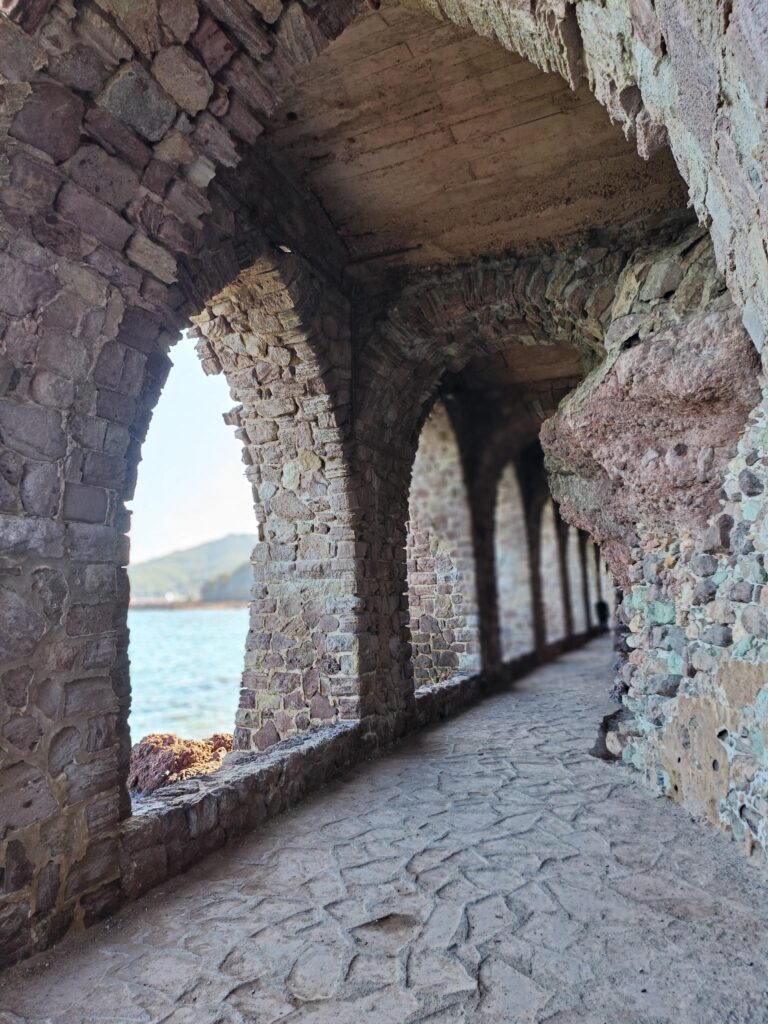
The road reaches the sea, the red rocks of the Estérel appear in the distance, there are boats everywhere and the Château de la Napoule sits almost improbably at the water’s edge. Behind it are a small sandy beach, restaurants, a handful of streets and the railway station. Suddenly Mandelieu makes much more sense.
That contrast is important, because Mandelieu-la-Napoule is spread out. There isn’t one centre around which everything revolves. There is Mandelieu itself, the older village of La Napoule by the sea, Capitou further inland, the Siagne running through town, several marinas and golf courses, and residential neighbourhoods climbing the hills behind. For someone buying here, where you are within Mandelieu matters enormously. The attraction is space, views, green and the sea.
Compared with Cannes, just a few kilometres away, Mandelieu feels much less urban. The hills of the Estérel begin on its western side and the Tanneron rises behind it. Umbrella pines and mimosa cover the slopes, while the Siagne and the golf courses create surprisingly green corridors through the town. There are also seven ports. Boats are not just decoration here; they are part of the place.
Mandelieu won’t suit everyone. If your ideal second home means walking downstairs into a beautiful old town filled with boutiques and restaurants, look at Antibes or Cannes instead. If you want nightlife, you will probably end up driving into Cannes.
But if the idea is a villa with a view and a garden, an apartment overlooking a marina, golf nearby, a boat within walking distance or simply more room around you, Mandelieu becomes is very interesting. And Cannes is just around the corner.
Between Cannes and the Estérel
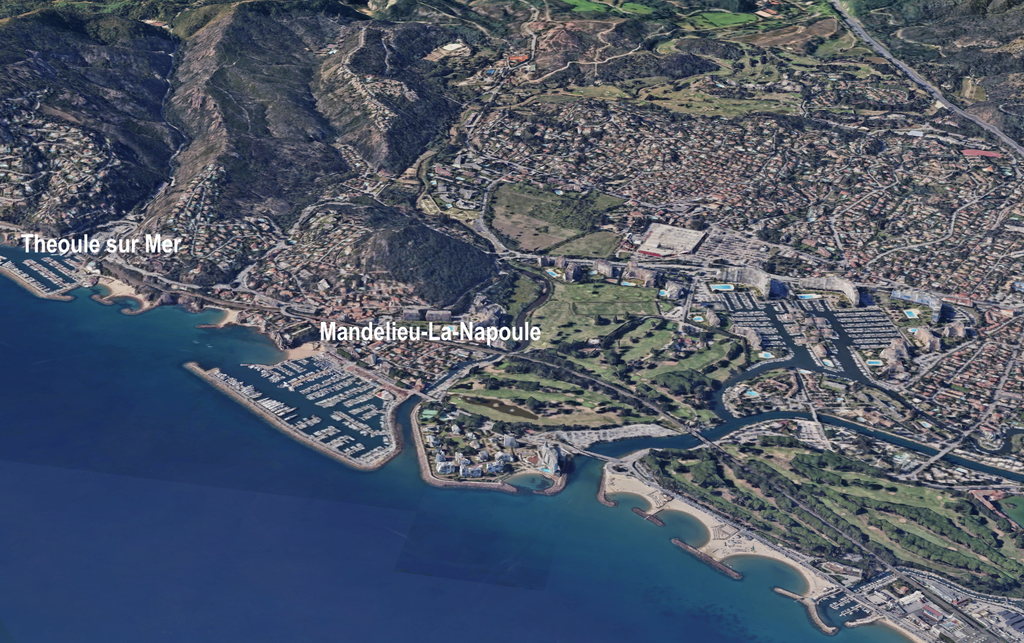
Mandelieu occupies an interesting position at the western end of the Bay of Cannes. Cannes is immediately to the east. Théoule-sur-Mer begins just beyond La Napoule to the west, and from there the landscape changes dramatically as the red volcanic rock of the Massif de l’Estérel reaches the Mediterranean. That transition is one of the pleasures of living here.
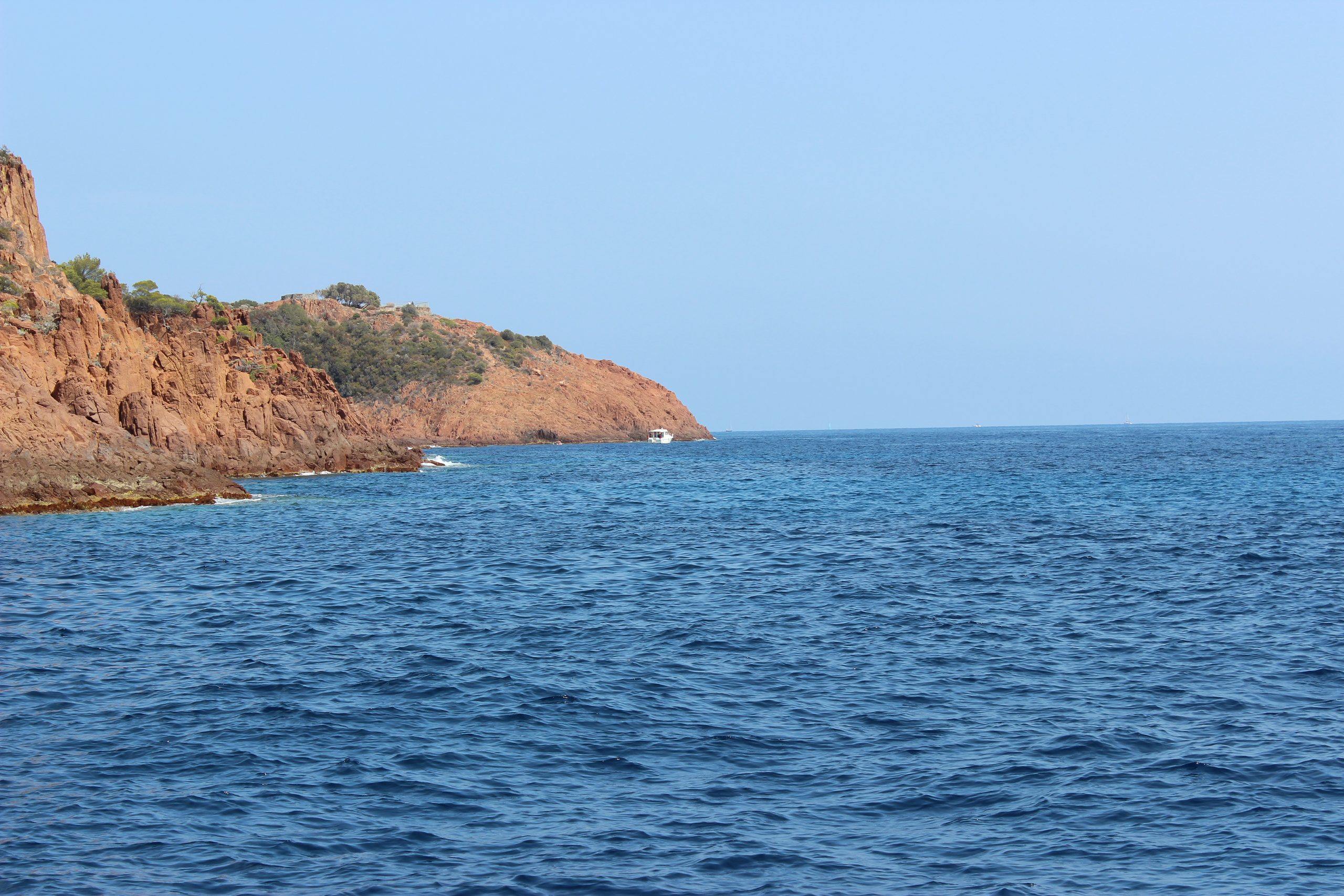
Drive ten minutes east and you can be in Cannes. Drive west and within minutes you are on the Corniche d’Or, with red cliffs dropping into intensely blue water and small rocky coves below.
Head north instead and you are quickly in the Tanneron hills, particularly beautiful in winter when the mimosa is flowering.
The A8 motorway is nearby and Nice Côte d’Azur Airport is roughly 30–35 kilometres away, although journey times depend heavily on traffic. Mandelieu-la-Napoule also has a small airport, Cannes-Mandelieu, mainly used for private and business aviation.
La Napoule has its own railway station on the coastal line. This is useful, although the train is less central to everyday life here than it is in places such as Antibes, Beaulieu or central Cannes. In most of Mandelieu, a car makes life considerably easier.
What is everyday life like?
This depends very much on where you live.
In La Napoule, daily life can be surprisingly compact. You can walk to the beach, restaurants, bakery, château, port and train station. It feels more like a small seaside village than part of a town of more than 20,000 people.
Around Cannes Marina and the Siagne, the atmosphere is completely different. Large residential complexes overlook gardens, swimming pools, the river and marina basins. Boats move slowly between their moorings and the sea. It is very Riviera, but in a distinctly 1970s version of the Riviera.
Further inland, Mandelieu becomes an ordinary working French town. There are supermarkets, schools, sports facilities, medical services and all the things that rarely make it into holiday photographs but become rather important once you own a house here.
Up in the residential hills, life is quieter. Villas sit among pines and Mediterranean gardens, often with views across the bay, the Estérel or the surrounding hills.
One thing you notice quickly is how much outdoor life there is. Golf, boating, cycling, walking in the Estérel, beaches, running along the Siagne. This is not a town where the principal attraction is its historic centre.
And winter is not an afterthought. Mandelieu has a substantial permanent population, so restaurants may become quieter and the beaches empty, but the town continues to function. In January and February the mimosa starts flowering in the hills behind town, which is arguably when this part of the Côte is at its best.
Neigbourhoods
La Napoule
If we had to choose the part of Mandelieu with the most immediate charm, it would be La Napoule.
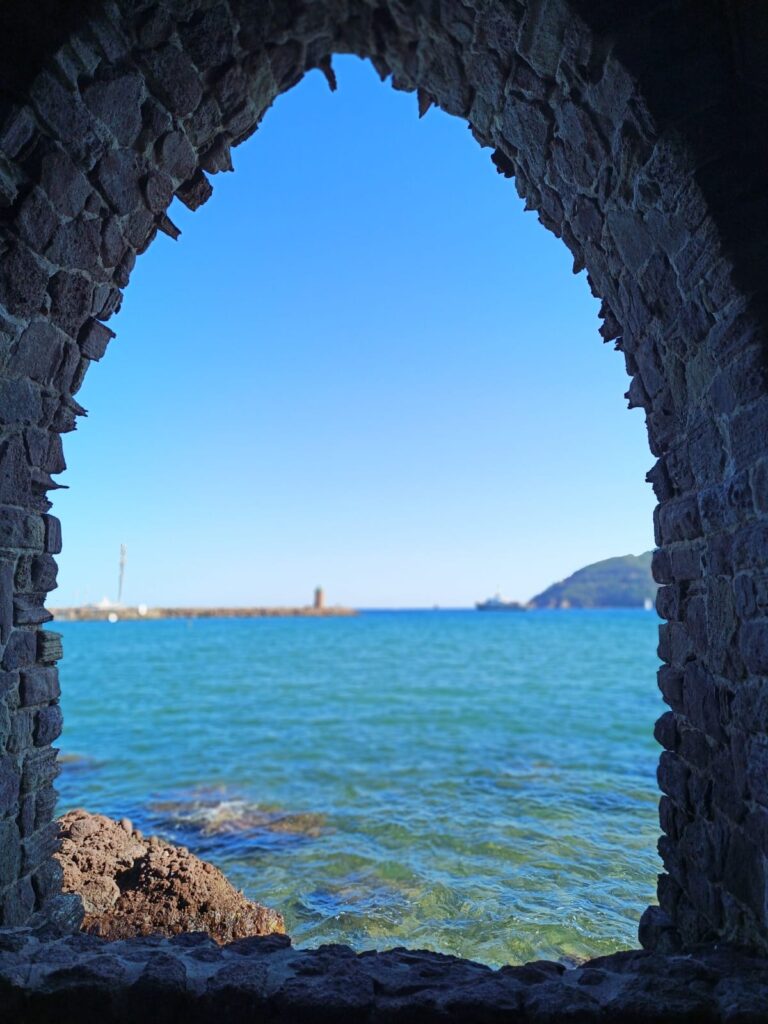
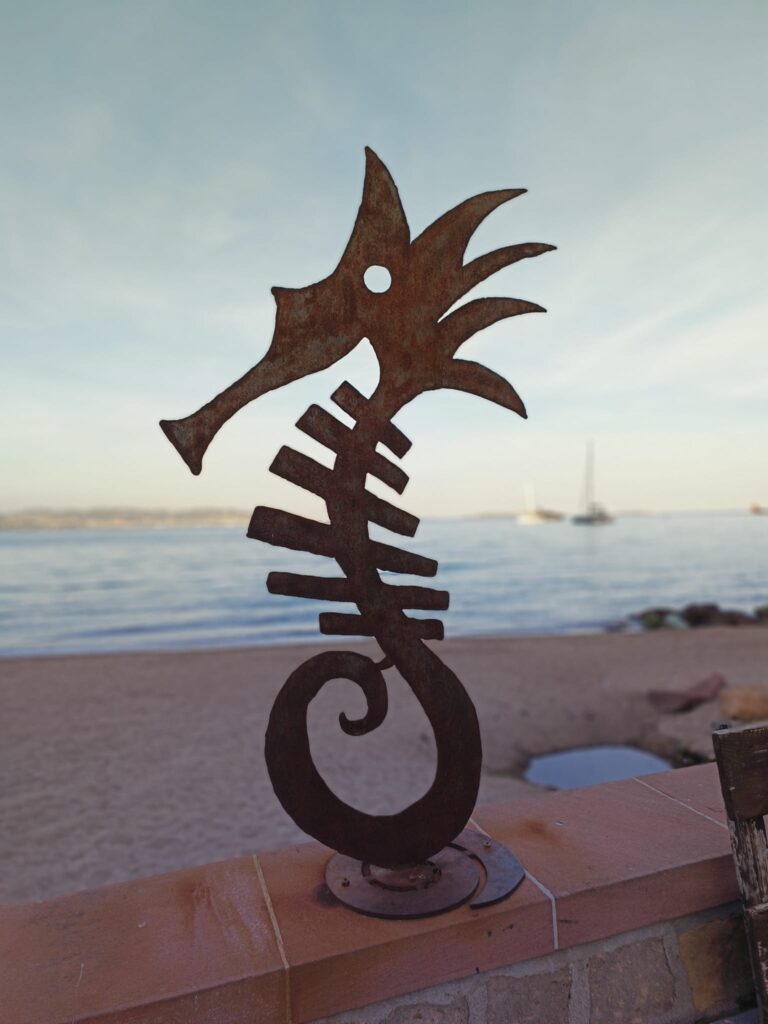
The old village sits directly beside the Mediterranean, between the port and the Château de la Napoule. It is small enough to walk around easily and has restaurants, terraces, a bakery, beaches and its own station. There is none of the scale of central Cannes here.
The Château dominates the waterfront, while the railway line runs just behind the village – something worth remembering when looking at property. The tracks are very close to some homes.
Housing is a mixture of apartments, older village properties and villas as you move away from the centre. La Napoule works particularly well for a second home because you can genuinely leave the car parked for much of the day. Have breakfast in the village, walk to the beach, take the coastal path, have lunch overlooking the port and catch the train to Cannes for dinner. It is also the gateway to Théoule and the Estérel, which gives it a rather different feel from the eastern side of the Bay of Cannes.
Cannes Marina and the Siagne
Cannes Marina is impossible to miss.
Built largely during the 1960s and 1970s, the development consists of substantial apartment residences set around landscaped grounds, swimming pools, waterways and marina basins.
Architecturally, opinions differ. Some people see large 1970s apartment blocks. Others walk onto a high terrace overlooking boats, palms, the Estérel and the sea and immediately understand the appeal. The apartments can offer something difficult to find elsewhere for the same budget: generous terraces, views, communal pools, landscaped grounds and, in some cases, a mooring close to home.
The Siagne runs through this part of Mandelieu before reaching the Mediterranean. Its banks have walking and cycling routes and are much greener than you might expect if your only experience of Mandelieu is the main commercial road.
For boat owners, this part of town deserves particular attention.
Minelle
Minelle sits between central Mandelieu and La Napoule and is largely residential.
It is a useful compromise.
You are close to the beaches and ports of La Napoule but also within easy reach of shops and the practical centre of Mandelieu. Apartments, residences and villas can all be found here.
Parts are green and quiet, and the area around the Old Course golf club adds considerably to that feeling.
For permanent residents who don’t necessarily need a sea view but want easy access to both coast and everyday amenities, Minelle is often worth a closer look.
Capitou
Capitou is older and more local.
Set inland at the foot of the Tanneron, it has retained something of its original village identity around its small centre. This is also the side of Mandelieu most closely associated with mimosa.
It feels removed from the marina developments and beach life around La Napoule.
Housing becomes more residential, with villas and smaller developments climbing towards the hills.
Capitou makes sense for people who value greenery, local life and access to the hinterland more than being able to walk to the beach.
Les Termes and the hills
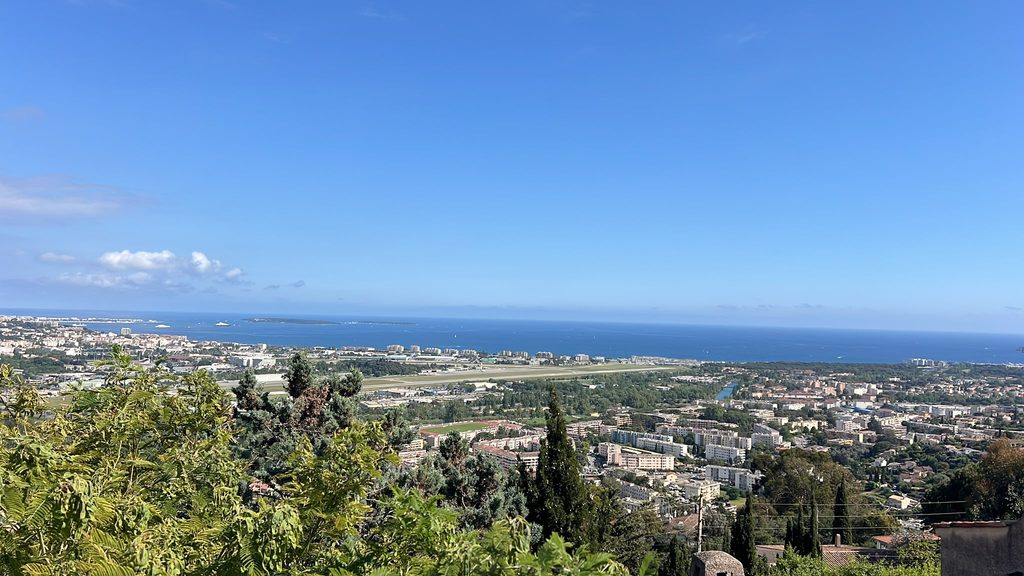
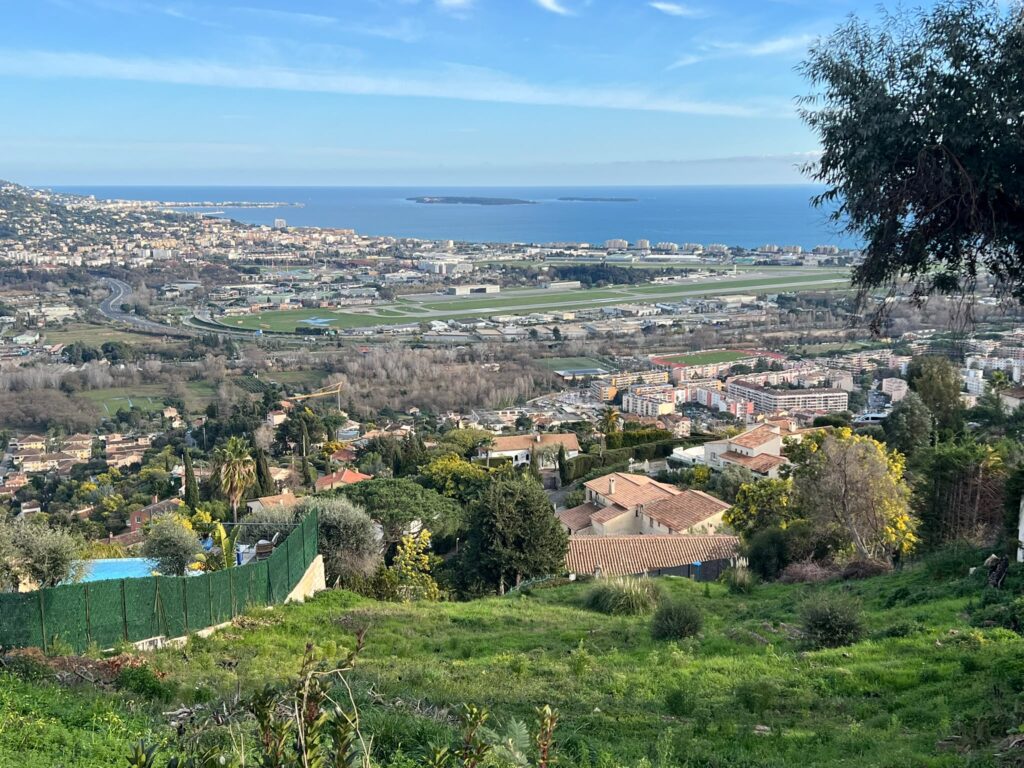
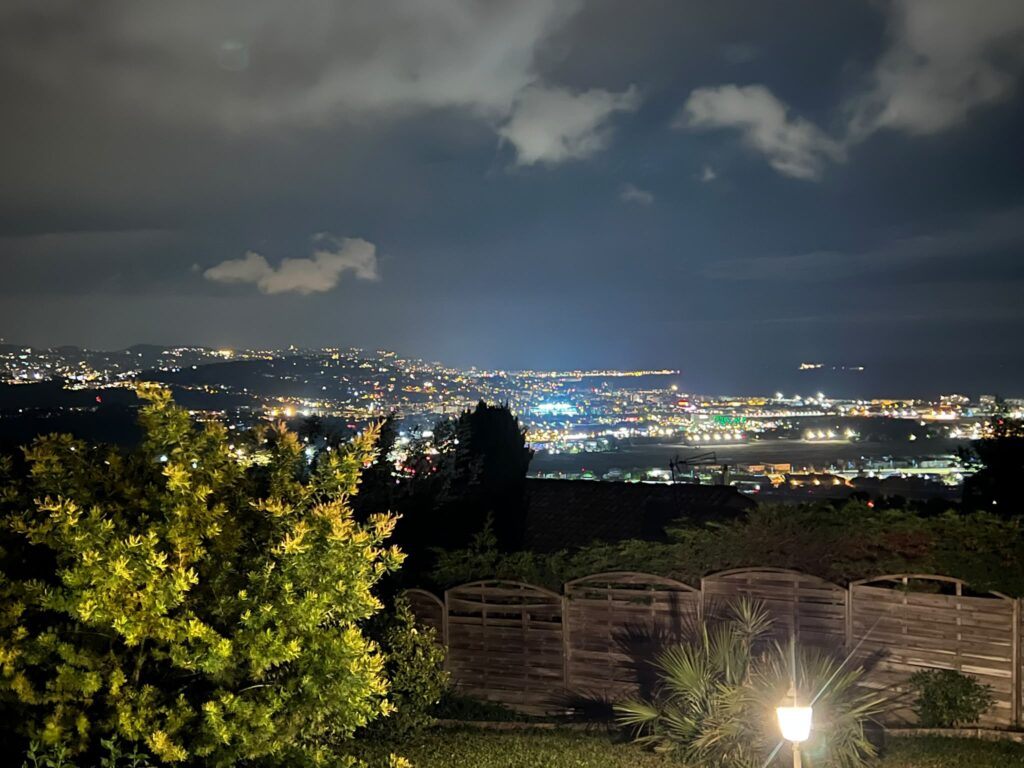
Above Mandelieu, residential roads climb into the hills. This is villa territory. The attraction is easy to understand: more land, gardens, pools, quiet streets and, from the right position, broad views over the Bay of Cannes, the Lérins Islands and the Estérel.
The difference between one road and the next can be substantial. Orientation matters, as do access, gradient and road noise from the A8 in some locations.
A five-minute visit at midday isn’t enough. Come back in the morning and evening. Drive the access road twice. Check where the sun disappears behind the hills. And if you are sensitive to motorway noise, stand outside and listen rather than assuming a spectacular view compensates for everything.
The good properties up here can offer a great deal of Côte d’Azur for the money compared with Cannes itself. But you will use your car. A lot.
PROPERTY IN MANDELIEU
Mandelieu is one of the places where we would be particularly wary of searching by price per square metre alone. There is simply too much variation.
A villa high above town with panoramic sea views, an apartment overlooking Cannes Marina, a 1970s residence near the centre and a property in La Napoule may all share the same postcode while offering completely different lives.
The first question should therefore be what you actually want to do when you are here. Boat owners often gravitate towards the marinas and Siagne. Golfers have two courses practically in town. Buyers wanting a garden and pool tend to look uphill. Those who want to walk to the beach and dinner should start around La Napoule.
Mandelieu is particularly strong in apartments within larger residences. Many were built at a time when developers were rather more generous with grounds than they are today. Mature gardens, swimming pools and sizeable terraces are therefore relatively common. The architecture is not always beautiful. But a large terrace overlooking palms and boats may prove rather more important after six months than an attractive façade you only see when arriving home.
Villa buyers have a wide range of options in the hills. Views can be excellent, and compared with Cannes, Mougins or the most prestigious coastal communes, the budget can sometimes stretch considerably further.
There are trade-offs. Much of Mandelieu is car-dependent. Some parts are affected by traffic or motorway noise. Flood risk also needs proper attention around the Siagne and low-lying areas – something to investigate carefully for an individual property rather than dismissing because the surroundings look peaceful on a sunny afternoon. And Mandelieu is not uniformly pretty. We actually think that is important to say. Choose the location well, though, and it offers a combination of space, sea, boating, golf and nature that is difficult to replicate so close to Cannes.
To Do
Walk around La Napoule
Don’t begin your visit to Mandelieu in the commercial centre. Start here in La Napoule.
Have coffee in the village, walk past the port and Château de la Napoule and continue towards the beach. Within an hour you will understand the part of Mandelieu that doesn’t reveal itself from the main road. Then come back for dinner.
La Napoule is particularly pleasant after the beach crowds have gone home.
Visit Château de la Napoule
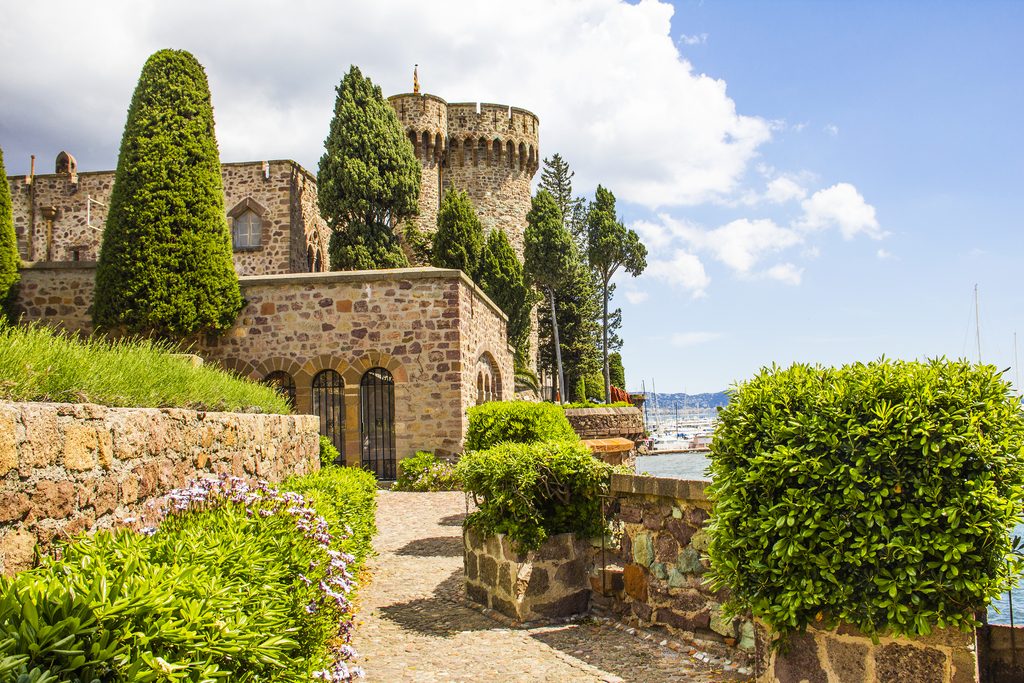
This is no conventional medieval château. The building you see today is largely the creation of an eccentric American couple, Henry and Marie Clews, who bought the ruined château in 1918 and spent years turning it into their own romantic fantasy. Henry was an artist and sculptor; Marie an architect and landscape designer.
The result is wonderfully peculiar: part medieval reconstruction, part artwork and part love story. The gardens reach almost to the Mediterranean and are worth visiting even if you have little interest in castles.
More about the Clews later, because their story is too good to hide in a sightseeing paragraph.
Walk along the Siagne
The Siagne is one of the quieter pleasures of Mandelieu.
Paths follow sections of the river past boats, greenery and residential areas towards the sea.
It is also a useful walk if you are considering buying around Cannes Marina. Places look different on foot than they do from a car.
Play golf – or at least have lunch there
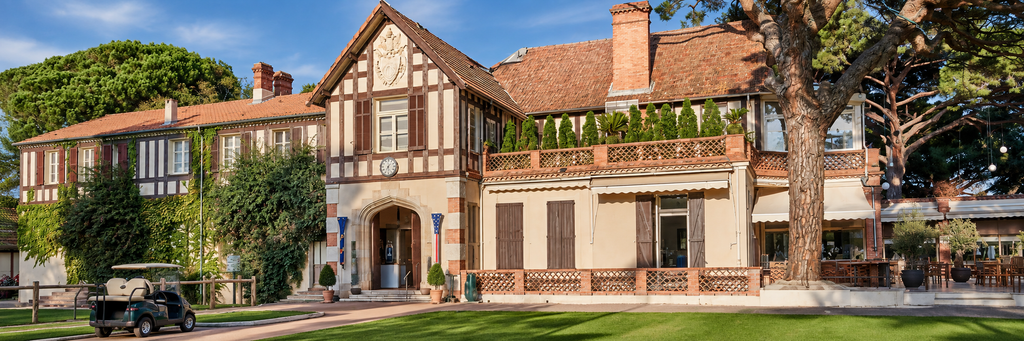
Mandelieu has a serious golfing tradition.
The Old Course was founded in 1891 by Grand Duke Michael of Russia and is one of the oldest golf courses in France. The fairways run among umbrella pines close to the Siagne.
There is also the Riviera Golf de Barbossi, inland in a much more open landscape. Even non-golfers benefit from all this green space.
Take the Corniche d’Or
From La Napoule, drive west through Théoule and continue along the Corniche d’Or. This is one drive on the Côte where stopping repeatedly is almost unavoidable.
The red porphyry of the Estérel drops into the Mediterranean, creating small bays and coves below the road. Late afternoon is particularly beautiful when the rock becomes almost orange-red.
It also demonstrates one of Mandelieu’s great advantages: this landscape is on your doorstep.
See the mimosa in February
If you only know the Côte in summer, come back in winter.
Mandelieu calls itself the capital of mimosa, and from January into March the hills around Tanneron turn yellow.
The Fête du Mimosa is held in February, but you don’t need a festival to appreciate it. Drive towards Tanneron and the landscape does the work.
There are few better reminders that winter on the Côte d’Azur is a season in its own right.
FActs
Department: Alpes-Maritimes (06)
Region: Provence-Alpes-Côte d’Azur
Population: around 22,000 permanent residents
Location: immediately west of Cannes, at the eastern edge of the Massif de l’Estérel
Distance from Nice Côte d’Azur Airport: approximately 30–35 km
Railway station: Mandelieu-la-Napoule, in La Napoule
Local airport: Cannes-Mandelieu Airport
Coast: beaches, marinas and rocky coastline towards Théoule
Ports: seven
Golf: Old Course Cannes-Mandelieu and Riviera Golf de Barbossi
Best-known village: La Napoule
Landscape: Mediterranean coast, Siagne river, Tanneron hills and the Estérel
Main property types: apartments in residences, marina apartments and villas
Year-round life: strong
Car dependency: moderate to high, except in parts of La Napoule
Character: green, residential, nautical, sporty and considerably quieter than neighbouring Cannes
Best suited to: buyers wanting space, boating, golf, nature or a villa environment while staying close to Cannes
History
Two places become one
The name tells part of the story. Mandelieu and La Napoule did not begin as one neat Riviera resort. The older settlement developed inland, while La Napoule grew around its château and small port on the coast. Over time the communities expanded and became the Mandelieu-la-Napoule we know today.
The area sat between Provence, the Mediterranean and the difficult terrain of the Estérel – strategically useful, but also exposed. The Château de la Napoule was built and rebuilt over centuries, suffering invasions, wars, abandonment and eventually the upheavals of the French Revolution. By the beginning of the twentieth century, much of it was in ruins. Then two Americans arrived.
The English arrive with golf clubs
Long before today’s golf resorts, wealthy northern Europeans had begun discovering this part of the coast.
In the late nineteenth century the Riviera was primarily a winter destination. British aristocrats and other wealthy visitors came south for the climate. In 1891, Grand Duke Michael Mikhailovich of Russia founded what is now the Old Course Cannes-Mandelieu.
There was one slight inconvenience: the Siagne crossed the course. Players were transported across by boat. More than a century later, the little ferry remains part of the course.
Oscar Wilde in La Napoule
Another rather unexpected name in La Napoule’s history is Oscar Wilde.
In the winter of 1898–1899, not long after his release from Reading Gaol, Wilde stayed at the Hôtel des Bains in La Napoule. His friend and biographer Frank Harris had encouraged him to leave Paris for the Riviera, hoping that sunshine, sea air and some peace might help him start writing again.
Wilde certainly appreciated the surroundings. He walked along the coast and through the pine woods and wrote about the beauty of the place in his letters.
But the hoped-for creative revival never really came.
He was lonely, short of money and in increasingly poor health. La Napoule offered an escape, but not the new beginning his friends had hoped for. Wilde returned to Paris and died there in November 1900, less than two years later.
It is a small episode in the history of Mandelieu, but a rather lovely one to know. Long before people started coming to the Côte d’Azur to reset, Oscar Wilde had apparently tried much the same thing.
Henry and Marie Clews
Henry Clews Jr. was born into a wealthy New York banking family. A conventional career was apparently not the plan. He became an artist and sculptor, married Marie Elsie Whelan and eventually came to the French Riviera. In 1918 the couple discovered the ruined Château de la Napoule. They bought it. What followed was less a restoration in the modern heritage sense and more the creation of a private universe.
Over the next years, Henry and Marie rebuilt and reinvented the château. Marie worked on its architecture and gardens while Henry filled it with sculpture and strange, sometimes fantastical figures. The building became their home, studio and joint artwork.
Henry died in 1937 and is buried at the château in a tomb he designed. Marie remained devoted to the place. After the Second World War she established the La Napoule Art Foundation, ensuring that the château would continue to have an artistic purpose. It still does. Knowing this story changes the building completely. What initially looks like an old French château is really the intensely personal creation of two twentieth-century Americans who decided to build their own medieval dream beside the Mediterranean. Very Côte d’Azur, in its own eccentric way.
Mimosa changes the hills
Mimosa is so closely associated with Mandelieu today that it seems indigenous. It isn’t. The plant originates in Australia and was introduced to the Côte d’Azur during the nineteenth century, initially in the gardens of wealthy winter residents. It loved the local climate.Cultivation spread through the Tanneron and surrounding hills, eventually becoming an important local industry. Cut flowers were transported north during winter, bringing a flash of Riviera yellow to colder parts of Europe.
Today the Route du Mimosa runs for around 130 kilometres from Bormes-les-Mimosas to Grasse, with Mandelieu at its heart.
Trivia
The golf course has a ferry
There aren’t many golf courses where a boat is part of the round.
At the Old Course Cannes-Mandelieu, the Siagne separates parts of the course and golfers still cross the river by a small ferry.
It is a charming survival from another era of Riviera tourism.
Mimosa isn’t French
Few plants look more Côte d’Azur than mimosa flowering against a blue February sky. Yet it came from Australia.
It arrived on the Riviera in the nineteenth century and flourished so spectacularly that it is now difficult to imagine the Tanneron without it.
Oscar Wilde came here to write. He didn’t.
In 1898, Oscar Wilde’s friend Frank Harris brought him to La Napoule in the hope that peace, sunshine and Mediterranean air would revive his creativity.
Wilde stayed at the Hôtel des Bains, walked among the pine trees and admired the sea.
The plan failed completely.
Despite finding La Napoule beautiful, he produced no new work during his stay. A letter Wilde sent from the Hôtel des Bains in February 1899 still survives – signed not only “O”, but also Sebastian Melmoth, the name he used after leaving prison. Christie’s
A New Yorker rebuilt a French château
Château de la Napoule looks old enough to have survived intact since medieval times. It didn’t. Much of what visitors see is Henry and Marie Clews’ twentieth-century interpretation of what their château should be. Purists might raise an eyebrow. We rather like that about it.
There is another airport
Most visitors automatically associate the Côte d’Azur with Nice Airport. But Mandelieu has had an important aviation connection for almost a century. Cannes-Mandelieu Airport opened in the 1930s and today caters principally to business aviation and private aircraft. During major Cannes events, the rather discreet airport suddenly becomes considerably less discreet.
Seven ports, one town
Mandelieu has an extraordinary concentration of marinas and moorings. The combination of the coast and navigable Siagne means boats appear well inland from the beach.
It is one of the few places on the Côte where an apartment overlooking a river can also mean watching yachts pass your terrace on their way to the Mediterranean.
WHO IS MANDELIEU FOR?
Mandelieu makes most sense for people who want the Côte d’Azur with a little more breathing room.
It isn’t the place we would send someone whose first requirement is a beautiful historic centre outside the front door. Nor would we choose it for someone who wants to spend every evening walking between fashionable restaurants and bars. But those are not everyone’s priorities.
If your Côte involves breakfast on a large terrace, golf in the morning, taking the boat out after lunch or walking in the Estérel the following day, Mandelieu starts looking rather good.
It is particularly worth considering for people who want a villa but find the equivalent property in Cannes too expensive. The same applies to buyers who want substantial outside space or an apartment in a residence with gardens and a swimming pool.
For boat owners, it should be on the list almost automatically.
And La Napoule gives buyers who still want a walkable seaside environment an option that feels very different from the rest of Mandelieu.
When might Mandelieu not be the right choice?
If you don’t want to drive, choose carefully. La Napoule can work well on foot, but in much of Mandelieu a car quickly becomes part of everyday life. It also lacks a single attractive centre that binds the whole town together. This bothers some people more than others. And anyone searching for old-stone Provence will probably be happier in Mougins, Valbonne or one of the villages further inland.
There is another practical point: don’t choose Mandelieu from an online property listing alone. A sea-view villa can look spectacular in photographs while being surprisingly close to the motorway. A marina apartment may have wonderful views but a large residence with significant annual charges. A peaceful-looking ground-floor apartment near the Siagne requires proper investigation of flood exposure. Micro-location matters here.
Mandelieu or Cannes?
This is probably the most useful comparison. Cannes wins easily if you want restaurants, shopping, events, nightlife and a genuine urban centre. It is possible to live extremely well there without using a car every day. Mandelieu gives you more space. There is more greenery, villa living is more attainable, boating and golf are woven into the town and the Estérel is next door. The two are close enough that you don’t necessarily have to choose between their amenities. You can live quietly in Mandelieu and be on the Croisette for dinner. The journey home will remind you why you didn’t buy there.
Mandelieu or Théoule-sur-Mer?
Théoule is smaller and more dramatic. The red Estérel reaches straight into the sea and some villas have exceptional views. If scenery and a small coastal-village atmosphere come first, Théoule has the advantage. Mandelieu is much more practical. It has more shops and services, easier motorway access, golf, a wider choice of property and considerably more year-round infrastructure. For a permanent home, that can matter.
Mandelieu or Mougins?
Both appeal to buyers wanting more space than central Cannes provides, but the lifestyle is quite different.
Mougins turns inland. Think stone, wooded hills, large gardens, villas and village life. Mandelieu faces the water. Boats, beaches, marinas, golf and the Estérel shape the place. If having the Mediterranean physically present in everyday life matters, Mandelieu is the more natural choice.
The essence of Mandelieu-la-Napoule
Mandelieu is perhaps best understood by accepting that its least attractive parts and its most attractive parts sit surprisingly close together. You can be buying groceries beside a busy commercial road and, ten minutes later, sitting beneath the château walls in La Napoule with your feet almost in the Mediterranean.
You can live in a large apartment overlooking boats, in a villa among the mimosa-covered hills or close enough to a golf course to hear the first players teeing off in the morning.
And Cannes is still next door.