

About Antibes
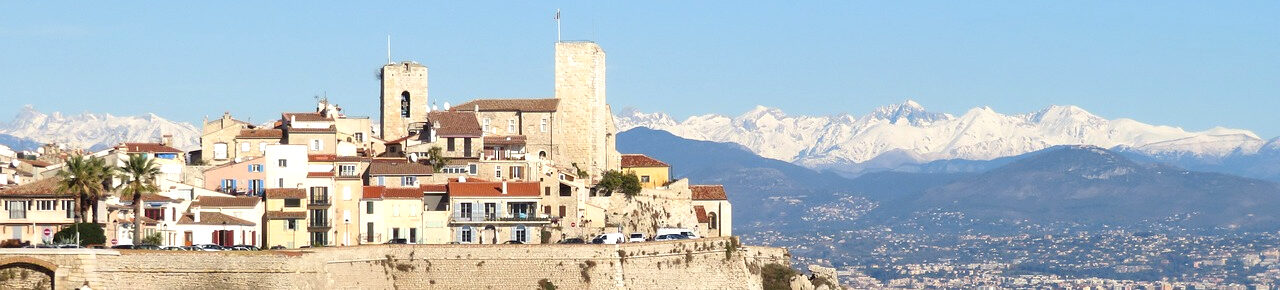
Antibes is one of those rare places on the Côte d’Azur that manages to be many things at once.
It is an old Mediterranean town enclosed by ramparts, a major yachting centre, a lively year-round community, a beach destination and, on Cap d’Antibes, home to some of the most prestigious villas on the French Riviera. Cross to the other side of the peninsula and you arrive in Juan-les-Pins, with an altogether different personality: beaches, restaurants, summer evenings and a long association with jazz and the glamorous Riviera of the 1920s.
That variety is perhaps Antibes’ greatest strength. Unlike smaller coastal towns, choosing Antibes does not mean choosing one particular lifestyle. You can live in a centuries-old apartment behind the Marché Provençal, walk to your boat in Port Vauban, have a contemporary apartment near the centre, live close to the beach in Juan-les-Pins or disappear behind the gates of a villa surrounded by umbrella pines on Cap d’Antibes.
And despite its international reputation, Antibes is not merely a resort.
It is a sizeable French town with permanent residents, schools, shops, sports facilities, supermarkets, medical services and a busy local economy. Life continues throughout winter, when the beaches become quiet and the narrow streets of the old town belong more to residents again.
Its position is another major advantage. Antibes lies almost halfway between Nice and Cannes, with Nice Côte d’Azur Airport approximately 20 kilometres away. Sophia Antipolis, one of Europe’s major technology parks, lies just inland.
For people who want the Mediterranean on their doorstep but need more than a holiday resort, Antibes makes a compelling case.
A town with two faces – and a peninsula in between
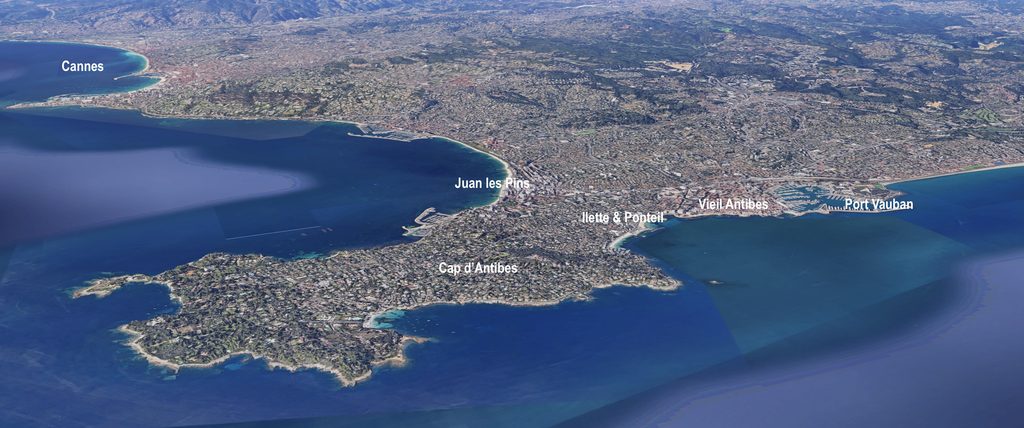
Understanding Antibes begins with its geography. The historic town faces east towards Port Vauban and the Baie des Anges. To the south, the coast extends around Cap d’Antibes before turning west towards Juan-les-Pins and the Golfe-Juan.
These areas may be only a few kilometres apart, but they feel remarkably different. Vieil Antibes is Mediterranean and historic: ochre façades, narrow streets, little squares, restaurants, galleries and the daily market beneath the covered Marché Provençal.
Cap d’Antibes is greener, quieter and much more private. Behind high walls and mature gardens are villas ranging from traditional Riviera houses to exceptional waterfront estates.
Juan-les-Pins is more extrovert. Its identity is closely connected with the beach, hotels, music and summer life.
And then there is modern Antibes beyond the ramparts: residential neighbourhoods where people actually live, take children to school, shop and commute to work.
This is why simply saying “I want to buy in Antibes” is not really enough. The first question should be: which Antibes?
Antibes is particularly good at combining ordinary life with the pleasures people move to the Côte d’Azur for.
In the old town, a morning can start at the Marché Provençal, followed by coffee on a terrace and a walk along the ramparts. The beach is close enough for a swim before lunch, and the port is only a few minutes away.
Outside the historic centre, everyday life becomes more conventional. There are neighbourhood shops, supermarkets, schools and larger residential buildings. This side of Antibes may be less photogenic, but it makes the town considerably more practical for permanent residents.
The railway station is within walking distance of the old centre and provides direct connections along the coast towards Nice, Cannes and Monaco. For anyone who wants to reduce dependence on a car, that matters.
Antibes also has an unusually strong international community. The yachting industry centred around Port Vauban brings crews, owners and marine businesses from around the world, while Sophia Antipolis attracts an international professional population.
In summer, naturally, everything changes gear.
The old town becomes busier, the beaches fill up and Juan-les-Pins comes properly alive. Restaurants and terraces remain busy late into the evening and the harbour fills with some very serious yachts.
In winter, Antibes becomes more local again.
For buyers planning to spend substantial periods here rather than only July and August, that year-round character is one of its biggest advantages.
Neigbourhoods
Vieil Antibes
For atmosphere, Vieil Antibes is difficult to beat.
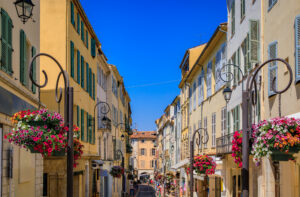
The old town occupies the area within and around the historic ramparts, between Port Vauban and the sea. Narrow streets lead past ochre and cream façades, shutters, galleries, cafés and small restaurants.
At its heart is the Marché Provençal.
This is the Antibes most visitors fall in love with first.
For property buyers, it offers apartments in historic buildings and townhouses hidden in the maze of streets. Some have terraces or glimpses of the Mediterranean; others look onto intimate lanes and rooftops.
Living here can be wonderfully easy if you enjoy walking. Restaurants, food shops, the market, beaches and station are all nearby.
But historic charm has its practical side. Many buildings have no lift. Parking can be difficult. Apartments may have unconventional layouts, narrow staircases or limited outdoor space. A beautiful third-floor apartment feels rather different after carrying shopping upstairs every day.
For a lock-up-and-leave second home, however, Vieil Antibes can be extremely attractive. You close the front door and immediately step into the life of the town.
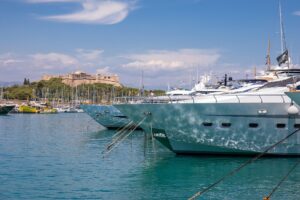
Ilette & Ponteil
Just south of the old town, around Plage de la Salis, Ponteil and Ilette, Antibes becomes more residential while keeping the sea very close.
This is a particularly interesting area for buyers who love the old town but want a more modern apartment, a terrace, a lift or easier parking.
The beaches are within walking distance, as are the centre and the beginning of Cap d’Antibes.
Apartments dominate, and sea views naturally command a premium.
The lifestyle is hard to argue with: walk into Vieil Antibes for dinner, swim in the morning and return home without needing a car.
For many second-home buyers, Ilette represents one of the best compromises in Antibes.

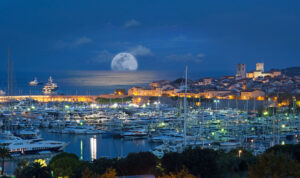
Cap d’Antibes
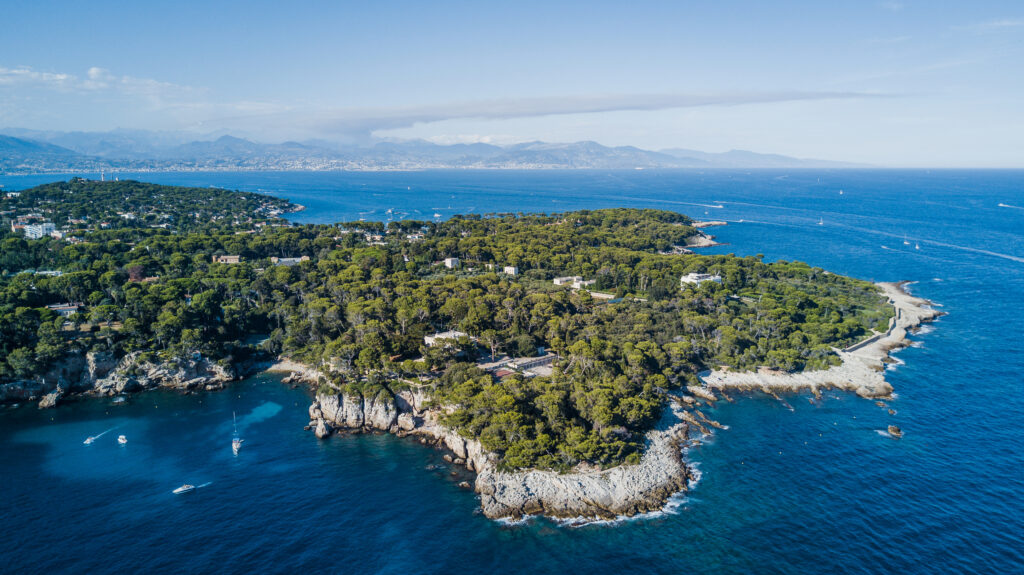
Cap d’Antibes is another world.
The peninsula stretches between Antibes and Juan-les-Pins and has been associated with wealthy international residents for more than a century.
Large villas sit behind walls and gates among umbrella pines, palms and mature Mediterranean gardens. Some overlook the sea; a much smaller number occupy exceptional waterfront positions.
This is also where you find the legendary Hôtel du Cap-Eden-Roc.
Cap d’Antibes is green, quiet and residential. Parts of it feel remarkably secluded considering that Cannes and Antibes are only minutes away.
But the peninsula is not uniform.
The eastern side towards La Salis has a somewhat different orientation and atmosphere from the western side overlooking the bay towards Juan-les-Pins and the Lérins Islands. Exact location, exposure, walking distance to the sea and traffic can make an enormous difference.
And unlike Vieil Antibes, this is generally car territory. If your ideal Riviera property involves privacy, a garden, a pool and perhaps a sea view, Cap d’Antibes belongs on the shortlist. If you want to walk downstairs for your morning croissant and have ten restaurants around the corner, it probably does not.
Juan-les-Pins
Juan-les-Pins is officially part of Antibes, but it has a personality entirely of its own.
It developed as a fashionable seaside resort during the early twentieth century and became particularly associated with the carefree Riviera years between the wars. Today its identity still revolves around the sea.
Sandy beaches – something worth mentioning on a coastline where many beaches are pebbled – restaurants, hotels and terraces line the waterfront. During summer the atmosphere is lively, international and considerably more animated than in most of Antibes.
The famous Jazz à Juan festival reinforces that identity every summer.
Property is predominantly apartments, from older residences to contemporary developments and high-end properties with terraces and sea views.
Juan-les-Pins is particularly attractive for buyers who want to walk to a sandy beach and like a lively summer atmosphere. Its seasonality should nevertheless be considered. The contrast between August and January is greater here than in central Antibes.
La Badine, Rostagne & the residential areas between Antibes and Juan-leS-PINS
Between central Antibes, Juan-les-Pins and Cap d’Antibes are quieter residential neighbourhoods that are easy to overlook.
For permanent living, they can be very interesting.
Here you find apartment residences, villas and homes with more greenery and outside space while remaining relatively close to both Antibes and Juan-les-Pins.
Areas such as La Badine and Rostagne can therefore suit buyers who do not need to be directly on the waterfront but want beaches and centres within easy reach. They are also worth investigating if Cap d’Antibes itself stretches the budget too far.
The northern and inland side of Antibes
Move north towards Biot and Sophia Antipolis and the character changes again. This is less about the postcard Riviera and more about practical residential life.
There are larger residences, family homes and villas, often with easier road access towards Sophia Antipolis and the A8.
For someone working in the technology park, or a family moving permanently to the area, these neighbourhoods may make far more sense than an apartment inside the old town.
The beach is no longer necessarily outside your front door. But it is still only a short drive away.
PROPERTY IN ANTIBES
The Antibes property market is unusually varied.
At one end are compact apartments in the old town. At the other are exceptional villas on Cap d’Antibes worth many millions of euros.
Between those extremes lies almost everything else.
There are bourgeois apartments, modern residences with pools, seafront apartments, family homes, villas in residential neighbourhoods and new developments.
That variety makes Antibes suitable for a much wider range of buyers than some of the smaller communes along the coast. It also makes average price-per-square-metre figures particularly misleading.
An apartment without a lift in Vieil Antibes cannot sensibly be compared with a renovated sea-view apartment at Ilette, let alone a villa on Cap d’Antibes. Here, location within the commune matters enormously.
For second-home buyers, the first decision is often whether walkability or space matters more.
If you want to arrive, put down the car keys and spend the next week walking everywhere, Vieil Antibes, Ilette or central Juan-les-Pins make sense. If the dream involves a garden, swimming pool and privacy, the search naturally shifts towards Cap d’Antibes or the residential areas further inland.
Parking deserves particular attention in central Antibes and Juan-les-Pins. So do seasonal noise and traffic.
On Cap d’Antibes, different questions become important: orientation, access, privacy, security, garden maintenance and the distance to everyday amenities.
The same town requires completely different buying criteria depending on where you look.
To Do
Start at the Marché Provençal
If you want to understand why people enjoy living in Antibes, start here rather than at a tourist attraction.
The covered Marché Provençal is one of the focal points of the old town.
In the morning, stalls are filled with fruit, vegetables, cheeses, olives, herbs and local produce. Around it are cafés and small shops.
For residents of Vieil Antibes, this is not simply somewhere to take visitors. It can be part of everyday life.
Go early, buy something for lunch and have coffee nearby. That is a fairly convincing introduction to living in Antibes.
Walk the ramparts
Antibes has one of the most enjoyable urban walks on this part of the coast.
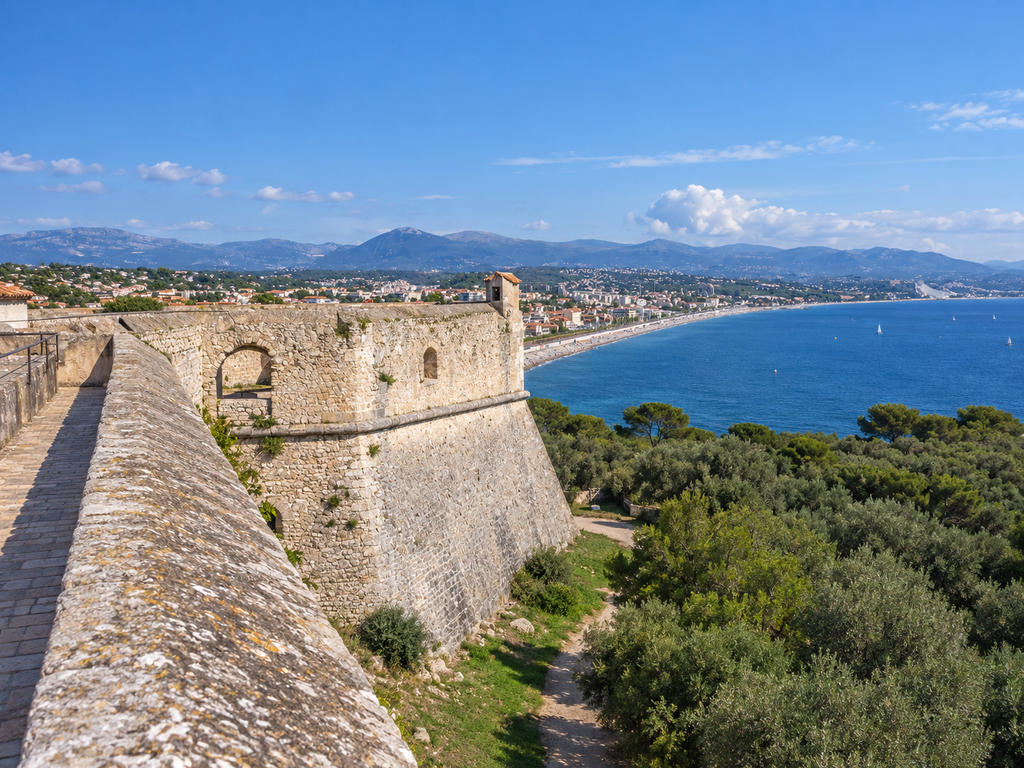
Follow the ramparts around the old town with the Mediterranean immediately below and the Alps visible in the distance on clear days.
The contrast is quintessential Antibes: centuries-old fortifications on one side and enormous superyachts in Port Vauban on the other.
Visit the Musée Picasso
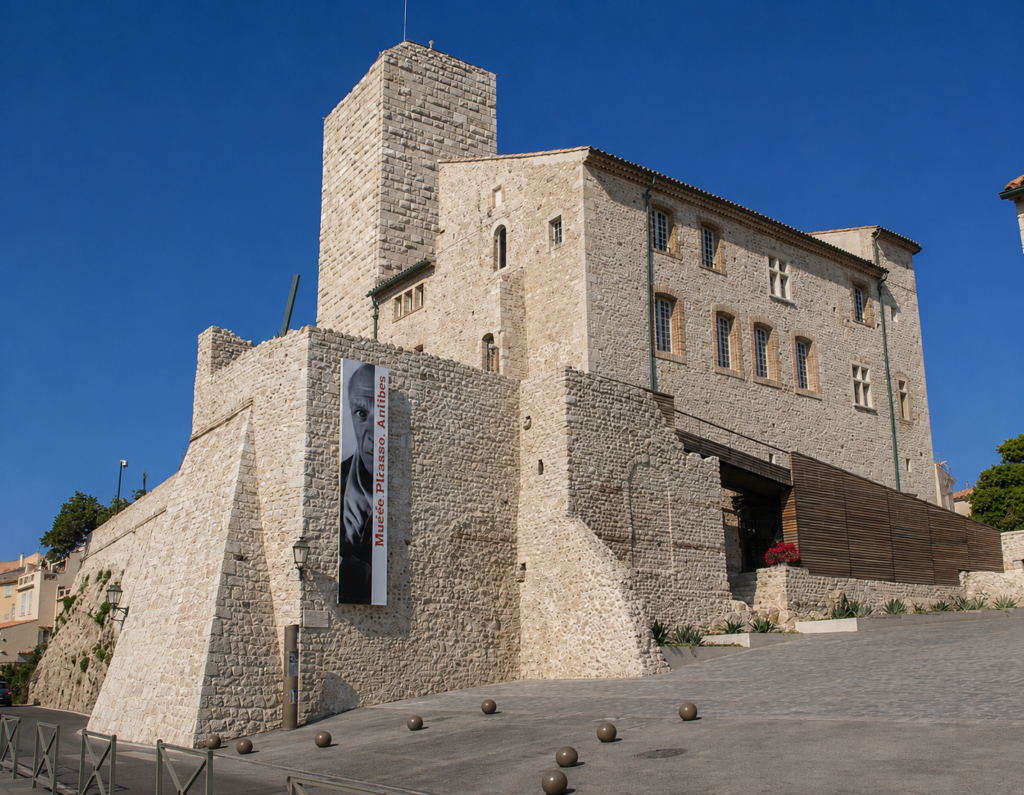
The Musée Picasso occupies the Château Grimaldi overlooking the Mediterranean.
Picasso worked here in 1946, when the building was still known as the Musée Grimaldi, and left a collection of works behind. The setting is almost as important as the collection. Few museums allow you to step from rooms containing twentieth-century art directly onto a terrace overlooking the Mediterranean.
Walk around Port Vauban
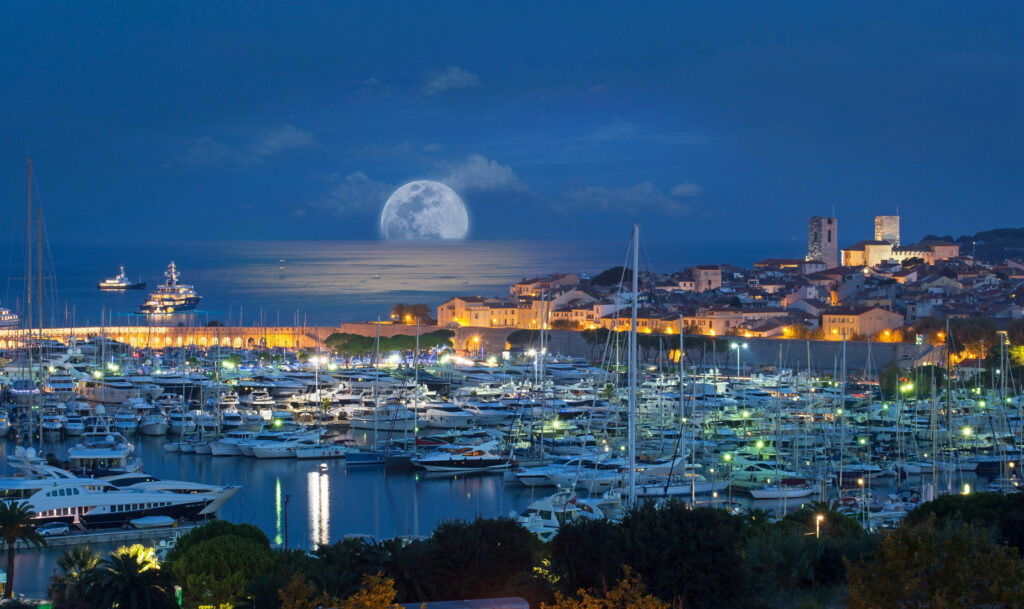
You do not need to own a yacht to find Port Vauban fascinating.
It is one of the largest leisure ports in the Mediterranean and an important centre for the international yachting industry.
The contrast between traditional Antibes and the enormous yachts moored at the famous Quai des Milliardaires is quite extraordinary.
More importantly for prospective residents, the port gives Antibes a cosmopolitan, working identity throughout the year.
Walk the Sentier du Littoral
The coastal path around Cap d’Antibes – often called the Sentier de Tirepoil – is one of the great walks of the Côte d’Azur.
The path follows the rocky shoreline beneath villas and Mediterranean vegetation, with the sea constantly beside you.
It is a wonderful way to understand the geography of the Cap.
And if you are considering buying there, walk it more than once. Seeing the coastline from below gives you a surprisingly good sense of orientation, exposure and the different parts of the peninsula.
Spend a day in Juan-les-Pins
Do not treat Juan-les-Pins as simply another neighbourhood. Have lunch, spend the afternoon on the beach and stay into the evening. Then come back in winter.
The difference between the seasons is part of what you need to understand before buying there.
Have a drink at Hôtel du Cap-Eden-Roc
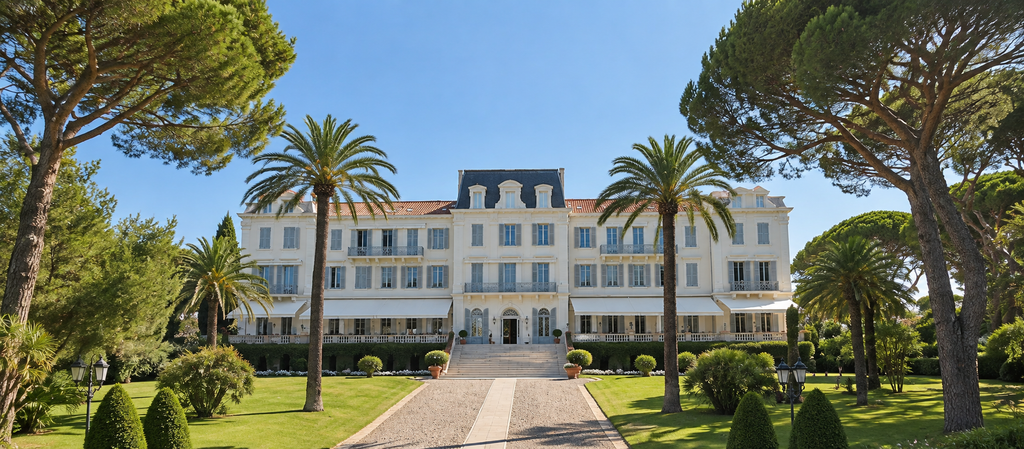
Even if your house search does not involve a multimillion-euro villa on Cap d’Antibes, the Hôtel du Cap-Eden-Roc is part of the area’s story.
The hotel opened in the nineteenth century as the Villa Soleil and became one of the Riviera’s legendary grand hotels.
Writers, artists, actors, industrialists and generations of wealthy visitors have stayed here.
It represents a very particular version of Côte d’Azur glamour: established, discreet and rather less interested in being seen than Cannes or Saint-Tropez.
FActs
Department: Alpes-Maritimes (06)
Region: Provence-Alpes-Côte d’Azur
Population: approximately 75,000 permanent residents
Location: between Nice and Cannes
Distance from Nice Côte d’Azur Airport: approximately 20 km
Railway stations: Antibes and Juan-les-Pins
Historic centre: Vieil Antibes
Seaside resort: Juan-les-Pins and Cap d’Antibes
Prestige villa area: Cap d’Antibes
Major marina: Port Vauban
Beaches: both sandy and pebble/rocky beaches, depending on location
Main property types: apartments, townhouses and villas
Year-round life: very strong in Antibes; more seasonal in parts of Juan-les-Pins
Car dependency: low in central Antibes and Juan-les-Pins; considerably higher on Cap d’Antibes and inland
Character: historic, international, maritime, residential and lively
Best suited to: buyers wanting a genuine year-round town with beaches, strong transport connections and a very broad choice of lifestyles and property types
History
Antipolis
Antibes is one of the oldest towns on the Côte d’Azur.
Its origins go back to antiquity, when Greeks from Massalia – present-day Marseille – established a trading settlement here known as Antipolis.
Its position was strategic from the beginning.
The natural harbour and location along Mediterranean trading routes made it valuable, and under the Romans Antipolis developed into an important regional town.
Remains of this ancient past still lie beneath and around modern Antibes.
A fortified frontier town
For much of its later history, Antibes occupied an important defensive position.
Until the County of Nice became French in 1860, the border with the territories of the House of Savoy lay not far to the east. Antibes therefore spent centuries as a frontier town.
Its fortifications were strengthened repeatedly.
Fort Carré, overlooking Port Vauban, dates principally from the sixteenth century and was later modified under the military engineering system associated with Vauban.
The ramparts around the old town still give Antibes much of its physical identity today.
Stand on them looking across the Baie des Anges and it is easy to understand why this location mattered militarily.
The Riviera discovers Antibes
During the nineteenth century, the Côte d’Azur began its transformation from Mediterranean borderland into an international winter destination.
Wealthy British, Russian and northern European visitors arrived.
Cap d’Antibes was particularly attractive because it offered land, privacy, sea views and a mild climate. Villas and grand hotels began to appear among the pines.
The Grand Hôtel du Cap – today’s Hôtel du Cap-Eden-Roc – opened in this period and would eventually become one of the most famous hotels in Europe.
The birth of Juan-les-Pins
Juan-les-Pins developed later. Its great period began during the 1920s, when the Riviera became a playground for a new generation of wealthy Americans, artists and writers.
Gerald and Sara Murphy famously spent time here and helped popularise the idea of the Riviera as a summer destination.
That was actually something new.
The earlier aristocratic Côte d’Azur had primarily been a winter resort. The Murphys and their circle – which included figures such as F. Scott Fitzgerald – helped turn the Mediterranean summer into something fashionable.
Juan-les-Pins became synonymous with beaches, parties and a freer, more modern Riviera lifestyle.
That legacy remains visible today.
Picasso in Antibes
In 1946, Pablo Picasso was offered space to work in the Château Grimaldi.He stayed for several months.
The Mediterranean, mythology and the optimism of the immediate post-war period inspired a remarkable body of work.
When Picasso left, he allowed works created there to remain in Antibes.
The château subsequently became the Musée Picasso – the first museum in the world dedicated to the artist.
It is one of the reasons Antibes occupies such an important place in the artistic history of the Côte d’Azur.
Trivia
Why Antibes?
The ancient Greek name Antipolis is generally understood as meaning “the city opposite”.
Exactly what it was considered opposite to is still discussed, but the name survived through centuries of linguistic evolution to become Antibes.
Napoleon was imprisoned at Fort Carré
Before he became Emperor, Napoleon Bonaparte briefly found himself on the wrong side of French revolutionary politics.
After the fall of Robespierre in 1794, Napoleon was arrested and detained for a short period at Fort Carré.
A curious episode considering what followed.
Picasso’s museum was Picasso’s studio
The Musée Picasso is not simply a museum that later acquired works by Picasso.
Picasso actually worked in the château itself.
That gives the place a completely different significance. You are walking through rooms where the artist was creating work while looking out at essentially the same Mediterranean view.
Jazz came to Juan
Jazz à Juan, founded in 1960, is one of Europe’s oldest jazz festivals.
Over the decades, some of the greatest names in jazz have performed beneath the pine trees of Juan-les-Pins.
The combination of jazz, warm summer nights and the Mediterranean is now inseparable from the identity of the resort.
The Billionaires’ Quay
Port Vauban contains a section traditionally known as the Quai des Milliardaires – Billionaires’ Quay.
The name tells you most of what you need to know.
It was created to accommodate some of the world’s largest private yachts and provides one of the more surreal contrasts on the Riviera: medieval Antibes on one side, floating palaces on the other.