
Mougins-Valbonne Area
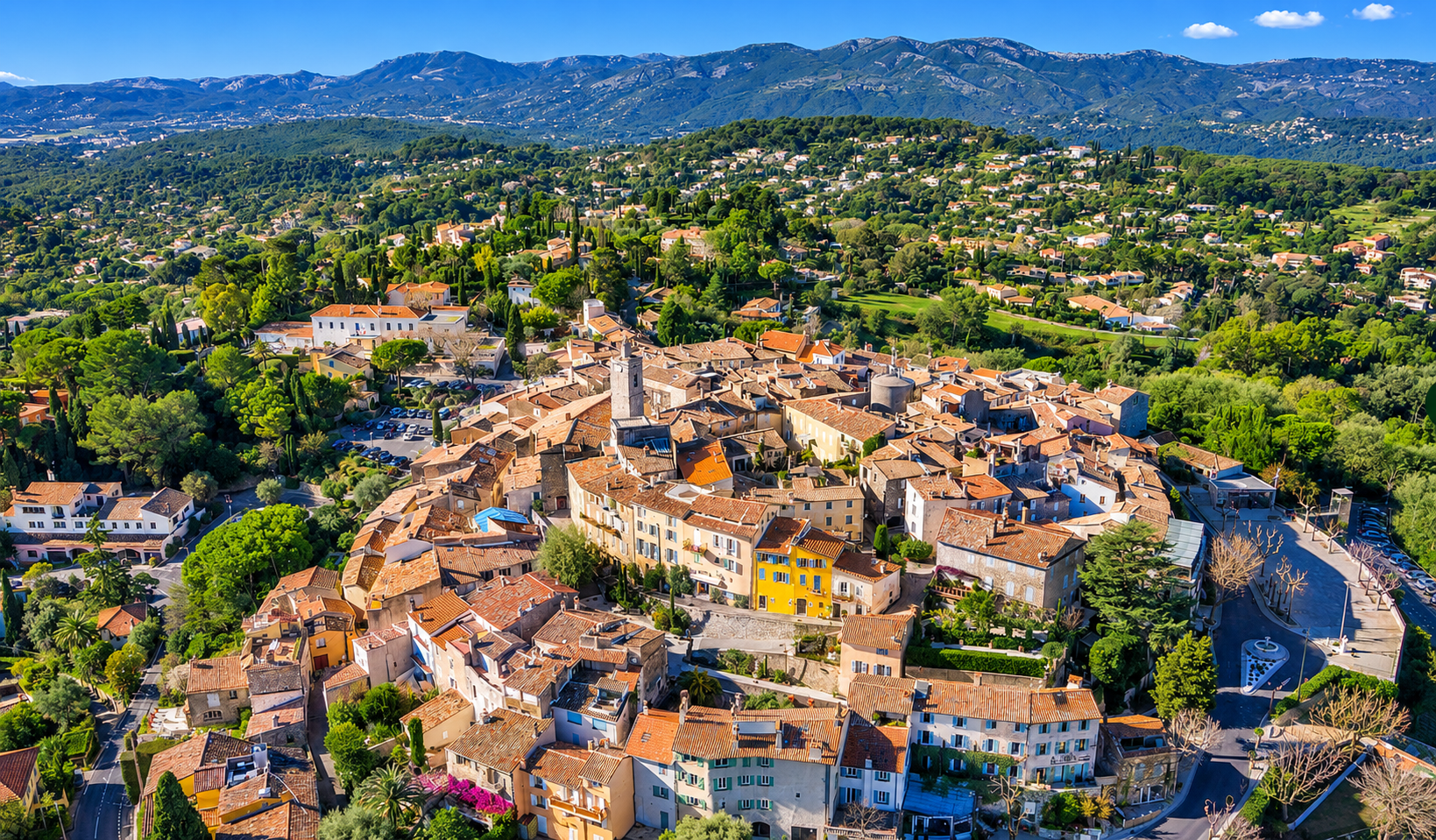
Just a few kilometres inland from Cannes and Antibes, the landscape changes considerably. The densely built coastline gives way to wooded hills, olive groves and residential neighbourhoods surrounded by Mediterranean vegetation. This is the Mougins–Valbonne area, a region where historic Provençal settlements coexist with one of the most important technology and research centres in France.
The area includes Mougins, Valbonne, Mouans-Sartoux, Opio, Le Rouret and Roquefort-les-Pins. Although each has its own identity, together they form an established residential region whose development has been closely connected to the growth of the Côte d’Azur.

From agricultural countryside to residential region
Until well into the twentieth century, much of the countryside behind Cannes and Antibes was devoted to agriculture. Olive cultivation, vineyards, small farms and grazing land shaped the landscape, while the villages provided local markets and services for the surrounding rural population. The hills were divided into terraces supported by dry-stone walls, many of which remain visible in private gardens and former agricultural properties.
The transformation began gradually as the coastal towns expanded and improved roads made the hinterland more accessible. From the middle of the twentieth century onwards, increasing numbers of people began looking beyond the densely developed coastline for larger houses and gardens. Agricultural land was progressively converted into residential plots, and new neighbourhoods developed along the roads connecting the villages.
This process did not produce a uniform landscape. Some areas retained extensive olive groves and wooded hillsides, while others became established residential communities. As a result, the region still contains a mixture of traditional country houses, twentieth-century villas, contemporary properties and pockets of agricultural land.
The influence of Sophia Antipolis
The establishment of Sophia Antipolis in 1969 marked a turning point in the development of the region. Conceived as a centre for science, technology and research, it introduced a new economic dimension to an area that had previously depended largely on agriculture, local commerce and the activities of the coastal towns.
Over the following decades, international technology companies, research institutions and educational establishments settled in Sophia Antipolis. The arrival of employees and their families created demand for housing, schools and services in the surrounding communes, particularly Valbonne and the neighbouring residential areas.
This development also changed the international character of the region. Unlike coastal resorts where foreign ownership is often associated with second homes, many international residents in the Mougins–Valbonne area live and work here throughout the year. The presence of international schools and a substantial professional community has reinforced this distinction.
Sophia Antipolis was deliberately developed within a wooded landscape rather than as a conventional urban business district. Its buildings are distributed among extensive green areas, although the growth of the technology park and the surrounding residential communities has also increased pressure on roads and infrastructure.
A landscape shaped by woodland and development
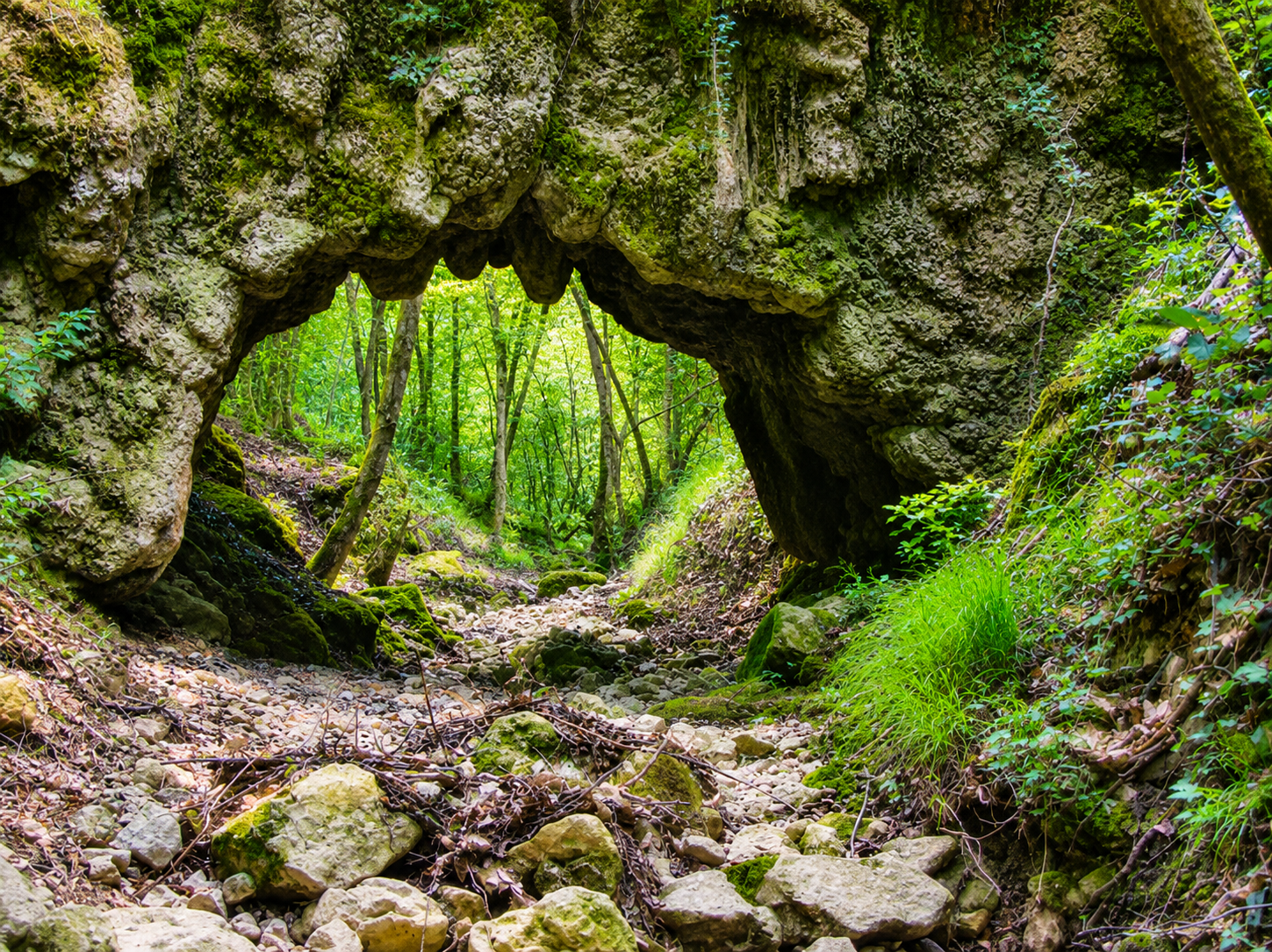
One of the defining features of the Mougins–Valbonne area is the way residential development is integrated into the hills. Unlike the continuous urban landscape along parts of the coast, houses are frequently set within gardens, pine forests and former agricultural land.
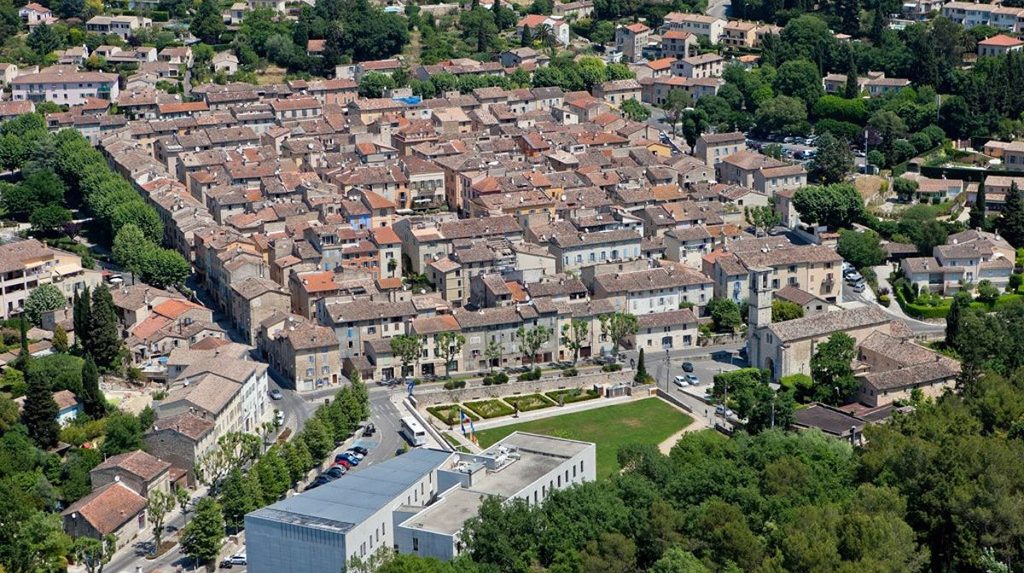
The character changes across the region. Mougins occupies the western side, close to Cannes, while Valbonne and Mouans-Sartoux form important centres of residential and commercial activity. Further east, Opio, Le Rouret and Roquefort-les-Pins have a more dispersed pattern of settlement, with villas and residential neighbourhoods extending through the countryside.
The terrain is generally less mountainous than the higher hinterland around Grasse, but the differences in elevation, orientation and vegetation are nevertheless significant. Open south-facing slopes can enjoy sunshine throughout the year, while wooded valleys may be cooler and more shaded, particularly in winter.
The natural surroundings are an important part of the region’s appeal, but they also influence the responsibilities associated with property ownership. Vegetation management, wildfire prevention, drainage and the maintenance of sloping land are practical considerations in many residential neighbourhoods. Planning regulations have also become increasingly important as municipalities seek to balance housing demand with the protection of remaining natural areas.
Living between the coast and the countryside
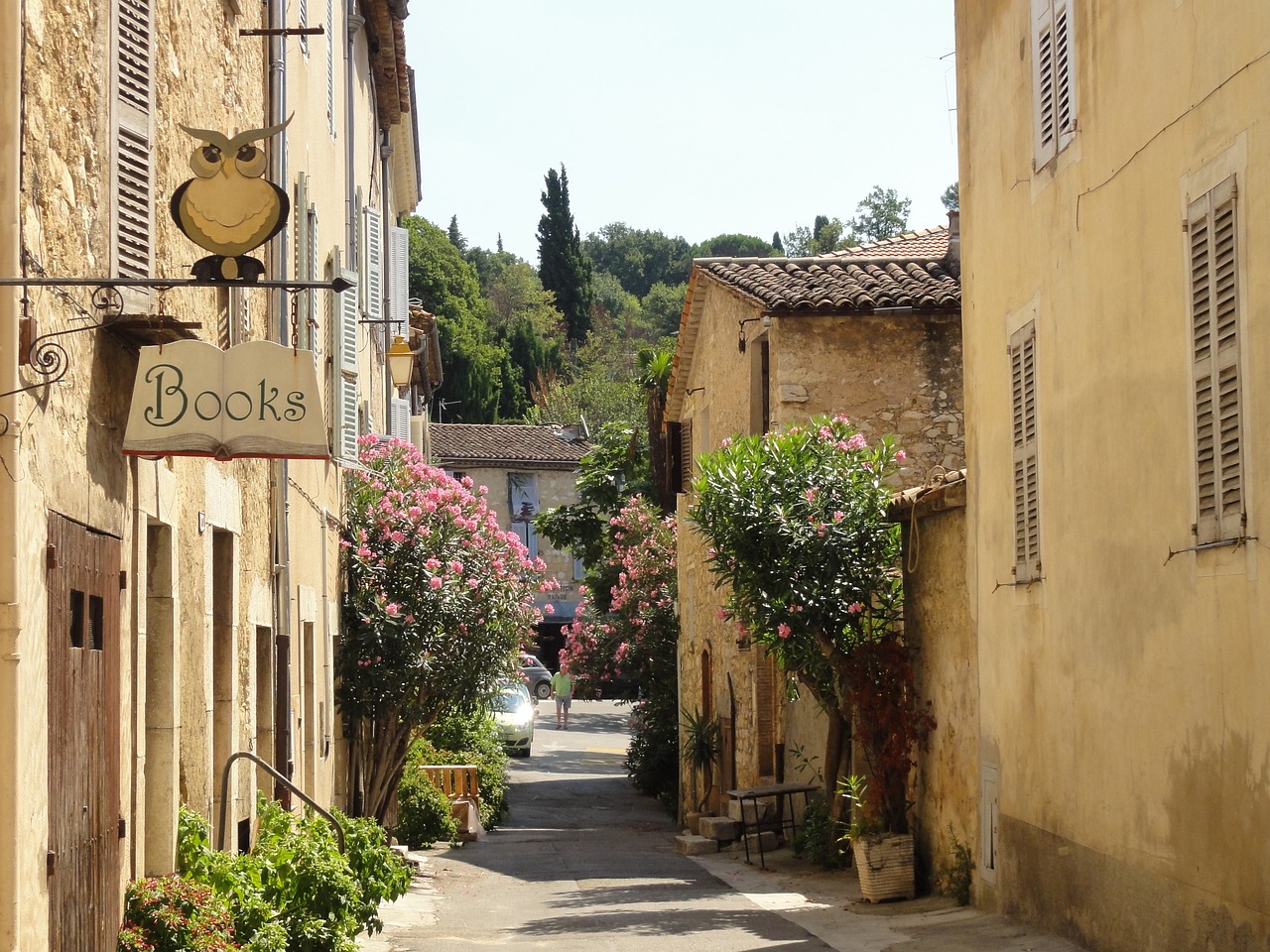
The Mougins–Valbonne area has become a predominantly year-round residential region. Its proximity to Cannes, Antibes, Grasse and Sophia Antipolis means that daily life is closely connected to employment, education and services rather than seasonal tourism alone.
Schools are an important part of this residential infrastructure, including several international educational institutions serving families from different countries. Shopping facilities range from village markets and independent businesses to larger commercial centres, while cultural activities and sports facilities are distributed across the region.
Transport is one of the main practical considerations. Although distances to the coast are relatively short, traffic can be substantial during commuting hours, particularly on routes serving Sophia Antipolis and the A8 motorway. Mouans-Sartoux has a railway station on the Cannes–Grasse line, but most residential neighbourhoods depend heavily on road transport.
For those considering living in the area, the precise location of a property can therefore be as important as the commune itself. Access to schools, commuting routes, shops and public transport varies considerably, even between neighbouring residential districts.
The region is particularly suited to people who want the space and surroundings of the Provençal countryside while remaining connected to the economic and cultural life of the Côte d’Azur. Its identity is neither that of a traditional rural hinterland nor that of a coastal resort, but of a residential area that has developed alongside the modern economy of the French Riviera.

Curious about Properties for sale in this region?
Or Explore our Website