
CANNES AREA
From Antibes to Théoule-sur-Mer
The Cannes area stretches along one of the most varied sections of the Côte d’Azur, from Antibes and Cap d’Antibes in the east to Théoule-sur-Mer and the first red rocks of the Estérel in the west. Cannes lies roughly at its centre, but the region is far more diverse than the international image of the city might suggest.
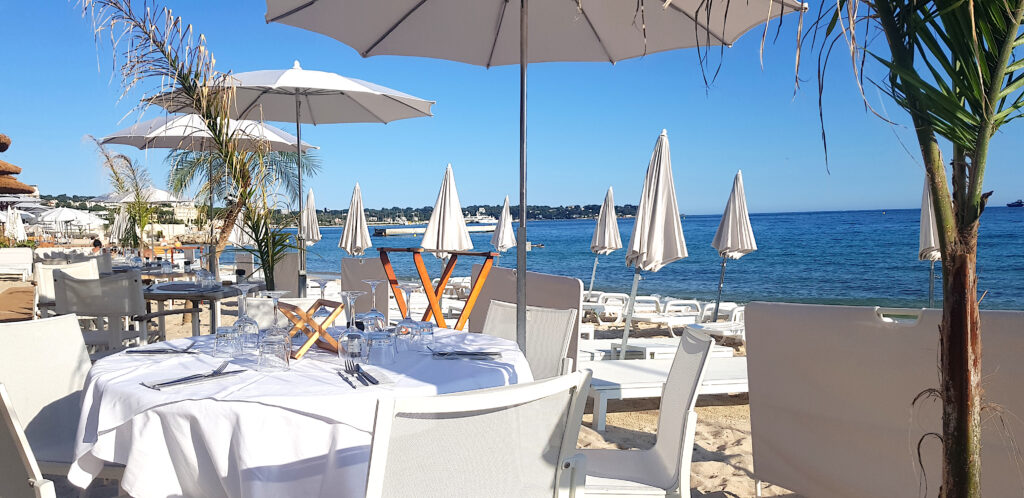
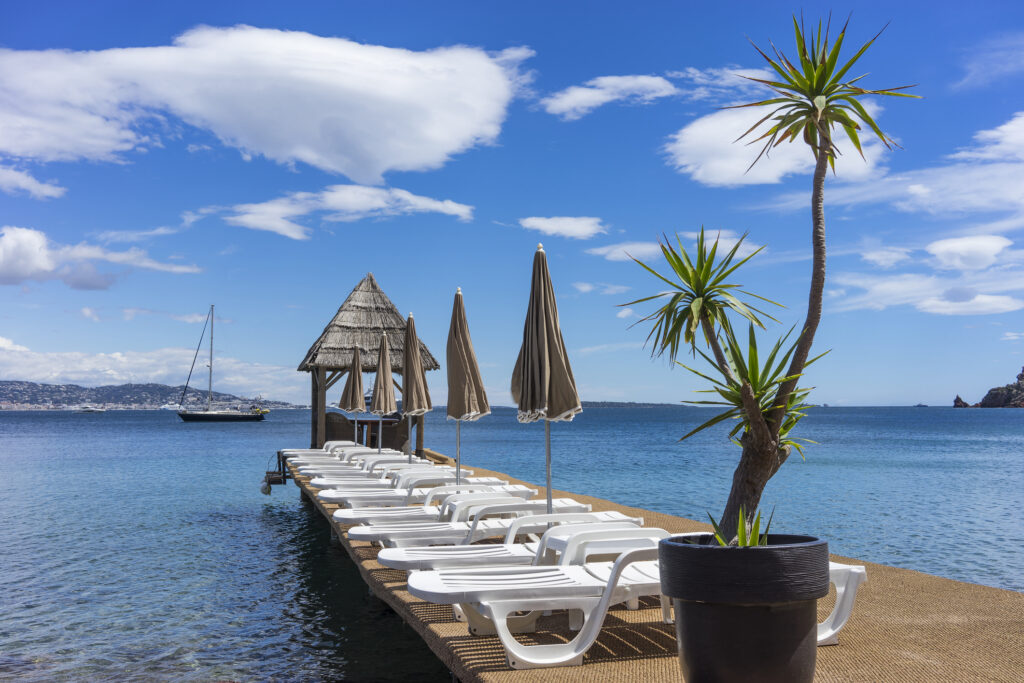
Within a relatively short distance, the landscape moves from the old ramparts and enormous marina of Antibes to the beaches of Juan-les-Pins, the wooded villas of Cap d’Antibes and the urban coastline around Cannes. West of the city, the scenery gradually opens again around Mandelieu-la-Napoule before becoming distinctly more dramatic at Théoule, where the Estérel mountains reach the Mediterranean.
This variety is also what makes the area interesting as a place to live. There are genuine town centres where almost everything can be done on foot, quiet residential hills only a few kilometres away, waterfront apartments, historic houses and some of the most exclusive villa neighbourhoods on the French Riviera. The distances are small, but everyday life can be remarkably different depending on which part of the region you choose.
Cannes: a city behind the famous façade
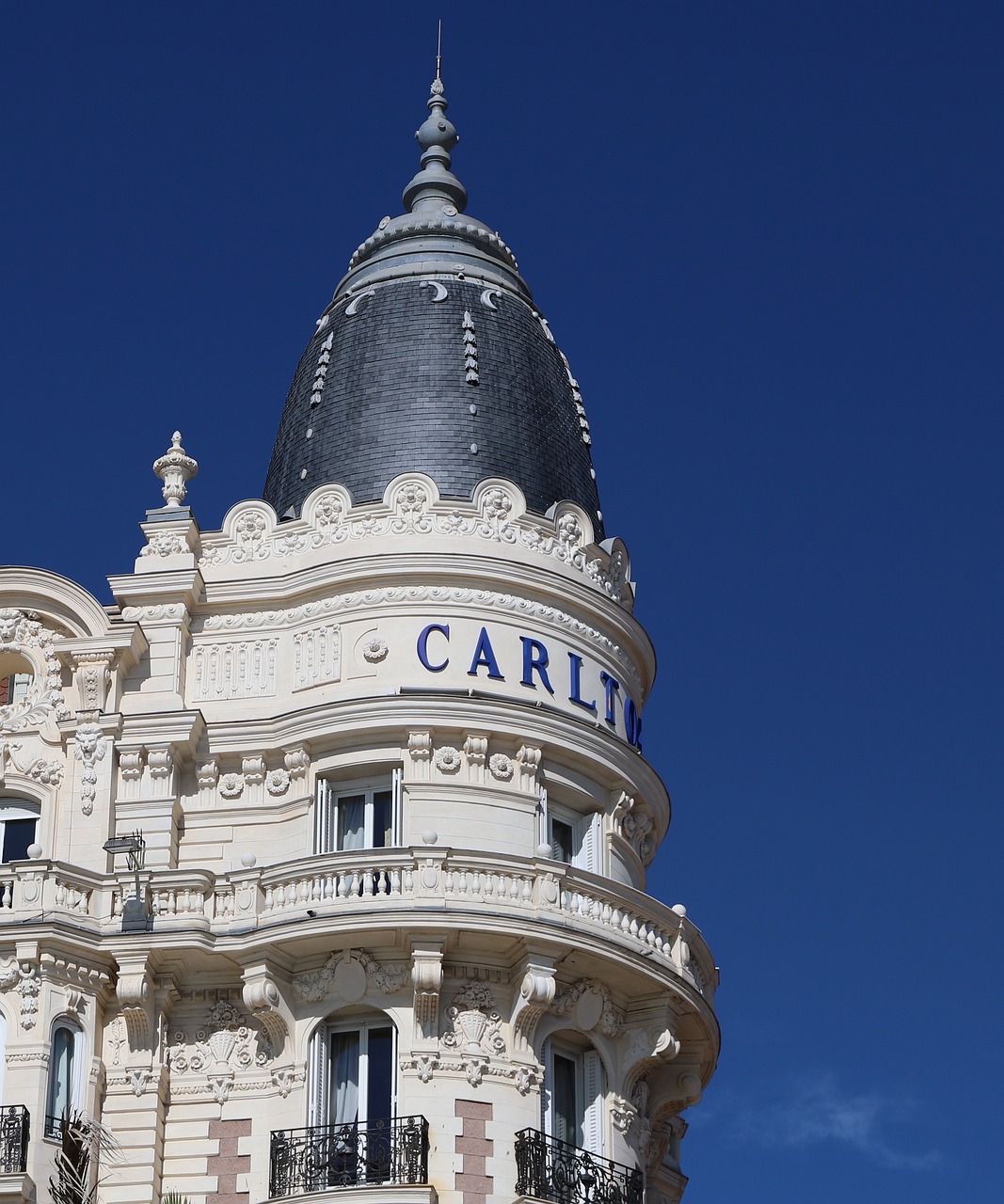
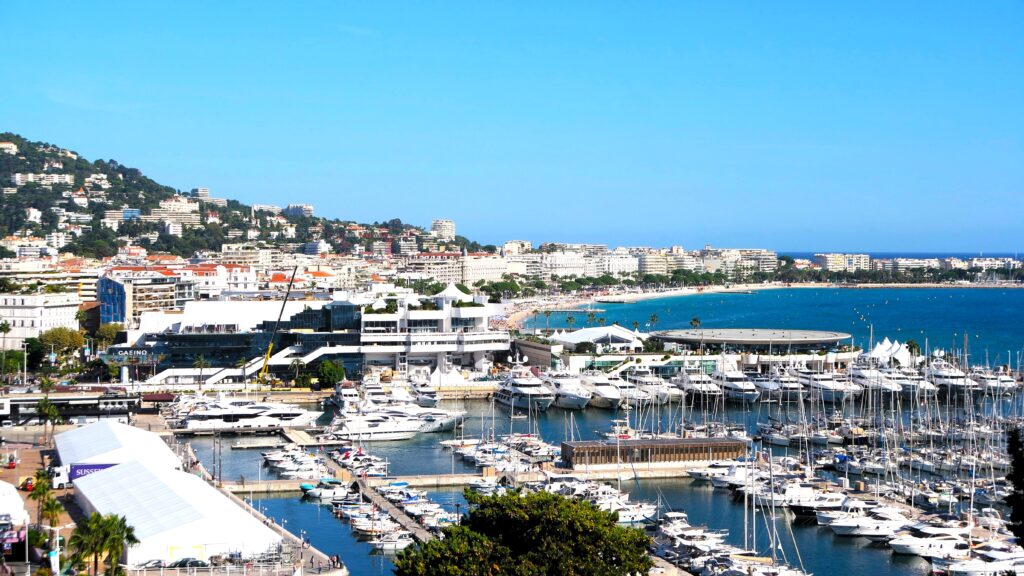
Cannes has an international reputation that precedes it. The Croisette, the Palais des Festivals, grand hotels and luxury boutiques have created an image recognised around the world, reinforced every May when the film festival temporarily turns the city into the centre of the international cinema industry.
But Cannes is not simply a resort built around the Croisette. Behind the seafront is a proper Mediterranean town with neighbourhoods that function throughout the year. Marché Forville is still a place to buy vegetables, fish and flowers in the morning, Le Suquet retains the irregular streets of the old town, and only a little further from the centre the atmosphere becomes predominantly residential.
The differences between the neighbourhoods are considerable. The Banane and Carré d’Or put restaurants, shops, beaches and the Croisette within walking distance. Palm Beach occupies the eastern end of the city between the bay and the beaches of Mouré Rouge, while Croix des Gardes, Californie and Super Cannes climb into greener hills where villas and larger residences overlook the coast. Petit Juas and Montfleury offer yet another version of Cannes, close to the centre but much less defined by tourism.
That is perhaps the part of Cannes that is easiest to miss on a short visit. The film festival may have made the city famous, but most of the year Cannes simply gets on with being Cannes.
Le Cannet and the hills above Cannes
Cannes does not end abruptly at the edge of its centre. The city gradually climbs into residential hills and, to the north, merges almost imperceptibly with Le Cannet.
Le Cannet has its own historic centre, with old houses, narrow streets and small squares overlooking the Bay of Cannes, but much of the commune consists of established residential neighbourhoods spread across the hills. It is close enough for Cannes to remain part of everyday life while offering a setting that can feel considerably removed from the activity around the Croisette.
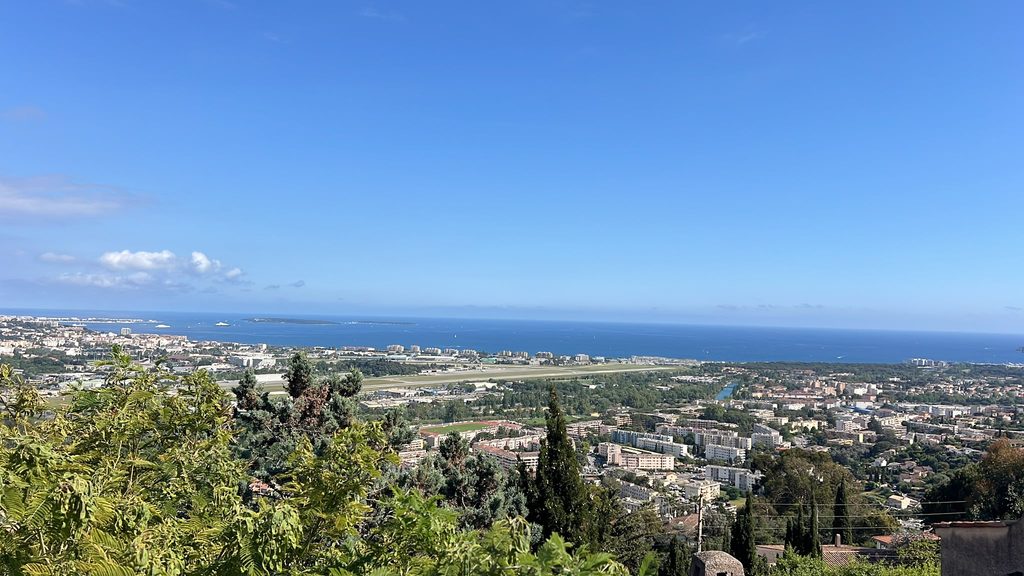
For buyers, these hills add an important dimension to the region. Living near Cannes does not necessarily mean choosing an apartment in town. A relatively short move inland brings gardens, villas, more privacy and, in many locations, views across the bay towards the Îles de Lérins and the Estérel.
The practical consequence is that location becomes increasingly important. Two houses that appear close
together on a map can have very different access, orientation, views and journey times into Cannes. As elsewhere along this part of the Côte, the hills create opportunities but also make it worth looking carefully at the actual terrain rather than simply the address.
Mandelieu-la-Napoule
West of Cannes, Mandelieu-la-Napoule marks a gradual change in both landscape and rhythm. The dense urban coastline begins to open up and the Siagne, several marinas and large green areas give the town a character quite different from central Cannes.
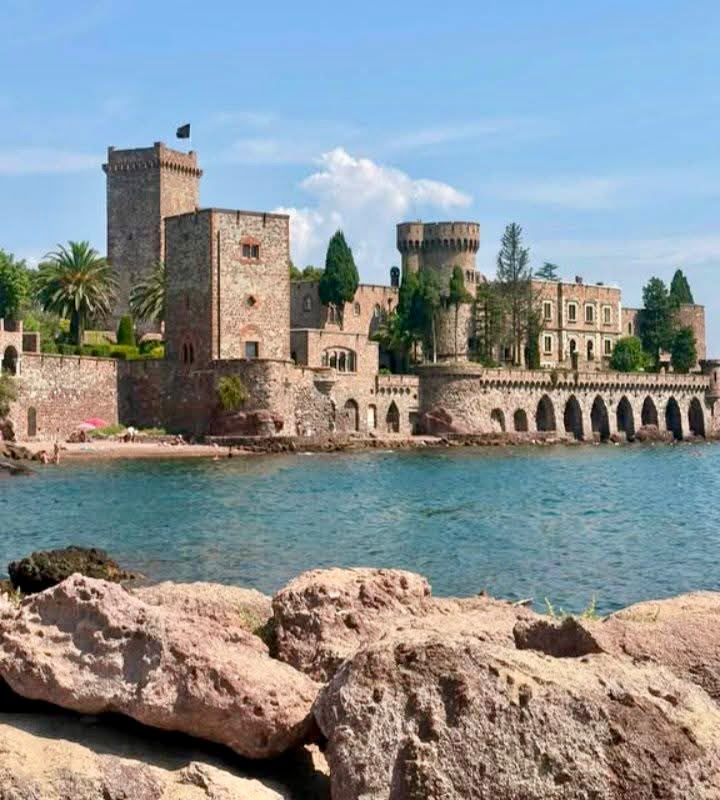
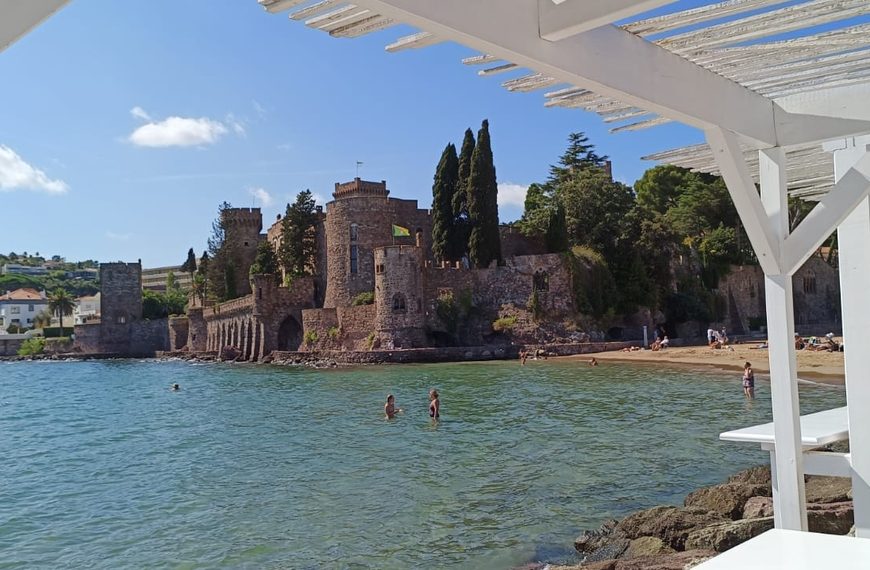
Boating plays an obvious role here. Mandelieu has several ports and provides easy access to the Bay of Cannes and the coastline around the Estérel. Golf is another important part of local life, with courses close to the centre, while the beaches and Château de La Napoule give the seafront its own identity.
Mandelieu is geographically spread out, which means that choosing a neighbourhood matters. La Napoule itself has a more recognisable seaside-village centre around the château, station, restaurants and port, while other parts of the commune are predominantly residential. Villas climb the surrounding hills, often with views across the bay or towards the Estérel.
The town also sits at an interesting point for transport. Cannes remains close, but the A8 provides straightforward access west towards the Var and east towards Nice. For people who regularly travel in both directions, that can be a practical advantage.
Théoule-sur-Mer and the beginning of the Estérel
At Théoule-sur-Mer, the landscape changes decisively. The coastline becomes steeper, the rock turns red and the Estérel mountains begin to dominate the scenery. It is one of the clearest geographical transitions on the Côte d’Azur.
Théoule itself is small, stretched between the Mediterranean and the mountains. Houses and apartment residences climb the slopes above the sea, while below them are small beaches, coves and ports. The coastal road continues west through the red rock of the Estérel, with the mountains rising almost directly from the water.
Living here is consequently very different from living in Cannes, despite the relatively short distance between them. The attraction is largely the landscape: sea, mountains and unusually dramatic views combined in a very compact area. Hiking trails lead directly into the Estérel and the coast is never far away.
The same geography requires some practical consideration when buying. Roads can be steep and winding, access
to individual properties varies enormously and a spectacular position high above the Mediterranean does not necessarily translate into an easy walk to the village or beach. Théoule rewards buyers who choose the precise location carefully.
Antibes, Juan-les-Pins and Cap d’Antibes
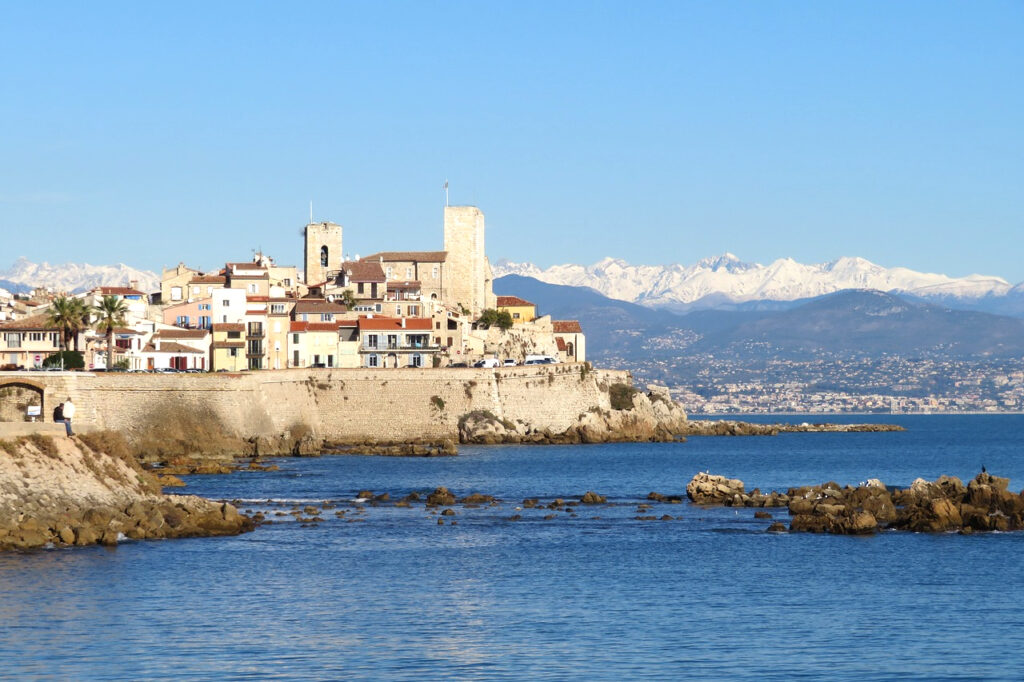
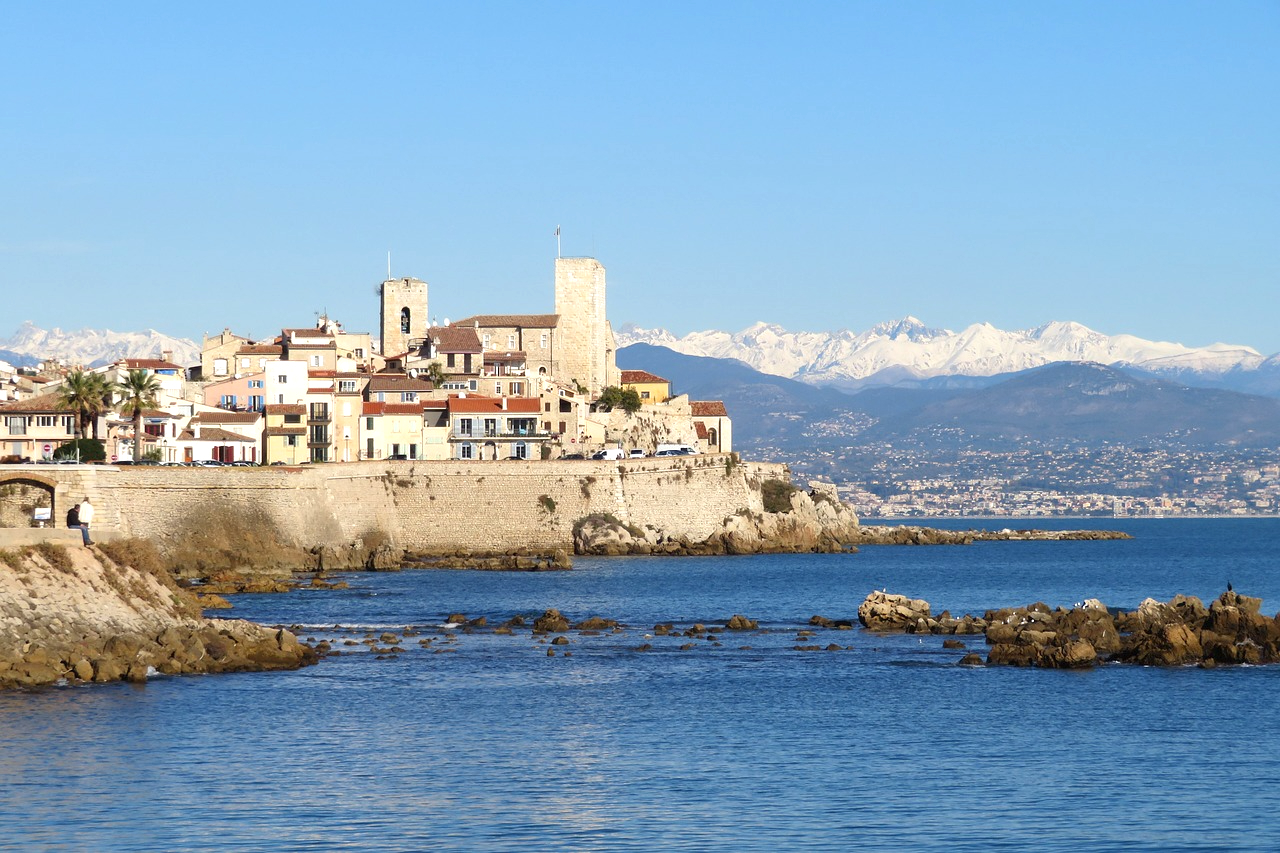
At the eastern end of the region, Antibes has a character that is quite distinct from Cannes. Its history is much older, and the old town still occupies a clearly defined position behind the ramparts between Port Vauban and the Mediterranean.
The centre remains lively throughout the year. The Marché Provençal, cafés, restaurants and small shops are woven into streets that have been occupied for centuries, while the Picasso Museum in the former Château Grimaldi reflects the long association between Antibes and the artists who came to the Côte d’Azur during the twentieth century. Beside the old town, Port Vauban has developed into one of the Mediterranean’s major yachting centres.
Cross the narrow peninsula and the atmosphere changes in Juan-les-Pins. The resort developed its international reputation during the 1920s and 1930s, when hotels, beaches, nightlife and a fashionable summer crowd helped establish a very different Riviera culture. Jazz later became inseparable from the town, a connection that continues with the annual Jazz à Juan festival.
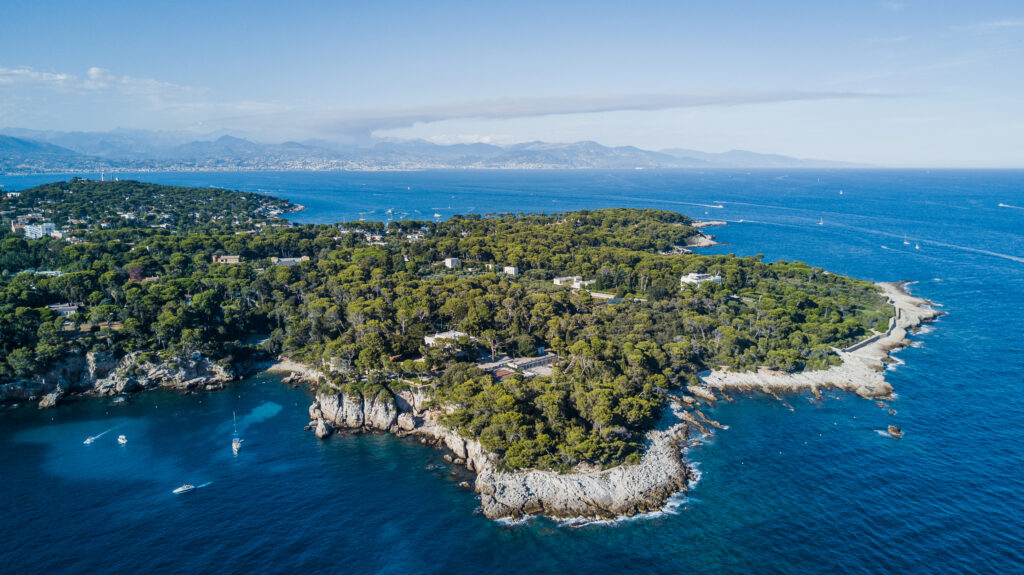
Between Antibes and Juan-les-Pins lies Cap d’Antibes. Here the density falls away and large villas disappear behind walls, gardens and umbrella pines. Parts of the peninsula remain surprisingly green, particularly around the coastal path and the southern end of the Cap.
These are not simply three names for the same place. Antibes offers historic town life, Juan-les-Pins is more explicitly a seaside resort, and Cap d’Antibes is predominantly residential. Their proximity means you can move easily between them, but choosing to live in one rather than another makes a considerable difference to everyday life.
Vallauris and Golfe-Juan
Between Antibes and Cannes lie Vallauris and Golfe-Juan, administratively part of the same commune but with quite different identities.
Vallauris sits a little inland and is particularly associated with ceramics. Pottery had been produced here long before Pablo Picasso arrived in 1948, but his years in Vallauris brought international attention to the town and its workshops. Picasso worked extensively with ceramics here, alongside his painting and sculpture, and his presence became part of a broader artistic culture that remains visible today.
Golfe-Juan faces the Mediterranean below. Its beaches, old port and marina give it a more obviously coastal
character, and its position between Cannes and Antibes makes both towns easily accessible.
The combination can be attractive for people who want to remain close to the main centres without necessarily living in either of them. As always, however, individual location matters. The experience of living close to the harbour in Golfe-Juan is very different from living higher up towards Vallauris, even though both share the same commune.
Choosing where to live in the Cannes area
The Cannes area works particularly well as a region because it does not force everyone into the same version of Côte d’Azur life. Within the stretch between Antibes and Théoule-sur-Mer there are several quite distinct possibilities.
For someone who wants to walk to shops, restaurants, a market and the sea, central Cannes and Antibes are obvious places to start. Juan-les-Pins adds a stronger beach and resort character, while Golfe-Juan offers a smaller coastal alternative between the two main towns.
Buyers looking for a villa have a much wider geographical choice. Cap d’Antibes occupies a very particular end of the market, but the hills around Cannes and Le Cannet also offer established residential areas with gardens and views. To the west, Mandelieu provides more space and particularly suits a lifestyle involving boating or golf, while Théoule is difficult to separate from the landscape of the Estérel itself.
There are practical differences too. Cannes, Antibes, Juan-les-Pins, Golfe-Juan, Mandelieu-La Napoule and Théoule all have railway stations, making the coastal railway genuinely useful. Nice Côte d’Azur Airport is more convenient from the eastern side of the region, while Mandelieu and Théoule provide easier access towards the Var.
For buyers, the important question is therefore not simply whether they like Cannes. It is what they want their daily life here to involve. Being able to walk into an old town, having a boat nearby, looking for a villa with a garden or wanting to step out of the house into the Estérel lead to quite different parts of the same region.
And that is ultimately what defines the Cannes area: not one Riviera lifestyle, but several of them within a surprisingly short stretch of coast.

Curious about Properties for sale in this region?
Or Explore our Website