

About CAGNES-SUR-MER
Le village des Pêcheurs
Cagnes-sur-Mer is easy to underestimate.
At first glance, it can seem like one of the many towns that have grown together along the coast between Nice and Antibes. Drive through on the main road and you may wonder why you would choose Cagnes over one of the better-known names on the Côte d’Azur. Spend a little more time here, however, and a very different picture emerges.
Cagnes-sur-Mer is not really one place. It is three.
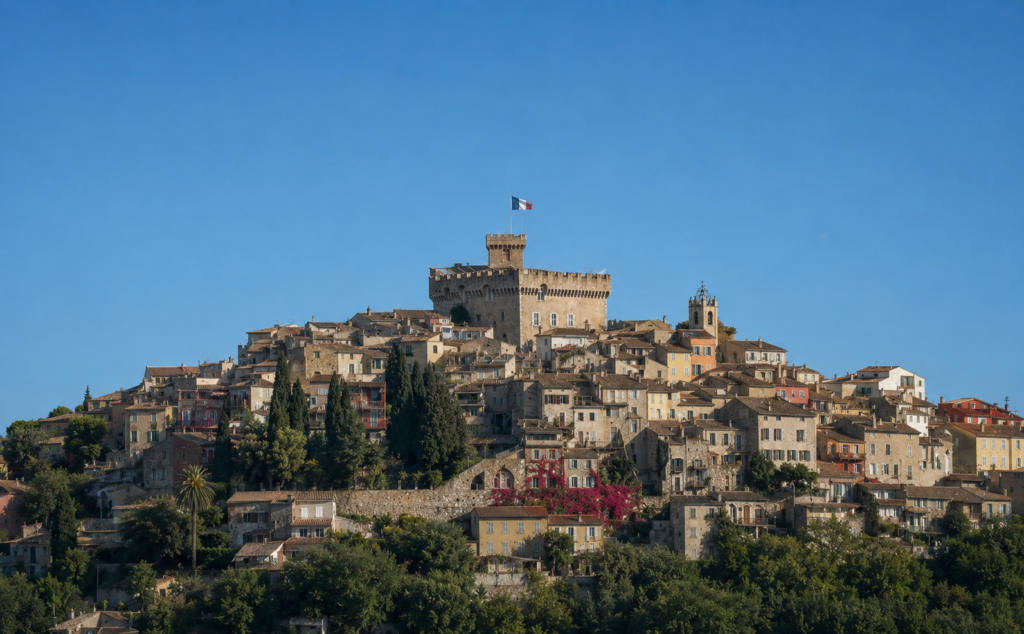
High above the modern town lies Haut-de-Cagnes, a medieval hilltop village of narrow lanes, stone houses and views across the Mediterranean and surrounding hills. Down by the sea is Cros-de-Cagnes, the former fishing village, where small streets lead towards the waterfront and local life still revolves around the coast. Between the two lies the modern centre of Cagnes, with shops, schools, services, apartments and the practical infrastructure of an everyday French town. Together they make Cagnes one of the more versatile places to live on this part of the Côte d’Azur.
You can choose a village house in a medieval setting, an apartment within walking distance of shops and transport, a home close to the beach, or a villa in one of the greener residential areas around the town. Nice is close, the airport is almost on the doorstep and Antibes and Sophia Antipolis are within relatively easy reach.
Cagnes is also less polished than places such as Beaulieu-sur-Mer and less glamorous than Cannes. That is part of its appeal. This is not a resort created primarily around visitors and second homes. It is a substantial, functioning town with permanent residents, schools, sports facilities, supermarkets, neighbourhood restaurants and ordinary daily life throughout the year.
And then, unexpectedly, there is Renoir.
The painter Pierre-Auguste Renoir spent the final years of his life at Les Collettes, surrounded by ancient olive trees above Cagnes. His former home is now the Musée Renoir and remains one of the most atmospheric places in the town.
Cagnes therefore combines something that is surprisingly difficult to find on the Riviera: sea, history, culture and practical everyday life without completely turning itself into a resort.
Between Nice and Antibes
Location is one of the strongest arguments for Cagnes-sur-Mer.
Nice lies immediately to the east, while Antibes is further along the coast to the west. Nice Côte d’Azur Airport is only a few kilometres away.
That makes Cagnes particularly convenient for people who travel frequently or use a second home throughout the year. Arriving on a Friday evening does not require another hour or more in the car once you leave the airport.
The railway is equally important. Cagnes-sur-Mer is connected to the coastal train line, making Nice, Antibes, Cannes and Monaco accessible without driving.
This central location also means that Cagnes works well for people whose daily life is not concentrated in one place. One partner might work in Nice, another in Sophia Antipolis; children may attend school elsewhere along the coast; Monaco, Cannes or the airport may need to be reached regularly. Geographically, Cagnes makes a great deal of sense.
But convenience is only half the story. Where you choose to live within Cagnes determines almost completely what the experience will be like.
What is everyday life like? There is no single answer.
Living in Haut-de-Cagnes is very different from living near the seafront, and both are different again from living in the modern centre.
In central Cagnes, life is practical. Shops, bakeries, pharmacies, supermarkets and services are part of the everyday landscape. It feels like a real French town rather than a holiday destination.
At Cros-de-Cagnes, the sea becomes much more present. The waterfront is used for walking, cycling, swimming and meeting friends. Restaurants and terraces bring life to the area, particularly in summer, but the neighbourhood remains inhabited throughout the year.
And up in Haut-de-Cagnes, the pace changes again. Cars largely disappear from the narrow historic streets, stone façades replace apartment blocks and the views open towards the coast and mountains.
This diversity is one of Cagnes-sur-Mer’s greatest strengths.
It is also why prospective buyers should not judge the town from a single visit – and certainly not from the view through the car window on the way from Nice to Cannes.
Neigbourhoods
Haut-de-Cagnes
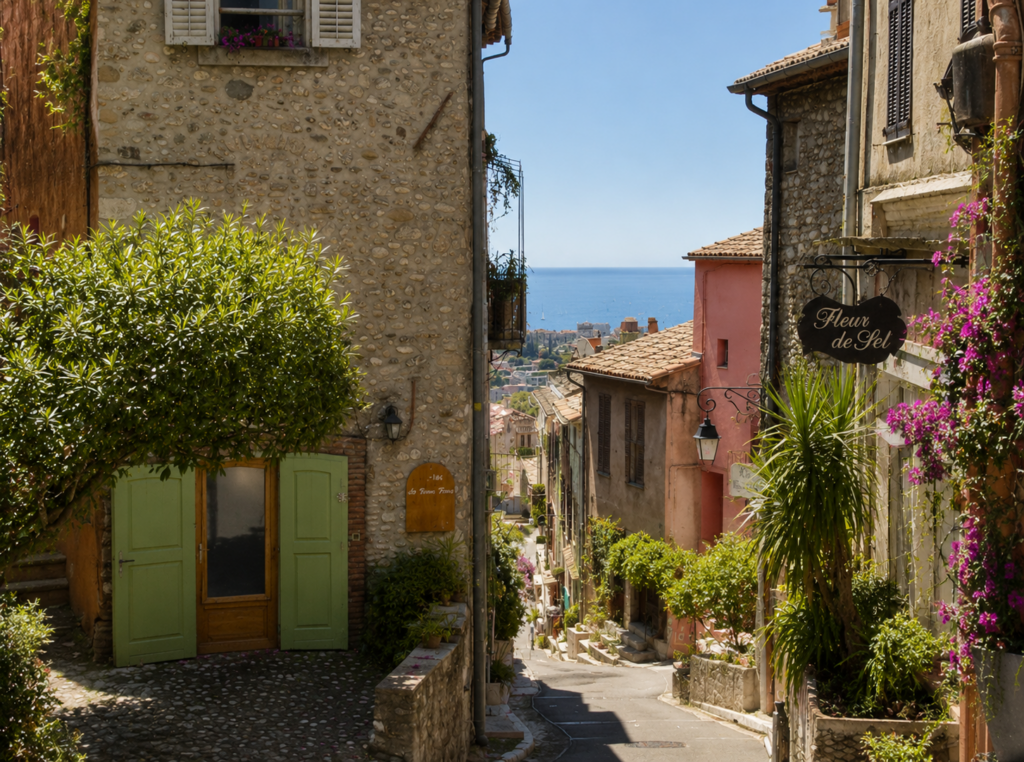
Haut-de-Cagnes is the part of Cagnes that surprises most first-time visitors.
Perched on the Colline du Château, the medieval village developed around the Château Grimaldi. Narrow lanes curve between old stone houses, vaulted passages appear unexpectedly and small squares open towards views of the sea and surrounding hills.
It feels a long way from the busy coastal corridor below.
The village attracted artists and writers during the twentieth century, and that artistic past still contributes to its identity. Renoir lived nearby, while artists including Modigliani and Soutine were associated with Cagnes.
For property buyers, Haut-de-Cagnes offers something quite specific.
The housing stock includes village houses and apartments in historic buildings, sometimes with terraces and remarkable views. Properties can have enormous character: beams, old stone, unusual layouts and centuries of architectural history.
But romance comes with practical considerations. Parking, access and stairs matter. Some properties cannot be approached directly by car. Old houses may have several levels and limited outdoor space. Renovations within historic buildings can also require more thought than buying in a modern residence.
For someone dreaming of a genuine old village on the Côte d’Azur, however, Haut-de-Cagnes deserves serious consideration.
And unlike many famous hilltop villages further inland, the Mediterranean is only a few kilometers away.
Cros-de-Cagnes
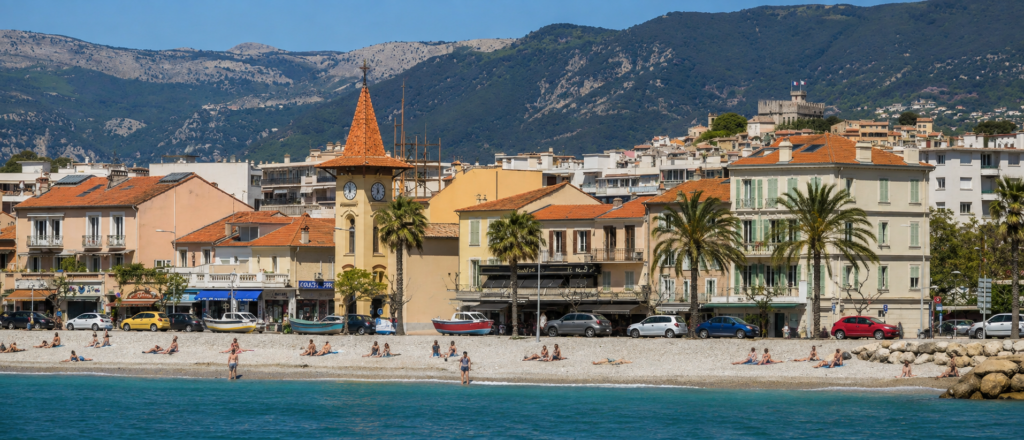
Cros-de-Cagnes began as a fishing village.
Fishermen settled along this stretch of coast during the nineteenth century, and although the neighbourhood has changed considerably since then, it retains an identity distinct from central Cagnes.
The sea defines everyday life here.
The promenade runs along the waterfront, with beaches on one side and apartments, restaurants and local streets on the other. Walking, running and cycling along the coast become part of the routine rather than activities reserved for holidays.
Behind the seafront, some smaller streets still hint at the old fishing village. Property consists mainly of apartments, ranging from older buildings to more modern residences. Depending on the location and floor, properties may have sea views, terraces or direct access to the waterfront.
For buyers who want the Mediterranean close by but do not necessarily need the prestige – or prices – associated with some of the Côte d’Azur’s more famous coastal addresses, Cros-de-Cagnes can be an interesting alternative.
The atmosphere is livelier and more urban than Beaulieu-sur-Mer or Saint-Jean-Cap-Ferrat. The seafront road is present, and this is not a secluded Riviera enclave.
In return, you get a beachside neighbourhood that remains connected to a real town throughout the year.
Cagnes Centre
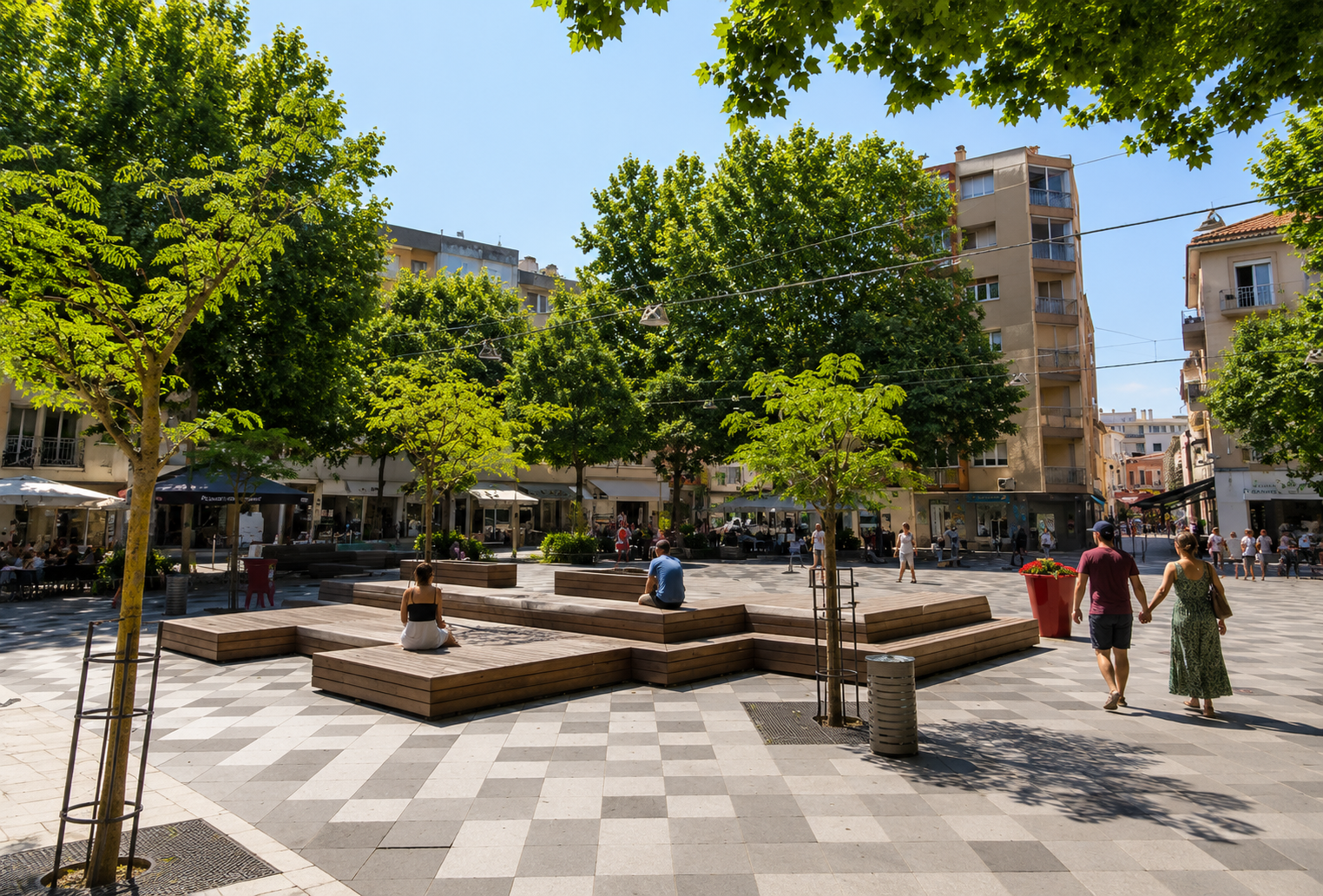
Central Cagnes is the practical heart of the commune.
This is where everyday life takes precedence over Riviera fantasy.
There are shops, services, schools, supermarkets, medical facilities and public transport. The housing stock is largely apartments, including many post-war and contemporary residences.
Architecturally, this is not generally the part of Cagnes that appears on postcards. But for permanent living it can make considerable sense.
You can have amenities within walking distance, good transport connections and relatively easy access to both the coast and Nice.
Apartments may also offer more practical layouts, lifts, garages and terraces than historic properties in Haut-de-Cagnes.
For buyers relocating permanently rather than looking exclusively for a romantic second home, the centre should not automatically be dismissed.
PolyGone Riviera
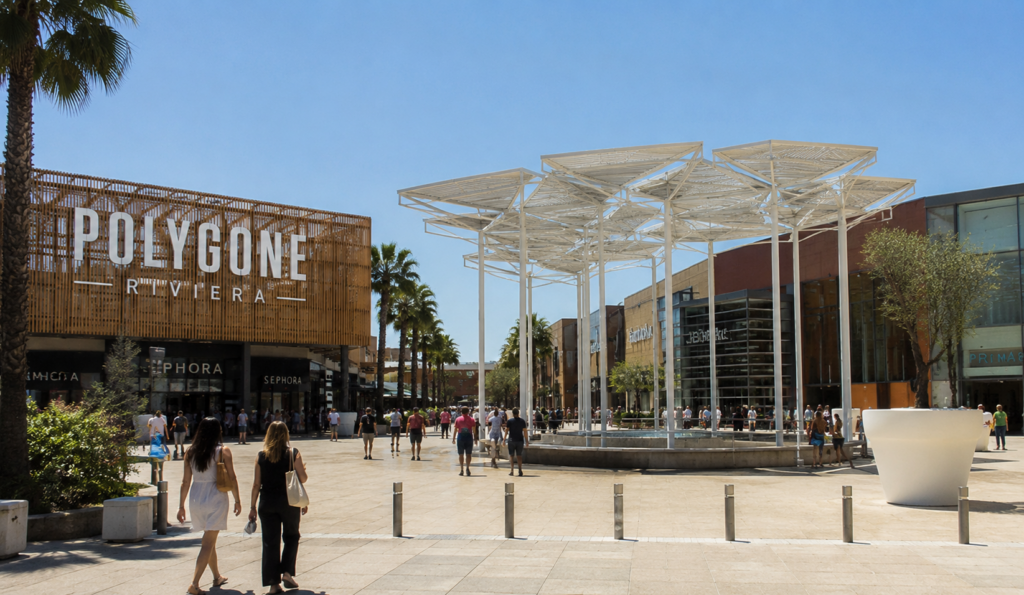
For shopping, Cagnes-sur-Mer has something rather unexpected: Polygone Riviera, one of the largest open-air shopping centres on the Côte d’Azur. Designed more like a landscaped pedestrian district than a traditional shopping mall, it combines fashion boutiques and major international brands with restaurants, cafés, a cinema and contemporary art.
It is certainly not the romantic side of Cagnes, but for everyday life it is a considerable advantage. From Haut-de-Cagnes or the residential areas around town, you can go from medieval village streets to serious shopping in just a few minutes.
Les Collettes and the residential hills
Around Les Collettes and the slopes above Cagnes, the landscape becomes greener and more residential.
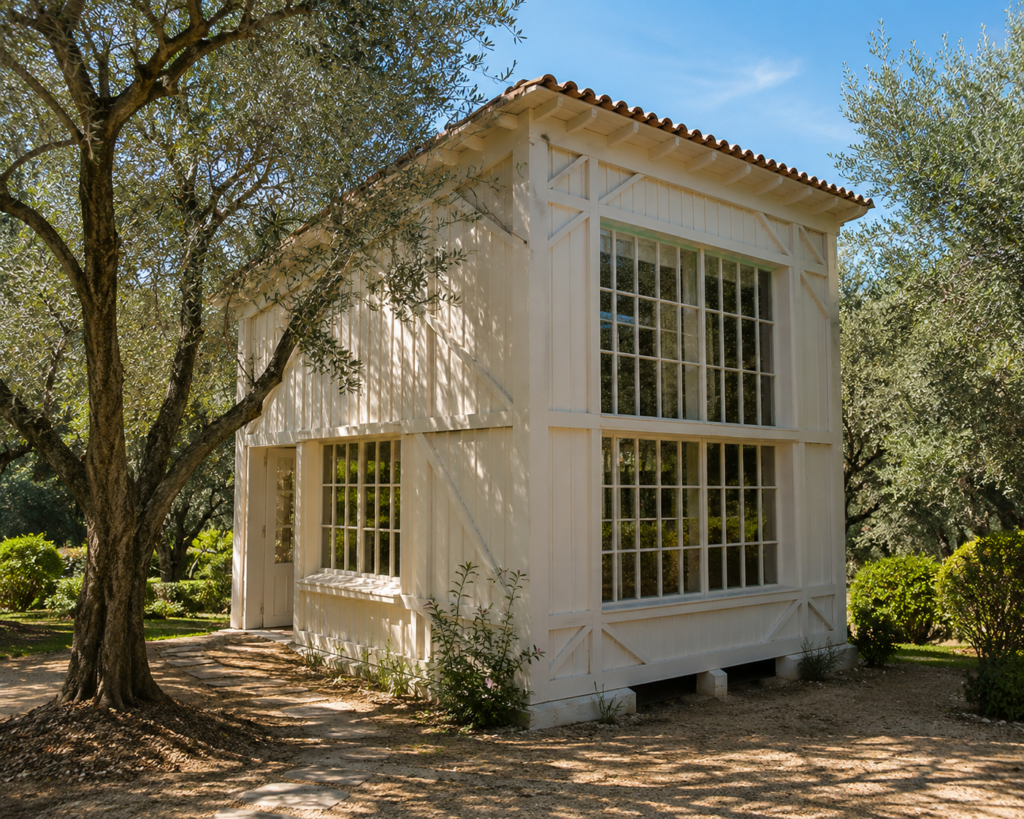
This is the Cagnes associated with Renoir. In 1907, the painter bought the Domaine des Collettes, an estate planted with ancient olive trees. He built a house there and remained in Cagnes until his death in 1919.
Today this side of town offers a very different residential environment from the coast. Villas, gardens and lower-density housing become more common. Depending on the position, properties may enjoy views towards the sea, Haut-de-Cagnes or the surrounding hills.
For buyers wanting more space and greenery while remaining close to Nice and the airport, these residential areas can be particularly interesting. The trade-off is greater dependence on the car.
PROPERTY IN CAGNES-SUR-MER
The variety of property is one of Cagnes-sur-Mer’s biggest advantages.
Unlike a small coastal commune dominated almost entirely by apartments, Cagnes offers a broad spectrum: historic village houses, seafront apartments, modern residences, family apartments and villas with gardens.
That also means that average prices tell only part of the story.
A beautifully renovated village house in Haut-de-Cagnes is a fundamentally different product from a 1970s apartment near the centre. A top-floor seafront apartment with a large terrace cannot sensibly be compared with a villa in the hills.
For buyers, it is therefore more useful to begin with lifestyle than with postcode. Do you want to walk to the beach? Do you want to live without a car? Is a garden important? Would you rather have historic character or a lift and garage? Do you need to reach the airport frequently? Is this primarily a holiday home, or will you live here throughout the year?
Those questions quickly point towards very different parts of Cagnes.
Cagnes can also offer more property for the budget than some of the prestigious communes immediately east of Nice. That does not make every part of Cagnes inexpensive – particularly good sea views, villas and exceptional properties command their own premiums – but buyers often have a broader range of choices.
For someone who has initially concentrated on Nice, Antibes or the smaller coastal towns around Monaco, it can therefore be worth widening the search to Cagnes.
To Do
Explore Haut-de-Cagnes
The best introduction to Cagnes is to go uphill.
Leave the modern town behind and wander through the streets around the Château Grimaldi. Haut-de-Cagnes is compact enough to explore without a plan.
Walk slowly. The pleasure is in the passages, stairways, old doors, small squares and sudden views between buildings.
It also gives prospective buyers an immediate sense of the practical realities of living here. A beautiful house halfway down a narrow pedestrian lane feels rather different when you imagine carrying groceries home.
Visit Château Grimaldi
The Château Grimaldi dominates Haut-de-Cagnes.
Originally constructed as a fortified residence by Rainier Grimaldi in the early fourteenth century, it was later transformed into a more comfortable aristocratic residence.
Today it houses a museum and provides one of the clearest links with the town’s long history. Climb to the top for the views. They also help explain the geography of Cagnes: medieval village above, modern town below and Mediterranean beyond.s across the bay and the waterfront becomes quieter.
Visit Renoir’s home
The Musée Renoir at Les Collettes is essential if you want to understand Cagnes rather than simply see it.
Pierre-Auguste Renoir bought the estate in 1907 partly to preserve its old olive trees. His house remains surrounded by the landscape that attracted him here.
Inside are works, furniture and personal objects connected with the artist. But the garden may be the most memorable part.
Standing among the olive trees with Haut-de-Cagnes visible in the distance, it becomes easier to understand why painters were drawn to this landscape.
Walk or cycle along the seafront
The promenade at Cros-de-Cagnes is part of everyday life.
It connects beaches, restaurants and residential areas and is used throughout the year for walking, running and cycling.
For someone considering buying near the coast, it is worth visiting at several times of day – early morning, lunchtime and evening – because the character changes considerably.
Have lunch in Cros-de-Cagnes
The former fishing quarter is an obvious place for a long Mediterranean lunch.
Rather than choosing purely by sea view, explore the streets just behind the waterfront as well. This is where some of the neighbourhood’s older character is easier to find.
Go to the beach – in October
Almost anywhere on the Riviera can look appealing in July.
Come back in October, February or April. Walk along the seafront, visit the centre, have coffee in Cros-de-Cagnes and see how much life remains.
For a permanent or frequently used second home, that tells you far more than an afternoon on the beach in August.
FActs
Department: Alpes-Maritimes (06)
Region: Provence-Alpes-Côte d’Azur
Population: around 53,000 inhabitants
Location: between Nice and Antibes
Distance from Nice Côte d’Azur Airport: approximately 5–7 km, depending on the part of Cagnes
Railway station: yes, on the coastal railway line
Coast: approximately 3.5 km of Mediterranean shoreline
Historic centre: Haut-de-Cagnes
Seaside quarter: Cros-de-Cagnes
Main property types: apartments, village houses and villas
Year-round life: very strong
Car dependency: low to moderate in the centre and Cros-de-Cagnes; higher in the residential hills
Character: varied, practical, historic, Mediterranean and residential
Best suited to: buyers who want easy access to Nice and the airport, year-round life and a wider choice of properties and budgets than in many smaller Riviera resorts
History
A town built on a hill
Like many settlements along the Mediterranean coast, old Cagnes developed away from the shoreline.
The elevated position offered protection and visibility.
The history of Haut-de-Cagnes became closely linked with the Grimaldi family. In around 1309, Rainier Grimaldi, Seigneur de Cagnes and Admiral of France, ordered the construction of a fortified château on the hill.
The castle would become the focal point of the settlement.
Over the centuries, the military fortress evolved. During the seventeenth century it was transformed into a more elegant residence, reflecting a period when defence was becoming less important than comfort and display.
The village grew around it, producing the maze of streets that survives today.
The coast develops
For centuries, the coastline below Cagnes was much less developed than the hilltop settlement.
That changed during the nineteenth century.
Fishing families, including fishermen of Italian origin, settled along the shore and helped establish what became Cros-de-Cagnes.
The arrival of the railway and the broader development of the Riviera gradually connected Cagnes more closely to Nice and the other coastal towns.
Tourism followed. But unlike some Riviera resorts, Cagnes never became dependent solely on wealthy winter visitors or tourism. Agriculture, fishing, local commerce and later urban growth all contributed to its development. That helps explain its character today.
Renoir arrives
The most famous chapter in Cagnes-sur-Mer’s artistic history began in the early twentieth century.
Pierre-Auguste Renoir first came to the area for its climate. Suffering increasingly from rheumatoid arthritis, he eventually settled permanently in Cagnes.
In 1907 he acquired Les Collettes.According to the story closely associated with the estate, Renoir was horrified to learn that the ancient olive grove might be destroyed for development. He bought the land and commissioned a house there.
He continued painting despite severe physical limitations and lived at Les Collettes until his death in 1919.
His presence attracted other artists and helped establish Cagnes as part of the artistic geography of the twentieth-century Riviera.
Artists discover Haut-de-Cagnes
During the twentieth century, Haut-de-Cagnes became popular with artists, writers and performers. The inexpensive old houses, Mediterranean light and proximity to Nice attracted a bohemian community.
Artists including Chaïm Soutine and Amedeo Modigliani are associated with Cagnes, while later generations of painters and creative figures continued the tradition.
The contrast is fascinating.
Cagnes today is a sizeable modern town crossed by roads and surrounded by the urban development of the Riviera. Yet climb into Haut-de-Cagnes or walk through Renoir’s olive grove and an entirely different Cagnes is still there.
Trivia
Renoir bought Les Collettes for the trees
One of the loveliest stories about Renoir and Cagnes concerns not a painting, but olive trees.
When Renoir discovered that the centuries-old olive grove at Les Collettes was threatened, he acquired the estate.
The trees survived. More than a century later, they remain one of the defining features of the Musée Renoir.
A Grimaldi château – but not Monaco
The name Grimaldi immediately makes most visitors think of Monaco.
But branches of the Grimaldi family held territories elsewhere along the Riviera, including Cagnes.
The Château Grimaldi in Haut-de-Cagnes is one of the most visible reminders that the family’s history extends well beyond the borders of the present-day Principality.
From fishing boats to beach life
Cros-de-Cagnes was not originally a seaside resort.
It grew as a fishing settlement. That makes its relationship with the sea quite different from coastal neighbourhoods developed primarily for tourism. Look beyond the modern promenade and apartment buildings and traces of the old village can still be found.
One commune, three identities
Few towns along this stretch of the Côte d’Azur change character as dramatically within such a short distance.
In the space of a few kilometres, you can move from a Mediterranean beach to a busy modern French town and then climb into a medieval village.