

BEAULIEU-SUR-MER
About BEAULIEU
A small town with an old-world Riviera atmosphere
Location is undoubtedly one of Beaulieu’s great strengths, but it is not the only reason to live here. Beaulieu has an atmosphere of its own – elegant, affluent and slightly old-fashioned in the best possible way.
To the west lies Villefranche-sur-Mer, with its colourful old town, steep streets and spectacular natural harbour. Immediately to the east is Saint-Jean-Cap-Ferrat, known for its grand villas, extensive gardens and some of the most exclusive residential addresses on the Mediterranean.
Beaulieu sits between the two, both geographically and in terms of lifestyle, but it should not simply be seen as a compromise between its better-known neighbours.
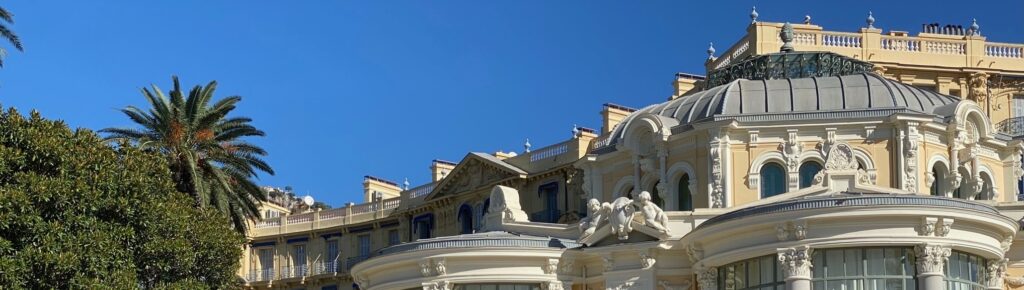
There is a quiet sense of luxury here. Smart boutiques and independent shops sit alongside cafés, restaurants and traditional food stores. Belle Époque façades, palm trees and manicured gardens are part of the streetscape, while the marina and the yachts moored there add another layer to the town’s distinctly Riviera character.
And Beaulieu still carries traces of its past as a fashionable winter resort for wealthy British and northern European visitors. There is something almost English about parts of the town: the grand former hotels, the gardens, the architecture and a certain understated formality. It is not difficult to imagine the days when visitors arrived by train with trunks rather than suitcases and spent an entire winter season on the Riviera.
That heritage gives Beaulieu a different kind of luxury from neighbouring Cap-Ferrat. Here, luxury is less about retreating behind the gates of a large private estate and more visible in everyday life – in a beautiful apartment in a former palace hotel, a morning coffee on a terrace, shopping in town, walking down to the beach or having lunch overlooking the port.
Compared with Villefranche, Beaulieu is less dramatic and less bohemian. It is more polished, more orderly and, for many people, considerably easier to live in on a daily basis. Compared with Saint-Jean-Cap-Ferrat, it is more urban and has far more apartments, but it also offers something the peninsula cannot quite match: a genuine town centre where much of daily life can be conducted on foot.
Nice and Monaco add another dimension. Both are easily accessible by train, so living in Beaulieu does not mean choosing between the intimacy of a small seaside town and the amenities of the larger cities nearby. You can have both.
Beaulieu-sur-Mer is approximately 17 km from Nice Côte d’Azur Airport and is easily accessible by train.
It is precisely this combination – elegance, history, seaside living, easy accessibel and everyday practicality – that makes Beaulieu attractive as both a permanent home and a second-home location.
What is everyday life like?
Beaulieu is compact enough for daily life to unfold within a surprisingly small area.
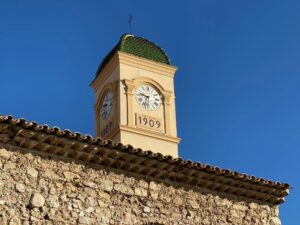
Place Marinoni is one of its natural meeting points. The market, cafés and surrounding streets give the centre a village-like rhythm. You soon start to recognise the places where people buy their bread, stop for coffee, pick up something for dinner or meet friends on a terrace.
But this is a rather sophisticated village.
There are boutiques and specialist shops to browse, good restaurants within walking distance and a noticeable international presence. Beaulieu feels prosperous without being showy. Even at its smartest, it has retained something pleasantly traditional.
The waterfront forms the other part of daily life. Walk in one direction and you reach the Baie des Fourmis and the small Port des Fourmis; in the other, the marina and Petite Afrique beach. From the centre, all of them can be reached on foot.
That may sound like a minor detail, but on the Côte d’Azur it is not.
In many beautiful places along the coast, even simple daily activities involve getting into the car. In Beaulieu, a day can quite naturally consist of walking to the market in the morning, having lunch near the port, swimming in the afternoon and going out for dinner in the evening without driving anywhere.
There is also an important difference between spending a week in Beaulieu in August and actually living here.
Summer brings more visitors, yachts and activity around the beaches and waterfront. The town feels livelier and more obviously like a Mediterranean resort. But when the summer crowds disappear, Beaulieu does not disappear with them.
In winter the pace becomes gentler. The market is still there, people still meet for coffee, the shops and restaurants continue to serve local residents and the trains continue to connect the town with Nice and Monaco. On a sunny winter morning, with the Belle Époque buildings, subtropical gardens and the sea only a few streets away, you perhaps understand Beaulieu best.
It is also when that old winter-resort atmosphere becomes most tangible.
Beaulieu is not the place to choose for a major nightlife scene. Even in summer, its social life is more about dinner, drinks on a terrace, the port and meeting friends than late-night clubs. For theatres, large cultural venues, extensive shopping or a much broader nightlife scene, Nice and Monaco are close enough to provide them.
For many people considering Beaulieu, that is not a drawback at all.
It is part of the attraction: you can live somewhere small, elegant and unmistakably Riviera, without giving up the city when you want it.
Neigbourhoods
Beaulieu-sur-Mer covers less than one square kilometre, so talking about its “neighbourhoods” can sound rather grand. Nevertheless, where you live within this small area makes a considerable difference.
The main distinctions are between the centre, the Baie des Fourmis, Petite Afrique and the port, and the higher residential streets towards the hills.
Town Centre & Place Marinoni

For buyers who want to live without depending on a car, central Beaulieu is the obvious place to start.
Around Place Marinoni and the streets between the station and the sea, apartments dominate. Buildings range from older bourgeois residences and Belle Époque architecture to more conventional twentieth-century apartment buildings.
The great advantage is convenience.
The market, bakeries, cafés, restaurants, station and most everyday services are within walking distance. The beaches and waterfront are also close enough to reach on foot.
For a second home, this can make life particularly easy: arrive by plane, take a train or taxi from Nice, and once in Beaulieu there may be little need to use a car at all.
The trade-off is that this is the more urban part of town. Properties do not automatically have sweeping sea views, gardens are uncommon and parking can be important when comparing apartments.
For buyers who value practical everyday living above having a large property, however, central Beaulieu is difficult to beat.
Baie des Fourmis
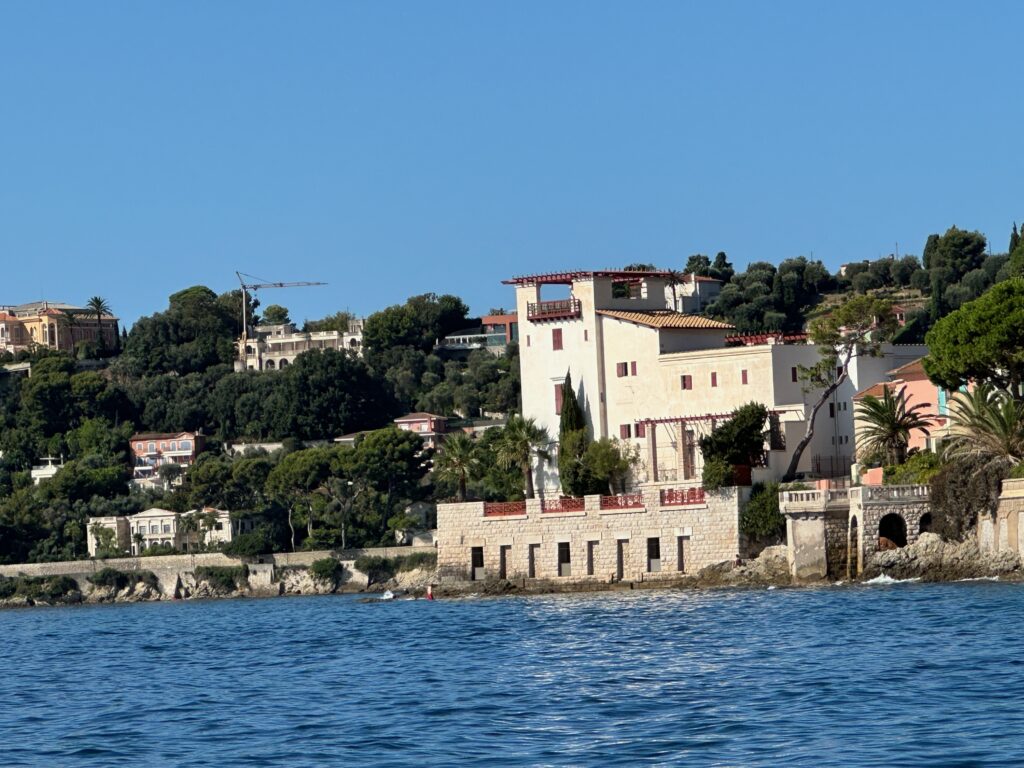
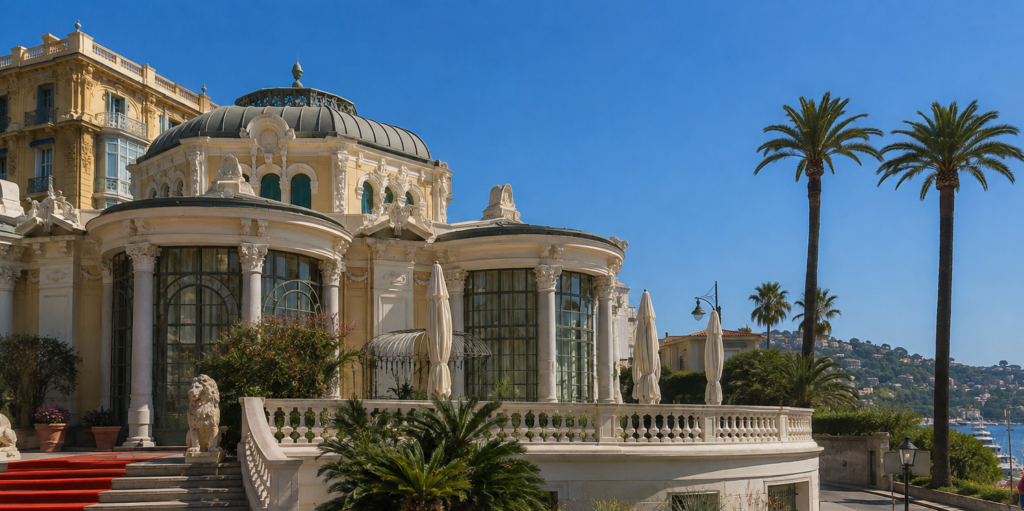
The Baie des Fourmis is where Beaulieu’s Belle Époque identity and its seaside setting come together most clearly.
Villa Kérylos stands at the edge of the bay, while the Rotonde and former Hôtel Bristol recall the period when wealthy European visitors came to spend their winters on the Riviera.
Living here puts the sea very close.
The beach, gardens and waterfront are on the doorstep, while the centre and station remain within walking distance. The pedestrian coastal path towards Saint-Jean-Cap-Ferrat begins nearby, making this one of the most attractive areas for people who want a genuine waterfront lifestyle without giving up the practical advantages of a town.
Properties include apartments in substantial historic residences as well as later buildings. Sea-facing apartments can enjoy views across the bay towards Cap-Ferrat.
This combination – sea, architecture and walkability – makes the area particularly attractive, but naturally also means that good properties are scarce.
Petite Afrique & the Port
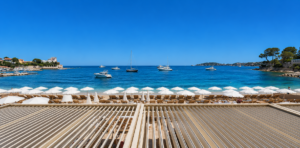
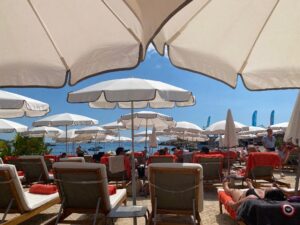
At the eastern end of Beaulieu lies Petite Afrique.
The name is usually associated with the exceptionally sheltered microclimate created by the cliffs behind the town. The vegetation here is noticeably lush, and the beach is protected by a dramatic rocky backdrop.
Next to it is Beaulieu’s large marina, le Port Plaisance.
This side of town has a more open, nautical feel than the compact streets around Place Marinoni. Boats, waterfront restaurants and the beach shape the atmosphere.
For someone who keeps a boat or simply likes having a marina as part of daily life, the location has obvious appeal.
Petite Afrique beach is also one of Beaulieu’s principal swimming spots and is particularly pleasant outside the busiest weeks of summer.
Residential options around this side of town include apartments and some rarer villas. As elsewhere in Beaulieu, exact orientation matters: the mountains rise sharply behind the coastline, so sunshine, views and exposure can vary considerably from one property to another.
The Upper Streets
Move away from the waterfront and Beaulieu quickly begins to climb.
The residential roads on the slopes above the centre can offer something that is harder to find lower down: greater elevation, more open views and, in some cases, larger terraces or outdoor space.
There are apartments as well as villas, although Beaulieu is not the place to search if your priority is a large estate with extensive grounds. For that, neighbouring Saint-Jean-Cap-Ferrat or the hills above Villefranche may offer more possibilities.
The advantage of the higher streets is the combination of a quieter residential setting and proximity to the centre.
The disadvantage is obvious once you start climbing: the famous walkability of Beaulieu becomes relative. A property that looks only a short distance from Place Marinoni on a map can involve a significant slope.
When buying here, therefore, distance should not only be measured in metres. Gradient matters.
Property in Beaulieu
Property in Beaulieu reflects the geography of the town. There simply is not much land.
With the sea on one side, steep terrain behind it and neighbouring communes close by, Beaulieu cannot expand in the way that inland towns can. The housing stock is consequently dominated by apartments.
These range from compact pieds-à-terre to substantial apartments in Belle Époque buildings and high-end residences, sometimes with terraces and panoramic sea views. Villas do exist, but they are much less common.
For buyers, this means it is useful to decide early what matters most. A central apartment may provide an exceptionally easy lifestyle but no sea view. A property higher on the slope may offer a spectacular panorama but make walking home from dinner considerably less appealing. A waterfront apartment may have the location you dreamed about but limited parking or outside space. In Beaulieu, a few hundred metres can change the character of a property completely.
Architecture also deserves attention. The town’s Belle Époque heritage means some buildings offer ceiling heights, proportions and decorative details that are difficult to reproduce in modern construction. Others have been divided or adapted over the decades, so the quality of renovation can vary considerably.
Modern residences can offer different advantages: lifts, garages, larger terraces, air conditioning or more straightforward maintenance.
There is no universally “best” choice. Much depends on how you intend to use the property.
For a lock-up-and-leave second home, a central apartment with lift and secure parking may be far more practical than a larger historic apartment. For someone moving permanently to Beaulieu, storage, accessibility and proximity to everyday shops may become more important than they initially appear during a sunny viewing in July.
To Do
Start the morning at the market
One of the best ways to understand whether you could live somewhere is to see it before lunch rather than only at sunset.
The market around Place Marinoni is part of everyday Beaulieu. Fruit, vegetables and other produce bring residents into the centre and reinforce the feeling that this is a functioning small town rather than simply a collection of holiday properties.
Sit down for a coffee afterwards and you begin to understand the rhythm of the place.
Walk to Saint-Jean-Cap-Ferrat
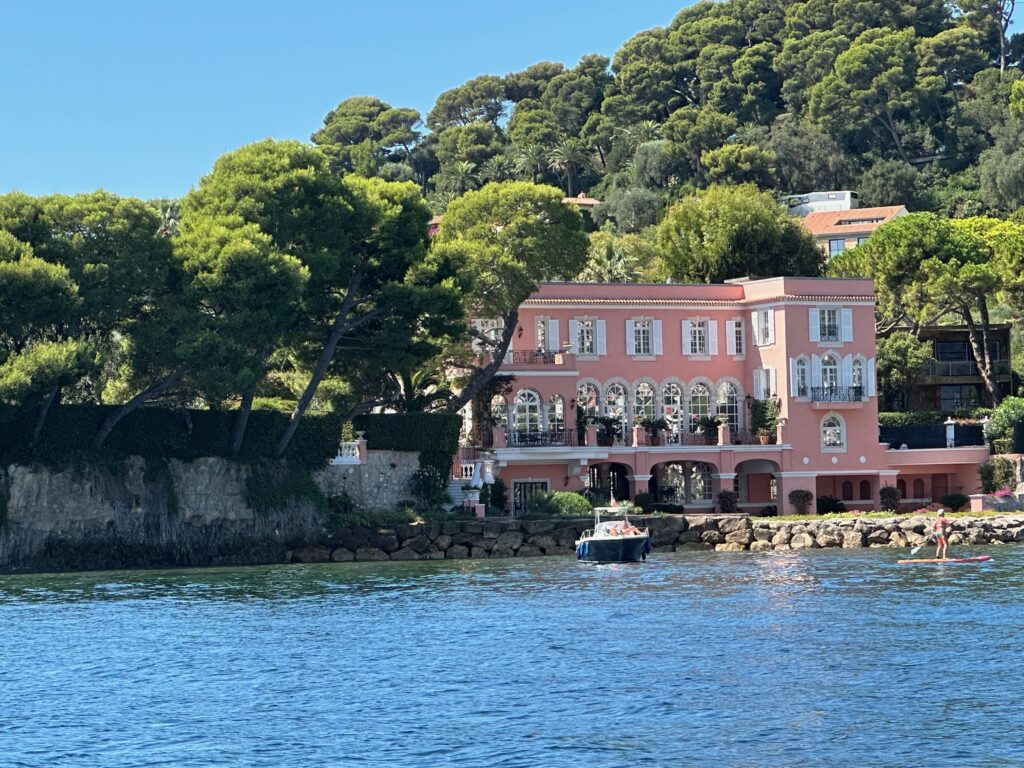
The coastal walk from Beaulieu towards Saint-Jean-Cap-Ferrat is one of those amenities that can become part of normal life rather than something you do once as a tourist.
The relatively gentle route follows the water around the Baie des Fourmis towards the neighbouring peninsula.
Morning walks, running, taking visitors out after lunch or simply going for a stroll without needing the car: these small things matter when choosing somewhere to live.
Swim at Baie des Fourmis
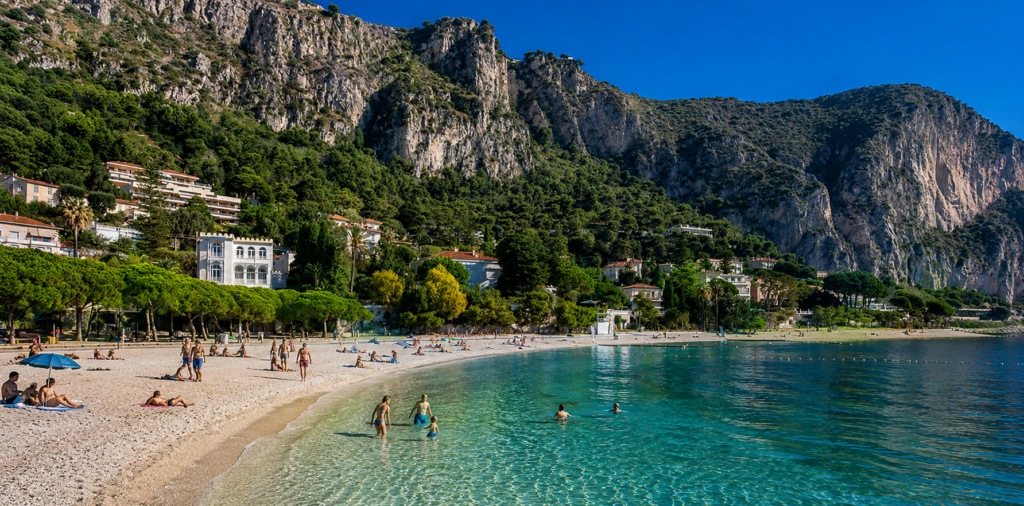
Baie des Fourmis is the more architectural of Beaulieu’s two main beaches.
Villa Kérylos, Cap-Ferrat and the surrounding historic buildings create a setting that is unmistakably Riviera.
Living nearby means a swim does not need to be planned as a day at the beach. It can simply be part of the day.
Spend an afternoon at Petite Afrique
On the other side of town, Petite Afrique has a different atmosphere.
Sheltered by the cliffs and surrounded by Mediterranean vegetation, it feels more enclosed and protected. Its unusual microclimate has long been part of Beaulieu’s reputation.
Take a book, have lunch nearby and stay until the late afternoon.
It is also worth visiting both beaches at different times of day when you are considering buying locally. Orientation and seasonal sunlight are important on this mountainous stretch of coast.
Visit Villa Kérylos
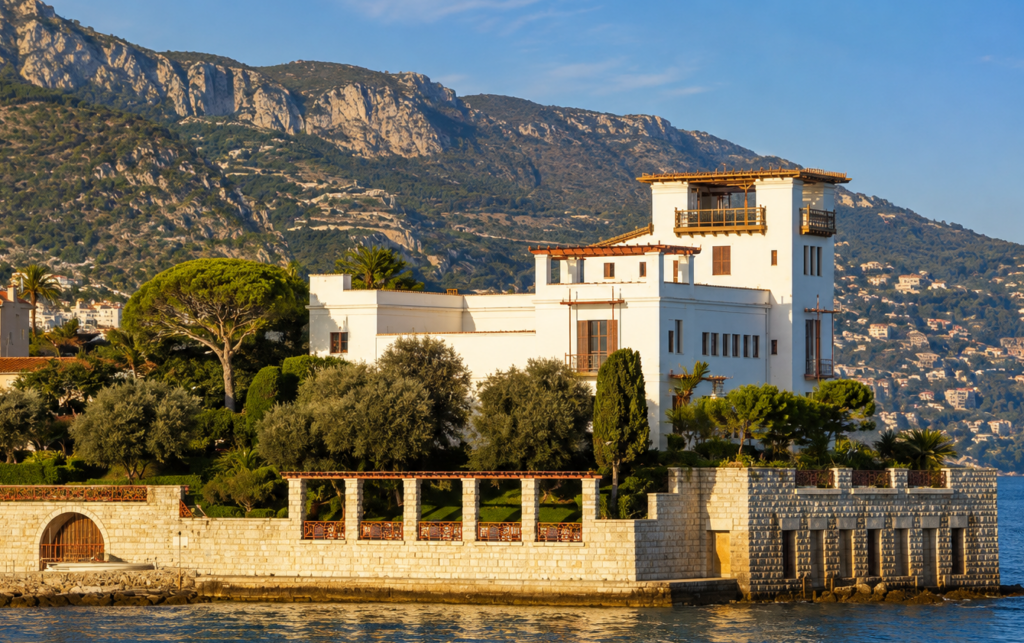
Villa Kérylos is much more than another grand Riviera villa.
Built for archaeologist and scholar Théodore Reinach, it was conceived as a recreation of an ancient Greek house, drawing inspiration particularly from the noble houses of Delos.
Its architecture, furniture, mosaics and gardens form an extraordinary early twentieth-century interpretation of ancient Greece.
It also tells you something about the people who shaped this part of the Riviera during the Belle Époque: wealthy, international and often extraordinarily ambitious in what they chose to build.
Read all about Villa Kérylos HERE in our in-depth article.
Walk around the port
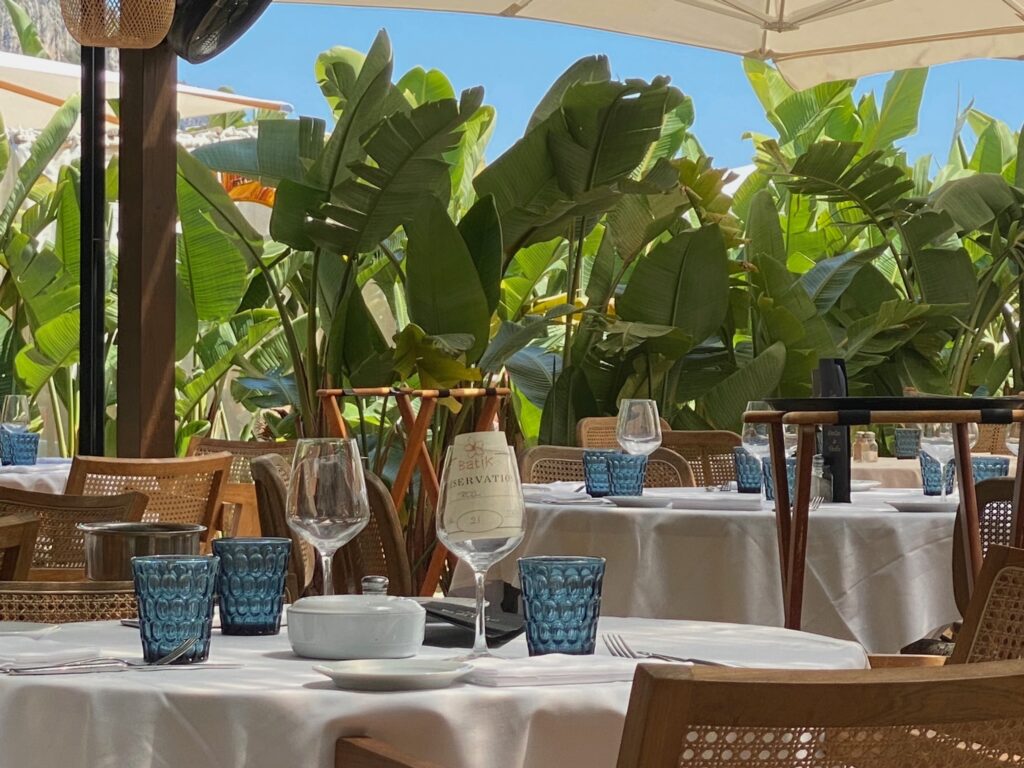
Beaulieu actually has two ports.
The small Port des Fourmis near Villa Kérylos retains a much more intimate character, while the larger Port de Plaisance on the Petite Afrique side accommodates hundreds of boats.
The latter forms an important part of contemporary Beaulieu. Walk around in the early evening and stop for dinner: this is the more nautical side of town. Lots of restaurants available for a nice lunch or dinner.
Take the train somewhere
This may not sound like a tourist attraction, but it is one of Beaulieu’s greatest lifestyle advantages.
The station sits right in town.
Being able to go into Nice or Monaco without worrying about traffic or parking changes the way you use the wider Côte d’Azur.
If you are considering living here permanently, try it during your stay. Take the train to Nice for lunch or to Monaco for an appointment and return in the afternoon.
It provides a much better impression of real life in Beaulieu than another drive along the coast.
FActs
Department: Alpes-Maritimes (06)
Region: Provence-Alpes-Côte d’Azur
Population: approximately 3,900 permanent residents
Setting: Mediterranean coast between Villefranche-sur-Mer and Saint-Jean-Cap-Ferrat
Nearest major cities: Nice and Monaco
Railway station: Beaulieu-sur-Mer, on the coastal railway line
Beaches: Baie des Fourmis and Petite Afrique
Ports: Port des Fourmis and Port de Plaisance
Character: compact, residential, international, Belle Époque, seaside
Main property type: apartments
Villas: available but relatively scarce
Car dependency: low in the centre; higher on the slopes
Year-round life: yes
Best suited to: buyers wanting the sea, everyday amenities and easy access to Nice and Monaco within a small town
Distance to Nice airport: app 17 kilometer
Beaulieu-sur-Mer had 3,874 permanent residents according to the 2023 reference population figures published by INSEE.
Its municipal territory is extremely small – under one square kilometre – which helps explain both its compact character and the scarcity of property.
History
From Anao to Beaulieu
Beaulieu’s history goes back much further than the Belle Époque façades suggest.
The area is associated with the ancient Greek maritime settlement of Anao, a reminder that this coast was connected to Mediterranean trade and civilisation long before the arrival of nineteenth-century winter visitors.
For centuries, however, Beaulieu was not an independent town. It formed part of neighbouring Villefranche-sur-Mer.
The transformation came in the nineteenth century.
The railway changes everything
The County of Nice became part of France in 1860, and improved transport links subsequently transformed the Riviera.
The railway reached this section of the coast during the 1860s, and Beaulieu station opened in 1868.
That connection was crucial.
Suddenly wealthy families from Paris, Britain, Russia and other parts of Europe could travel to the Riviera with relative ease. The Côte d’Azur became a winter destination long before it became primarily associated with summer holidays.
Beaulieu’s sheltered climate made it particularly attractive.
In 1872 it was recognised as a winter climatic resort. Doctors of the period promoted the mild weather and seaside air, and wealthy visitors followed.
The Belle Époque
By the end of the nineteenth century, Beaulieu was booming.
Grand hotels appeared, including La Réserve and Le Bristol. Villas were built for aristocrats, industrialists and intellectuals. The architecture became increasingly elaborate and international.
Beaulieu became an independent commune in 1891.
Its list of visitors and residents reads like a snapshot of Belle Époque Europe. Royalty, politicians, writers, industrialists and artists all passed through.
Queen Victoria, Leopold II of Belgium and other members of European royal families were associated with the resort. Gustave Eiffel owned a property here. Théodore Reinach built Villa Kérylos. Igor Stravinsky spent time in Beaulieu and worked on Petrushka here during the winter of 1910–1911.
The Riviera of this period was very different from the Côte d’Azur we know today.
The main season was winter.
Wealthy northern Europeans came south for the mild climate, while the hot Mediterranean summer was largely avoided. Hotels, gardens, promenades and villas were created around this seasonal migration.
You can still read that history in Beaulieu’s streets.
From grand hotels to apartments
The twentieth century changed the way people travelled.
After two world wars and the decline of the aristocratic winter season, the great Riviera hotels faced a very different world. Some disappeared; others were converted into residential buildings.
That history has directly shaped Beaulieu’s present-day property market.
Buildings that began life as grand hotels are now part of the residential landscape. The scale and architecture of some apartment buildings therefore make more sense once you know what they originally were.
The former Hôtel Bristol is one of the most visible examples of this Belle Époque legacy.
Beaulieu gradually changed from an aristocratic winter resort into the residential and holiday town it is today.
Yet compared with many Riviera resorts, remarkably much of its original identity remains visible.
Gordon Bennett, the man who made Beaulieu
Trivia
Why is it called Petite Afrique?
Petite Afrique – “Little Africa” – owes its name to its exceptionally sheltered position.
The high cliffs behind this part of Beaulieu protect it from colder northern winds and help create a particularly mild microclimate. The resulting vegetation contributes to the almost subtropical appearance of the area.
On a sunny winter day, the name suddenly makes considerably more sense.
A Greek villa built in the twentieth century
Villa Kérylos looks ancient but isn’t.
It was created in the early twentieth century for Théodore Reinach, an archaeologist, historian and politician with a passion for ancient Greece.
Rather than simply borrowing Greek decorative motifs, Reinach and architect Emmanuel Pontremoli attempted to imagine how a luxurious ancient Greek house could work as a modern home.
The result is one of the Riviera’s most unusual houses.
Gustave Eiffel lived here too
The engineer whose name will forever be associated with the Eiffel Tower also had connections with Beaulieu.
Gustave Eiffel owned Villa Salles in the town.
It is a nice reminder of just how extraordinary the community of winter residents on this small section of coast once was.
Stravinsky and Petrushka
Russian composer Igor Stravinsky spent part of the winter of 1910–1911 in Beaulieu and worked here on Petrushka, one of the ballets that helped establish his international reputation.
Today it seems almost improbable that so many important artists, writers, industrialists and members of royal families once converged on such a small Riviera town.
But that cosmopolitan history is part of Beaulieu’s DNA.
Who is Beaulieu for?
Beaulieu-sur-Mer particularly suits buyers who want to combine a small-town Mediterranean lifestyle with the practical advantages of the French Riviera’s most urbanised stretch of coast.
It works exceptionally well if you want to be able to walk.
Choose the right property and you can leave home in the morning, buy food at the market, have coffee in the centre, walk to the beach, take the train to Nice or Monaco and go out for dinner without using a car.
That may sound like a small consideration when looking at properties online. In practice, it can fundamentally change the way you use a second home.
Beaulieu is also an interesting choice for someone who wants year-round life.
It becomes considerably quieter outside summer, but it remains a real town. That distinguishes it from more seasonal coastal locations.
It is particularly attractive for:
– buyers looking for an apartment rather than a large villa;
– second-home owners who want an easy lock-up-and-leave property;
– people who want to spend substantial periods of the year on the Côte d’Azur;
– Monaco-based professionals who prefer living in a smaller seaside town;
– buyers who value walking and public transport;
– boat owners who want a marina nearby;
– people attracted to Belle Époque architecture;
– buyers who want beaches and everyday amenities within the same compact area.
When might Beaulieu not be the right choice?
Beaulieu is less obvious if your dream of the Côte d’Azur involves a large Provençal villa surrounded by extensive land. Space is scarce and villas are relatively limited.
For that lifestyle, looking further inland or at other residential areas may make more sense.
It may also feel too quiet for someone who wants a large city on the doorstep. Nice offers far more restaurants, museums, shopping, neighbourhoods and nightlife.
And although Beaulieu is very close to Monaco, buyers who need to be in the Principality every day may also want to compare it carefully with Cap-d’Ail, Beausoleil or Roquebrune-Cap-Martin.
Beaulieu or Villefranche-sur-Mer?
This is perhaps the most interesting comparison.
Villefranche is visually more dramatic. Its old town tumbles down towards one of the Mediterranean’s great natural bays, with narrow lanes, colourful façades and an atmosphere that is difficult to reproduce anywhere else.
Beaulieu is more ordered and generally easier.
It has flatter central streets, a convenient station, a market, accessible beaches and a compact commercial centre.
Choose Villefranche if the old-town atmosphere, dramatic views and character come first. Choose Beaulieu if everyday convenience, walking and a calmer, more polished environment matter more.
Beaulieu or Saint-Jean-Cap-Ferrat?
Here the difference is clearer.
Cap-Ferrat is about privacy, land, villas and exclusivity. Prices are the highest of the Côte d’Azur.
Beaulieu is about convenience.
If the dream is a substantial villa behind gates, surrounded by a garden and with maximum privacy, Cap-Ferrat is the natural place to investigate.
If you would rather walk out of your apartment and be at the market or station within minutes, Beaulieu is likely to suit you better.
And the two lifestyles are barely a kilometre apart.
The essence of Beaulieu
Beaulieu-sur-Mer does not have Nice’s energy, Villefranche’s theatrical setting or Cap-Ferrat’s vast private estates.
That is precisely its attraction.
It offers something quieter and unusually practical: a small, elegant Mediterranean town where the beach, market, station, restaurants and harbour can all form part of everyday life.
For the right buyer, that combination is difficult to improve upon.